Key takeaways
- Roof construction: Galvanized steel hardtops outperform fabric canopies by an enormous margin — no annual replacement, no sagging pools of rainwater. Look specifically for a double-layer or vented roof, which lets heat and smoke escape through the peak instead of pushing back down toward the cook.
- Footprint versus grill count: A 6×8 shelters one full-size grill with modest prep space. If you run a gas grill alongside a smoker or pellet cooker, you need 12 feet or more of length — cramming two heat sources under an 8-foot span is both uncomfortable and unsafe.
- Frame material and climate: Powder-coated aluminum resists rust indefinitely and suits coastal or high-humidity regions. Cedar brings warmth and better acoustic softness for conversation, but expects a sealing coat every few years. Both work; choose honestly based on the maintenance you’ll realistically do.
- Integrated power: Built-in outlets and USB ports matter more than they sound. They let you run dimmable string lights, a small fan, or a speaker without extension cords snaking across the lawn — and warm, low-lumen lighting is the single easiest way to keep an evening restful rather than stimulating.
- Snow and wind ratings: Manufacturers who publish load figures are telling you they’ve tested. Anywhere with real winters, prioritize models listing explicit snow support and wind resistance over those that stay vague.
What's inside
Ask most people when they last felt genuinely unhurried, and they’ll describe an evening outdoors — a long dinner that drifted past sunset, conversation that didn’t need to go anywhere. There’s real science behind why that memory sticks. Evening light exposure outdoors, unstructured time away from screens, and the slow ritual of cooking over fire all nudge the nervous system toward the parasympathetic state that precedes good sleep. The problem is that most backyards make this impossible to sustain. Smoke drifts into your face, an unexpected shower ends the night early, and the harsh floodlight you bolted above the patio door blasts your retinas with exactly the wrong wavelength at exactly the wrong hour.
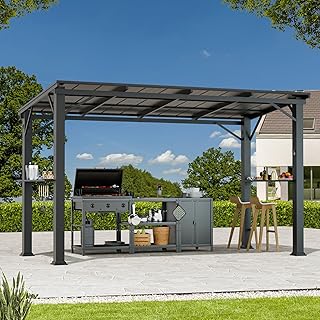
A grill gazebo solves a surprising amount of this at once. It shelters your cook station from weather, vents smoke upward instead of sideways, and — critically — gives you a defined outdoor room you’ll actually use after dark, with power for warm, low-level lighting rather than blue-heavy security lamps. This guide covers the structures worth your money in 2026: what separates a hardtop that survives a decade from one that buckles in the first heavy snow, which frame materials suit which climates, and how features like integrated outlets, shelving, and roof geometry affect whether the thing becomes a nightly habit or a seasonal ornament.
As an Amazon Associate we earn from qualifying purchases.



How to Choose a Grill Gazebo (2026)
- Roof construction: Galvanized steel hardtops outperform fabric canopies by an enormous margin — no annual replacement, no sagging pools of rainwater. Look specifically for a double-layer or vented roof, which lets heat and smoke escape through the peak instead of pushing back down toward the cook.
- Footprint versus grill count: A 6×8 shelters one full-size grill with modest prep space. If you run a gas grill alongside a smoker or pellet cooker, you need 12 feet or more of length — cramming two heat sources under an 8-foot span is both uncomfortable and unsafe.
- Frame material and climate: Powder-coated aluminum resists rust indefinitely and suits coastal or high-humidity regions. Cedar brings warmth and better acoustic softness for conversation, but expects a sealing coat every few years. Both work; choose honestly based on the maintenance you’ll realistically do.
- Integrated power: Built-in outlets and USB ports matter more than they sound. They let you run dimmable string lights, a small fan, or a speaker without extension cords snaking across the lawn — and warm, low-lumen lighting is the single easiest way to keep an evening restful rather than stimulating.
- Snow and wind ratings: Manufacturers who publish load figures are telling you they’ve tested. Anywhere with real winters, prioritize models listing explicit snow support and wind resistance over those that stay vague.
The Best Grill Gazebos of 2026, Reviewed
Backyard Discovery Saxony XL 12′ x 6′ Cedar BBQ Gazebo
The most complete package here: a 12-foot cedar pavilion with bar tops on both sides, a hardtop galvanized roof, and published snow and wind ratings that justify its price in northern climates. The bar surfaces are what elevate it — they turn a cooking shelter into a place people linger, which is the entire point.
Sunjoy Wooden Grill Gazebo 8 x 12 ft. with AC Power Port
Sunjoy’s cedar-framed 8×12 offers the deepest footprint on this list, meaning you can stand comfortably behind a grill without backing into the rain line. Built-in electrical outlets and a decorative fence panel make it feel architectural rather than temporary.
MUPATER 6 x 13 FT Wooden Grill Gazebo
Explicitly engineered for two full-size grills, with a sloping metal roof that sheds water and snow efficiently. Choose this if you’re a serious cook running gas and smoke simultaneously — the length is the feature.
Modern Shade Aluminum Grill Gazebo 6×8 with USB Charging
The low-maintenance pick. Aluminum construction won’t rot or need resealing, and the extra-wide column design adds genuine stability for its compact size. The USB power strip, shelves, and hooks handle the small ergonomic details most gazebos ignore.
Modern Shade Wood Grill Gazebo 6×8 with USB Power Strip
Same thoughtful feature set as its aluminum sibling — shelving, hooks, a paper towel holder, USB charging — wrapped in cedar for a softer, warmer presence on a deck. A strong compact choice for smaller patios where the structure will be visible from indoors.
Frequently Asked Questions
Is it safe to use a grill under a gazebo?
With a hardtop grill gazebo specifically designed for it, yes — these have vented roofs and adequate clearance. Always check your model’s stated minimum clearance, keep sidewalls and curtains well clear of the firebox, and never use charcoal or a smoker in a fully enclosed structure.
Do I need to anchor a grill gazebo?
Always. Anchor into concrete, pavers, or deck framing using the supplied hardware. An unanchored hardtop is a genuine hazard in gusting wind, regardless of its weight.
Aluminum or cedar — which lasts longer?
Aluminum, with essentially no upkeep. Cedar is naturally rot-resistant and looks better doing it, but needs sealing every two to three years to reach a comparable lifespan.
Can I leave it up through winter?
Hardtop models are designed for year-round installation. Clear accumulated snow from the roof after heavy storms, and prioritize models with published snow-load figures if you’re in a high-snowfall region.
Final Thoughts
For most buyers, the Backyard Discovery Saxony XL is the strongest all-round investment — durable, generously sized, and built with the bar tops that turn cooking into an actual evening. Serious multi-grill cooks should size up to the MUPATER 6 x 13 FT, while anyone with a compact patio who’d rather not maintain wood will be well served by the Modern Shade Aluminum 6×8. Whichever you choose, add warm dimmable lighting on day one: the shelter gets you outside, but the light quality is what keeps the evening restful all the way to bedtime.