Key takeaways
- Throat depth vs. your widest panel: The number in the model name (8-inch, 9-inch, 10-inch) is the distance from blade to frame — the widest cut you can make from the edge inward. A typical twin headboard panel needs cuts well past that, so plan on cutting curves near the edges and finishing interior shapes with a jigsaw, or choose the largest throat you can fit on your bench.
- Cutting height for resawing: Maximum cut height determines whether you can slice a thick board into two thin ones — essential for bookmatched headboard faces or thin bed slats. Three inches is workable for small stock; if resawing is your main goal, treat it as the single most important spec.
- Blade speed matched to material: Wood wants fast (roughly 1,800–2,500 FPM). Metal wants slow, often under 500 FPM. A wood-only saw with one or two speeds is simpler and cuts cleaner in hardwood; variable-speed models earn their keep only if you’re also cutting aluminum, brass, or steel hardware.
- Table quality and tilt: A flat cast-aluminum or cast-iron table with a smooth 0–45° tilt lets you cut beveled edges and angled leg joinery. Thin stamped-steel tables flex under stock and are the most common source of wandering cuts on budget saws.
- Guide adjustability and dust control: Blade guides you can actually set close to the workpiece are what produce crisp, drift-free curves. A functional dust port matters more in bedroom-adjacent workshops than most people expect — fine hardwood dust migrates into bedding and lingers.
What's inside
Most bedroom furniture projects stall at the same place: the curve. A headboard with a gentle arch, a nightstand leg with a subtle taper, a cradle rocker, a set of drawer pulls shaped to the hand — these are the details that make a bedroom feel restful rather than assembled, and none of them can be cut on a table saw. Buyers looking at their first band saw quickly hit a wall of specs written for metal fabrication shops: FPM ratings, amp draw, throat depth, resaw height. Very little of it is translated into what actually matters for someone building furniture in a garage or a spare room.
This guide translates it. Below are the tabletop and benchtop band saws worth considering in 2026 for home furniture work, with an honest read on what each one is genuinely good at. I’ve weighted the picks toward the jobs that come up most often in bedroom builds — curved headboard profiles, tapered legs, thin resawing for drawer bottoms and slats — and I flag the models that are really metal-cutting tools wearing a woodworking label. There’s also a short buying framework, so you can judge any saw you come across, not just the ones listed here.
As an Amazon Associate we earn from qualifying purchases.


How to Choose a Table Top Band Saw (2026)
- Throat depth vs. your widest panel: The number in the model name (8-inch, 9-inch, 10-inch) is the distance from blade to frame — the widest cut you can make from the edge inward. A typical twin headboard panel needs cuts well past that, so plan on cutting curves near the edges and finishing interior shapes with a jigsaw, or choose the largest throat you can fit on your bench.
- Cutting height for resawing: Maximum cut height determines whether you can slice a thick board into two thin ones — essential for bookmatched headboard faces or thin bed slats. Three inches is workable for small stock; if resawing is your main goal, treat it as the single most important spec.
- Blade speed matched to material: Wood wants fast (roughly 1,800–2,500 FPM). Metal wants slow, often under 500 FPM. A wood-only saw with one or two speeds is simpler and cuts cleaner in hardwood; variable-speed models earn their keep only if you’re also cutting aluminum, brass, or steel hardware.
- Table quality and tilt: A flat cast-aluminum or cast-iron table with a smooth 0–45° tilt lets you cut beveled edges and angled leg joinery. Thin stamped-steel tables flex under stock and are the most common source of wandering cuts on budget saws.
- Guide adjustability and dust control: Blade guides you can actually set close to the workpiece are what produce crisp, drift-free curves. A functional dust port matters more in bedroom-adjacent workshops than most people expect — fine hardwood dust migrates into bedding and lingers.
The Best Table Top Band Saw (2026)s Reviewed
WEN 10-Inch Band Saw with Stand (BA3962)
The most complete package here for furniture work: a genuine 10-inch throat, two-speed operation for switching between hardwood and softer material, and an included stand that gets the table to a comfortable standing height. If you’re building beds, nightstands, and dressers rather than trinkets, this is the sensible default.
SEESII Benchtop Band Saw, 8-Inch
A thoughtfully specified small saw — 8-inch cutting width, just over 3 inches of height, a 0–45° tilting table, plus a miter gauge and double-sided fence in the box. The fence is what sets it apart, making repeatable straight cuts and light resawing far less fiddly than on most benchtop machines.
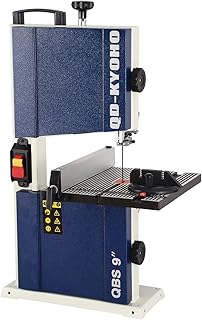
Portable 9-Inch Woodworking Band Saw
Fast blade speed and a cast-aluminum table with a scale make this a capable wood-only curve cutter, and the 9-inch throat splits the difference nicely between bench footprint and usable capacity. The modest 2.5-amp motor asks you to slow down in thick oak or maple, but cut quality holds up.
PeakPursuit 8-Inch Band Saw
A compact, well-mannered saw for detail work — shaped drawer pulls, small brackets, curved corbels under a headboard shelf. The copper-wound motor runs smoothly at 1,800 RPM, and the included fence and miter gauge cover the basics without extra spending.
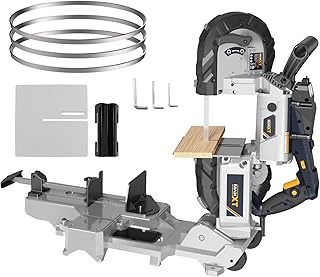
MAXXT 2-in-1 Band Saw with Table Saw Base
This is a portable deep-cut band saw that drops into a rolling base, giving you 5 inches of cutting depth in metal and wood from a lightweight aluminum body. It’s the pick for bed-frame hardware, threaded rod, and steel tubing — less so for delicate furniture curves.
Frequently Asked Questions
Can a tabletop band saw resaw boards for headboard panels?
Within limits. Most benchtop models top out around 3 to 3-1/2 inches of cutting height, so you can resaw narrow stock for slats, drawer bottoms, or veneer-thin accents — but full-width panels require a floor-standing saw.
Do I need variable speed for furniture building?
No. Wood cuts best at high blade speeds, so a single-speed or two-speed wood saw is sufficient. Variable speed matters only if you plan to cut metal on the same machine.
What blade should I start with?
A 1/4-inch, 6-TPI blade handles most furniture curves and light resawing. Add a 1/8-inch blade for tight radii and a wider 1/2-inch blade if you resaw often.
How much bench space do these actually need?
Budget roughly a two-foot-square footprint plus clear runoff space on both sides equal to the length of your longest workpiece — a common oversight when cutting bed rails.
Final Thoughts
For most people building bedroom furniture at home, the WEN 10-Inch with Stand is the best all-around buy: real capacity, comfortable working height, and no obvious weak point. Choose the SEESII 8-Inch if bench space is tight and you value its fence and tilting table for precise repeat cuts, and add the MAXXT 2-in-1 only if metal cutting is genuinely part of your work.