Key takeaways
- Fit before features: Confirm your saw’s rail mounting pattern, table thickness, and trunnion clearance. A replacement assembly listed for a specific model number (RTS10G, for example) will drop in cleanly; a universal rail system may need drilling or shimming.
- Rip capacity you’ll actually use: A 30-inch fence handles a ripped sheet down the middle comfortably. Going to 46 inches or beyond means more benefit for plywood work, but it also means significant real estate to the right of the blade — measure your shop before you commit.
- Lock mechanism and repeatability: A cam-action T-square that clamps front and rear stays square under load and returns to the same reading twice. Single-point front locks are quicker but more prone to deflection when you lean into a heavy board.
- Adjustability and squareness: Look for a fence body that can be micro-adjusted parallel to the miter slot and shimmed vertically square to the table. Self-aligning designs save real setup time and hold their calibration through seasonal humidity swings.
- Workholding and expansion: T-track faces let you mount featherboards, stop blocks, and sacrificial sub-fences without clamps hanging into your cut path. If you also run a router table or bandsaw, a fence that migrates between machines earns its keep twice over.
What's inside
Quick note: your brief says “sleep-wellness expert angle,” which doesn’t fit a table saw roundup — I’ve written this from a woodworking/shop-tool expert voice instead. Say the word if you actually want the sleep framing.
Almost every frustrating cut on a table saw traces back to the same culprit, and it usually isn’t the blade. A fence that drifts a few thousandths out of parallel, flexes under hand pressure, or refuses to lock in the same spot twice will quietly sabotage every joint downstream — panels that won’t close, drawer boxes that rack, tabletops with hairline gaps you can feel with a fingernail. Worse, a fence that pinches toward the back of the blade is the classic recipe for kickback, which is where a nuisance becomes a genuine safety problem.
The good news is that a fence is one of the few upgrades you can bolt onto an existing saw and immediately feel the difference. This guide breaks down the fence systems worth your money in 2026, from full aftermarket T-square rails for cabinet and contractor saws to auxiliary T-track faces that add capacity and workholding to a jobsite saw, plus straightforward OEM replacement assemblies for popular portable models. Below you’ll find what to look for before you buy, short reviews of the standouts, and answers to the questions that come up most often.
As an Amazon Associate we earn from qualifying purchases.


How to Choose a Table Saw Fences (2026)
- Fit before features: Confirm your saw’s rail mounting pattern, table thickness, and trunnion clearance. A replacement assembly listed for a specific model number (RTS10G, for example) will drop in cleanly; a universal rail system may need drilling or shimming.
- Rip capacity you’ll actually use: A 30-inch fence handles a ripped sheet down the middle comfortably. Going to 46 inches or beyond means more benefit for plywood work, but it also means significant real estate to the right of the blade — measure your shop before you commit.
- Lock mechanism and repeatability: A cam-action T-square that clamps front and rear stays square under load and returns to the same reading twice. Single-point front locks are quicker but more prone to deflection when you lean into a heavy board.
- Adjustability and squareness: Look for a fence body that can be micro-adjusted parallel to the miter slot and shimmed vertically square to the table. Self-aligning designs save real setup time and hold their calibration through seasonal humidity swings.
- Workholding and expansion: T-track faces let you mount featherboards, stop blocks, and sacrificial sub-fences without clamps hanging into your cut path. If you also run a router table or bandsaw, a fence that migrates between machines earns its keep twice over.
The Best Table Saw Fences (2026)s Reviewed
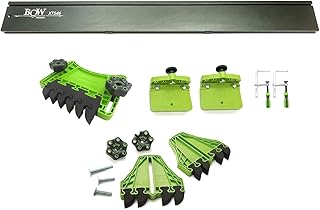
BOW Products Ultimate XTENDER & Safety Kit
This is the most complete package here: the 46-inch XT XTENDER fence bundled with two support feeds, T-track clamps, and both the FeatherPRO and FencePRO featherboards. If you want capacity and proper hold-down pressure in one purchase rather than assembling it piecemeal, this is the efficient path.
BOW Products 46″ XT XTENDER Fence System
The standalone version of the same platform, ideal if you already own featherboards you like. Its real strength is versatility — the T-track extrusion mounts to portable saws, contractor saws, router tables, and bandsaws, so one investment upgrades several machines.
36″ Professional Advanced Table Saw Fence
A self-aligning T-square design aimed squarely at cabinet and contractor saws, and the pick for woodworkers whose main complaint is a fence that won’t stay parallel. The 36-inch capacity covers sheet-goods ripping without dominating a two-car garage shop.
Delta 36-T30T3 T3 Fence System
Delta’s T3 is the conservative, proven choice: 30 inches of capacity, a smooth glide, and a lock that seats consistently cut after cut. It’s the fence to buy if you value predictable, well-supported hardware over maximum capacity.
Rip Fence Assembly for RTS10G / RTS10NS
Not an upgrade so much as a rescue — this OEM-style assembly restores a damaged or missing fence on compatible portable saws for a fraction of a new machine. Verify your model number, and you’re back to accurate ripping the same afternoon.
Frequently Asked Questions
Will an aftermarket fence fit my saw?
Usually, but never assume. Check rail bolt spacing, table edge thickness, and whether the system requires drilling. Model-specific assemblies are the safest bet for jobsite saws; T-square rail systems suit cabinet and contractor saws best.
How do I know my fence is set up correctly?
Reference everything to the miter slot, not the blade. Measure from the slot to the fence at the front and rear of the table; aim for identical readings, or a few thousandths of relief at the back. Then check the face for square to the table.
Do I still need featherboards with a good fence?
Yes. A fence controls lateral position; featherboards keep stock pressed down and against the fence, which is what prevents lift, wander, and kickback on thin or bowed material.
Is more rip capacity always better?
No. Extended rails add footprint and can make a small shop unworkable. If you break sheet goods down with a track saw or circular saw first, 30 to 36 inches is plenty.
Final Thoughts
For most woodworkers upgrading a cabinet or contractor saw, the 36″ Professional Advanced Fence delivers the alignment accuracy that matters most, while the Delta 36-T30T3 is the dependable, no-drama alternative. If your priority is added capacity plus serious workholding — especially across multiple machines — the BOW Products Ultimate XTENDER & Safety Kit is the strongest all-in-one value on this list.