Key takeaways
- Cutting capacity: Measure the largest stock you realistically use, then add margin. A 5-inch deep-cut portable handles 2×2 tube, angle iron, and pipe with room to spare; if you’re regularly slicing 4-inch round bar or 6-inch channel, you need a floor-standing machine instead.
- Blade speed control: Metal demands slow, steady surface feet per minute — roughly 100–250 FPM for steel and 400+ for aluminum and brass. Variable speed isn’t a luxury here; running too fast strips teeth and work-hardens the cut. Look for a dial or a multi-speed pulley, not a single fixed speed.
- Portable versus stationary: Handhelds go to the work, which matters for installed railings and long stock you can’t lift. Stationary saws bring repeatability, a proper vise, and mitre angles — the better choice if you’re producing matched furniture legs.
- Vise and mitre accuracy: A saw that can’t hold stock square will cost you every joint downstream. Check that the vise clamps without twisting thin-wall tube and that the 0°–45° detents actually repeat.
- Noise, vibration, and chip control: Band saws are the quietest way to cut metal, typically 20–30 dB below an abrasive chop saw, but frame rigidity varies widely. A cast or heavy aluminum base damps chatter, keeps the cut quiet enough for evening work, and drops chips into a tray instead of across your floor.
What's inside
Cutting metal at home is where a lot of otherwise capable workshops stall out. An angle grinder throws sparks across the garage and leaves a burr you’ll spend twenty minutes filing; a chop saw screams loud enough to wake the whole house and can send hot chips into a wooden bench top. If you’re building furniture with steel tube frames, brass hardware, aluminum extrusion, or threaded rod, the missing tool is almost always a band saw — and choosing one is genuinely confusing, because “metal band saw” covers everything from a five-pound handheld unit to a 300-pound floor machine with hydraulic downfeed.
This guide sorts that out. Below you’ll find our current picks for 2026, followed by the specifications that actually matter when you’re cutting mild steel rather than pine, short reviews of each machine’s real-world strengths, and answers to the questions we get most often from readers outfitting a home shop. Our emphasis throughout is on tools that cut cleanly, run cool, and behave well in a shared living space — because most of our readers are working in a garage attached to a house where someone is probably trying to sleep.
As an Amazon Associate we earn from qualifying purchases.


How to Choose a Metal Band Saw (2026)
- Cutting capacity: Measure the largest stock you realistically use, then add margin. A 5-inch deep-cut portable handles 2×2 tube, angle iron, and pipe with room to spare; if you’re regularly slicing 4-inch round bar or 6-inch channel, you need a floor-standing machine instead.
- Blade speed control: Metal demands slow, steady surface feet per minute — roughly 100–250 FPM for steel and 400+ for aluminum and brass. Variable speed isn’t a luxury here; running too fast strips teeth and work-hardens the cut. Look for a dial or a multi-speed pulley, not a single fixed speed.
- Portable versus stationary: Handhelds go to the work, which matters for installed railings and long stock you can’t lift. Stationary saws bring repeatability, a proper vise, and mitre angles — the better choice if you’re producing matched furniture legs.
- Vise and mitre accuracy: A saw that can’t hold stock square will cost you every joint downstream. Check that the vise clamps without twisting thin-wall tube and that the 0°–45° detents actually repeat.
- Noise, vibration, and chip control: Band saws are the quietest way to cut metal, typically 20–30 dB below an abrasive chop saw, but frame rigidity varies widely. A cast or heavy aluminum base damps chatter, keeps the cut quiet enough for evening work, and drops chips into a tray instead of across your floor.
The Best Metal Band Saw (2026)s Reviewed
DOVAMAN Portable Band Saw (10A, 5-Inch Deep Cut)
A strong all-rounder: the 10-amp motor holds speed under load in 1/4-inch plate, and the included base converts it into a small benchtop saw when you’d rather bring stock to the tool. The 0°–45° adjustable angle and two supplied blades mean you can cut mitred frame stock the day it arrives.
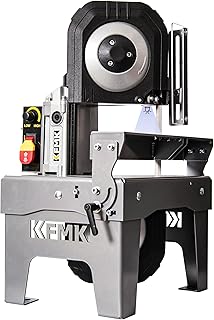
WEN Metal Band Saw with Stand (BA4664)
The pick for anyone building repeatable furniture components. It arrives on its own stand with a proper vise and multiple blade speeds, so you can set a stop and produce a dozen identical steel legs without re-measuring each one. Assembly is straightforward and it runs noticeably calmer than a comparable abrasive saw.
WEN Portable Band Saw (94396)
A well-priced handheld with the same 10-amp, variable-speed formula and a balance that makes overhead and awkward-angle cuts manageable. Best treated as a jobsite and cut-down tool rather than a precision saw; pair it with a file for finish work.
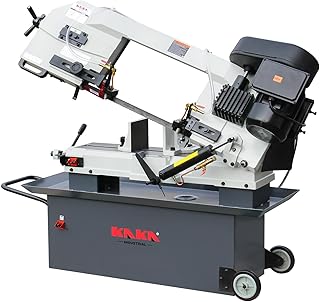
KAKA Industrial BS-912B
The serious option, with 9-inch round and 7 x 12-inch rectangular capacity, four blade speeds, and hydraulic downfeed that lets the saw feed itself at a consistent rate. If you’re cutting structural steel or working through bar stock in volume, this is the machine that stops being the bottleneck.
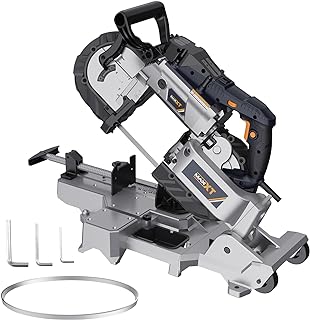
MAXXT 5-Inch Deep Cut Band Saw
A clever hybrid: a genuine 10-amp portable that sits in a lightweight aluminum base with carrying wheels, so it moves easily between garage and driveway. The base adds enough mass to steady the cut, and the multipurpose blade range covers wood and PVC as well as steel.
Frequently Asked Questions
Can a metal band saw cut wood too?
Yes, with a coarser blade and higher speed — most of these saws advertise wood and PVC capability. Just don’t expect resaw quality; the small wheel diameter and fine-tooth bias favour metal.
How many teeth per inch should the blade have?
Keep at least three teeth in contact with the material at all times. For thin-wall tube use 18–24 TPI; for solid bar over 1/2 inch, drop to 10–14 TPI so chips can clear.
Do I need cutting fluid?
Not for occasional cuts in mild steel or aluminum, though a wax stick or light oil on the blade extends life significantly and reduces the squeal that comes from a dry, rubbing cut.
Why is my blade wandering or breaking?
Usually excessive feed pressure, a speed set too high, or blade guides that have drifted out of adjustment. Let the saw’s own weight do the work and check guide clearance every few hours of use.
Final Thoughts
For most home furniture builders, the DOVAMAN Portable Band Saw offers the best balance of capacity, speed control, and dual handheld-plus-base flexibility. Choose the WEN BA4664 if repeatable, square, mitred cuts on a proper stand matter more than portability, and step up to the KAKA Industrial BS-912B if you’re regularly cutting heavy stock and want a machine that feeds itself while you work.