Key takeaways
- Duty cycle, stated honestly: Look for a manufacturer-published rating — 50%, 75%, or 100%. A 50% unit needs equal rest time; a 100% duty-cycle motor is engineered to run indefinitely. Guessing here is how compressors die in month three.
- CFM at 90 PSI, not peak PSI: Sustained airflow determines whether your tool works or stutters. Add up the CFM draw of every tool you’ll run simultaneously, then add 30% headroom. A 175 PSI badge means nothing if recovery is slow.
- Measured noise in dBA: Standard oil-free compressors sit near 85 dBA — loud enough to spike cortisol and cause measurable sleep-stage shifts two rooms away. Ultra-quiet models run around 60 dBA, roughly conversational volume. If your shop shares a wall or ceiling with a bedroom, treat this as a primary spec.
- Motor speed and heat: Low-RPM motors (around 1,680 RPM) generate less heat, less vibration, and dramatically less wear than high-speed universal motors. For long sessions, slower is better in every way that matters.
- Tank material and drainage: Aluminum tanks resist corrosion; steel tanks demand disciplined daily draining. Either way, an accessible drain valve is the difference between a ten-year tank and a rusted liability.
What's inside
Anyone who has run a nail gun through a Saturday afternoon of furniture assembly knows the sound of a compressor cycling on: that abrupt mechanical inhale that travels through floor joists, up a stairwell, and straight into a napping toddler’s room. Continuous-use compressors magnify the problem, because “continuous” means the motor spends far more of the hour running than resting. As someone who spends most of my working life studying how ambient noise fragments sleep architecture, I’ve come to see the shop compressor as one of the most underrated household sleep disruptors — a machine that generates 80 to 90 decibels of intermittent, unpredictable noise in a building where somebody is almost always trying to rest.
This guide approaches continuous-duty compressors through two lenses at once: the mechanical one (duty cycle, CFM recovery, tank sizing, thermal headroom) and the acoustic one (measured dBA, motor speed, vibration transfer into structure). The picks below range from a stationary 29-gallon vertical unit for furniture shops that run finish nailers and spray guns all day, to genuinely quiet 60 dBA aluminum-tank models, to cordless inflators rated for 100% duty cycle. Each is judged on whether it can work hard for long stretches without cooking itself — and without waking the house.
As an Amazon Associate we earn from qualifying purchases.



How to Choose an Air Compressor For Continuous Use (2026)
- Duty cycle, stated honestly: Look for a manufacturer-published rating — 50%, 75%, or 100%. A 50% unit needs equal rest time; a 100% duty-cycle motor is engineered to run indefinitely. Guessing here is how compressors die in month three.
- CFM at 90 PSI, not peak PSI: Sustained airflow determines whether your tool works or stutters. Add up the CFM draw of every tool you’ll run simultaneously, then add 30% headroom. A 175 PSI badge means nothing if recovery is slow.
- Measured noise in dBA: Standard oil-free compressors sit near 85 dBA — loud enough to spike cortisol and cause measurable sleep-stage shifts two rooms away. Ultra-quiet models run around 60 dBA, roughly conversational volume. If your shop shares a wall or ceiling with a bedroom, treat this as a primary spec.
- Motor speed and heat: Low-RPM motors (around 1,680 RPM) generate less heat, less vibration, and dramatically less wear than high-speed universal motors. For long sessions, slower is better in every way that matters.
- Tank material and drainage: Aluminum tanks resist corrosion; steel tanks demand disciplined daily draining. Either way, an accessible drain valve is the difference between a ten-year tank and a rusted liability.
The Best Air Compressor For Continuous Use (2026)s Reviewed
Klutch 29-Gallon Vertical, 2.5 HP
With 5.1 CFM at 90 PSI and a 29-gallon reserve, this vertical oil-free unit cycles less frequently than any small-tank competitor, which means fewer of those startle-inducing motor starts across a long build. It’s the strongest choice for a dedicated furniture or cabinet shop — just site it on rubber isolation pads, because a tank this size transmits real vibration into a wood-framed floor.
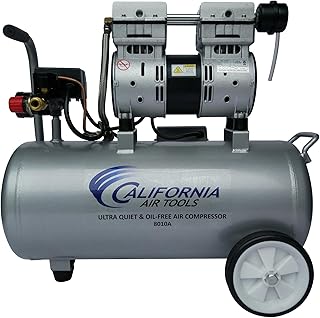
California Air Tools 8010A Ultra Quiet
At a measured 60 dBA, this 1.0 HP oil-free model is the one I recommend to anyone whose workspace shares structure with a bedroom or nursery — you can hold a phone call beside it, and it won’t pull anyone out of slow-wave sleep upstairs. The 8-gallon aluminum tank resists rust, and the low-RPM motor stays cool through extended finish-nailing sessions.
Metabo HPT EC914S Pancake
Four CFM and 200 PSI storage let this 6-gallon pancake feed multiple framing or brad nailers at once, making it the practical pick for crews and ambitious DIY builds. It’s louder than the California Air Tools unit, so schedule it for daytime hours rather than late-night projects.
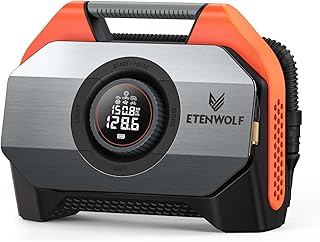
ETENWOLF VORTEX S6 Cordless Inflator
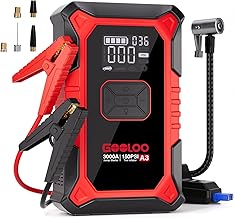
A rare portable with a true 100% duty cycle and dual-cylinder design, backed by a 19,200 mAh pack — it will fill a full set of truck tires without the forced cool-down that stops most cordless inflators cold. The LED backlight makes it genuinely usable at 2 a.m. without flooding a driveway in light.
OlarHike 12000mAh Heavy Duty Inflator
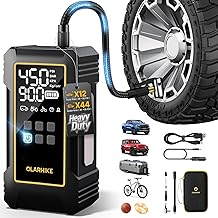
Dual 12V and cordless power plus a 150 PSI ceiling covers everything from Jeeps to RV tires, and the digital gauge takes the guesswork out of pressure setting. A sensible, quieter alternative to running a shop compressor and hose out to the curb.
Frequently Asked Questions
What does “continuous duty” actually mean?
It means the compressor’s motor and pump are rated to run without a mandatory cool-down interval — typically expressed as a 100% duty cycle. Most consumer compressors are 50% rated, meaning thirty minutes of running requires thirty minutes off.
Can a compressor really disrupt sleep?
Yes. Intermittent noise events above roughly 45 dBA at the sleeper’s ear are associated with micro-arousals and shifts out of deep sleep, even when the person doesn’t fully wake or remember it. The sudden onset of a compressor cycling is more disruptive than steady sound at the same volume.
How do I quiet down a compressor I already own?
Place it on anti-vibration mats or a dense rubber pad, keep it off shared walls, add an inline intake muffler, and enclose it in a ventilated cabinet lined with mass-loaded vinyl. Never restrict cooling airflow to gain quiet.
Is oil-free the right choice for long runs?
Oil-free pumps are lower maintenance and fine for most furniture work, though oil-lubricated pumps generally run cooler and quieter over very long sessions. For household shops, a low-RPM oil-free unit is the better overall tradeoff.
Final Thoughts
For a home workshop under a living space, the California Air Tools 8010A is the clear pick — 60 dBA keeps it below the threshold where noise reliably fragments sleep. If you need real volume and sustained airflow, the Klutch 29-Gallon delivers it with fewer motor cycles, while the ETENWOLF VORTEX S6 covers portable, true continuous-duty inflation anywhere.