Key takeaways
- Sound rating in decibels: Treat 60 dB as the practical ceiling for shared living spaces. Because decibels are logarithmic, a 70 dB compressor is not slightly louder than a 60 dB one — it delivers roughly ten times the sound intensity, which is the difference between background hum and a sleeper waking up.
- CFM at 90 PSI, not peak PSI: Brad and finish nailers sip air, typically needing well under 1 CFM in intermittent use. Framing nailers demand far more. Match sustained flow to your heaviest tool, and ignore marketing that leads with maximum pressure alone.
- Tank size versus cycle frequency: A larger tank runs the motor less often, which means fewer noise spikes even if the unit itself is louder. A one-gallon tank stays quiet but restarts constantly. For sleep-sensitive households, fewer long cycles often beat many short ones.
- Oil-free pump design: Oil-free pumps require no maintenance schedule, tolerate cold garages, and can be stored upright without seepage. The tradeoff is slightly more mechanical noise and a shorter service life under daily professional loads.
- Portability and setup friction: Weight and grip design determine whether the compressor moves to the quietest corner of the house or stays wherever it landed. Quick-connect couplers matter too — fewer fumbling seconds means less time with the motor idling.
What's inside
Anyone who has fired a brad nailer at 7 a.m. while a toddler naps down the hall understands the real problem with air compressors: they are loud, and the noise arrives in unpredictable bursts. A traditional pancake unit cycling its motor can spike past 90 decibels — roughly a lawnmower parked in your hallway. For furniture builders working out of a garage, spare bedroom, or apartment balcony, that acoustic footprint decides when you get to work, not your project timeline. Add the second problem — matching air delivery to the nailer you actually own — and the buying decision gets murky fast.
This guide approaches compressor selection through two lenses that rarely get combined: pneumatic performance and household acoustics. We look at sustained CFM against realistic nailing rhythms, tank capacity versus recovery cycles, and measured sound output in the context of sleep hygiene research, which generally flags intrusive noise above roughly 55 dB as disruptive to rest for people in adjacent rooms. Below you’ll find our current picks, a decision framework, and answers to the questions furniture makers ask most.
As an Amazon Associate we earn from qualifying purchases.


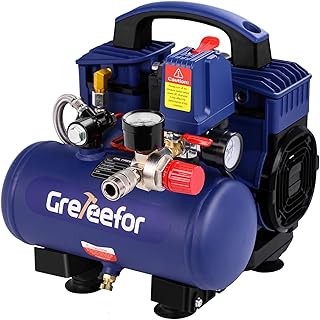
How to Choose a/an Air Compressor For Nail Guns (2026)
- Sound rating in decibels: Treat 60 dB as the practical ceiling for shared living spaces. Because decibels are logarithmic, a 70 dB compressor is not slightly louder than a 60 dB one — it delivers roughly ten times the sound intensity, which is the difference between background hum and a sleeper waking up.
- CFM at 90 PSI, not peak PSI: Brad and finish nailers sip air, typically needing well under 1 CFM in intermittent use. Framing nailers demand far more. Match sustained flow to your heaviest tool, and ignore marketing that leads with maximum pressure alone.
- Tank size versus cycle frequency: A larger tank runs the motor less often, which means fewer noise spikes even if the unit itself is louder. A one-gallon tank stays quiet but restarts constantly. For sleep-sensitive households, fewer long cycles often beat many short ones.
- Oil-free pump design: Oil-free pumps require no maintenance schedule, tolerate cold garages, and can be stored upright without seepage. The tradeoff is slightly more mechanical noise and a shorter service life under daily professional loads.
- Portability and setup friction: Weight and grip design determine whether the compressor moves to the quietest corner of the house or stays wherever it landed. Quick-connect couplers matter too — fewer fumbling seconds means less time with the motor idling.
The Best Air Compressor For Nail Guns (2026)s Reviewed
Metabo HPT EC914S Pancake Compressor, 6 Gallon
With 4 CFM of flow and a 200 PSI ceiling, this is the pick when you’re running framing, siding, or roofing nailers — or two brad guns at once for a build session. It is not a quiet machine, so schedule it for daylight hours, but the six-gallon reserve means far fewer motor cycles than compact units during sustained work.
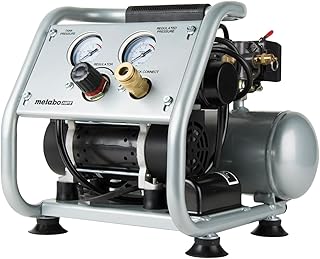
Metabo HPT EC28M Quiet Compressor, 1 Gallon
At a rated 59 dB, this oil-free single-gallon unit sits below the threshold where noise reliably fragments sleep in neighboring rooms, making it our top recommendation for indoor furniture work in occupied homes. The universal quick coupler speeds tool changes, though the small tank means the pump runs often on longer nailing runs.
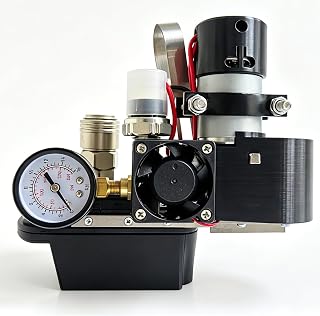
Cordless Tank-Free Compressor Pump (Miwoqi 18V Compatible)
Tank-free and battery-powered, this pump delivers air on demand for trim and woodworking without a cord or a pressure vessel, which makes it genuinely portable for on-site assembly. Expect brief run-ups before each shot rather than instant response, and treat it as a finish-nailing companion, not a framing solution.
14.5 Gallon Ultra Quiet Vertical Compressor, 8.75 CFM
This is the shop anchor: 8.75 CFM and a vertical 14.5-gallon tank mean it can feed multiple tools while cycling rarely, and its 70 dB rating is remarkably restrained for the capacity. The vertical footprint saves floor space, but at this size it earns a permanent home in a garage or basement.
1 Gallon Ultra Quiet Portable Compressor, 60 dB (Violet)
A 13-second fill time and 60 dB output make this compact oil-free unit ideal for quick repairs, upholstery tacking, and light trim work without disrupting the household. The 1.5HP motor punches above the tank size, though heavy continuous nailing will outpace its recovery.
Frequently Asked Questions
How quiet does a compressor need to be for indoor use?
Aim for 60 dB or lower. That range keeps the machine roughly at conversational volume, which is generally tolerable through a closed door and far less likely to wake someone resting nearby.
What CFM do I need for a brad nailer?
Most 18-gauge brad nailers need well under 1 CFM at 90 PSI in normal intermittent use, so nearly any pancake or one-gallon compressor will keep up comfortably.
Is a one-gallon tank too small for furniture projects?
Rarely, for finish work. The limitation is cycle frequency rather than capability — the motor simply restarts more often, which is worth considering if noise is your primary concern.
Do oil-free compressors last as long?
Under hobbyist and light professional use, yes. Oil-lubricated pumps still hold an advantage in daily high-duty environments, but oil-free units eliminate maintenance and cold-weather headaches.
Final Thoughts
For most home furniture builders working in occupied spaces, the Metabo HPT EC28M is the smartest buy — 59 dB is genuinely livable, and it handles every brad and finish nailer you’ll reach for. If you need serious capacity without abandoning quiet operation, the 14.5 Gallon Ultra Quiet vertical compressor delivers 8.75 CFM with impressively few cycles, while the Metabo HPT EC914S remains the value choice for framing-grade work when noise timing isn’t a constraint.