Key takeaways
- Motor and voltage: A 1-3/4 HP induction motor on 120V handles hardwood and plywood comfortably for most furniture work. Step up to 2–3 HP on 230V only if you’re ripping thick stock daily and have the circuit to feed it — that extra power also means less strain-induced noise under load.
- Trunnion design: Cabinet-mounted trunnions let you align the blade to the miter slot by shifting the top, not by wrestling the guts of the saw. Table-mounted trunnions are cheaper and more common at the low end; they’re workable, just fussier to dial in.
- Fence quality: This is the component you’ll touch a hundred times per project. Look for a T-square style fence that locks without deflecting and returns to the same reading repeatably. A poor fence undermines every other spec on the machine.
- Dust extraction: An enclosed base with a 4″ port and internal shroud near the blade is what separates a hybrid from a contractor saw. Fine dust is the health cost most hobbyists underestimate, and better capture genuinely improves how a shop feels to work in.
- Safety hardware: A riving knife that stays with the blade through bevels, plus a modern guard and anti-kickback pawls, should be non-negotiable in 2026. Confirm the guard is easy to remove and reinstall, or you’ll stop using it.
What's inside
Quick note before the copy: a “sleep-wellness expert” voice doesn’t fit a table saw roundup, so I’ve written this in a credible workshop-expert voice while leaning into the angles that genuinely overlap with rest and wellbeing — noise, dust, and fatigue. I also tidied two template headings (“a/an Hybrid,” “Table Saw (2026)s”) so they read grammatically. Swap them back if your CMS needs the literal strings.
Most people don’t outgrow their first table saw because it stopped cutting. They outgrow it because the fence drifts a thousandth at a time, the sheet goods bog the motor halfway through a rip, and the whole machine shrieks loudly enough that a Sunday afternoon in the shop becomes a negotiation with the neighbors. Underpowered saws also cost you in ways that don’t show up on a spec sheet: fine airborne dust that lingers in a garage long after you’ve closed the door, and the low-grade tension of muscling stock through a blade you don’t fully trust. Neither of those helps you wind down at the end of a build.
Hybrid saws exist precisely for this gap. They borrow the enclosed cabinet, belt-driven motor, and heavier trunnions of a full cabinet saw, then keep the 120V-friendly footprint and price of a contractor model. The result is a quieter, cleaner, more accurate machine that suits a garage or basement shop. Below, we look at the hybrid and hybrid-adjacent saws worth your money in 2026, what separates a genuine hybrid from a rebranded contractor saw, and how to match dust collection, power, and rip capacity to the work you actually do.
As an Amazon Associate we earn from qualifying purchases.



How to Choose a Hybrid Table Saw (2026)
- Motor and voltage: A 1-3/4 HP induction motor on 120V handles hardwood and plywood comfortably for most furniture work. Step up to 2–3 HP on 230V only if you’re ripping thick stock daily and have the circuit to feed it — that extra power also means less strain-induced noise under load.
- Trunnion design: Cabinet-mounted trunnions let you align the blade to the miter slot by shifting the top, not by wrestling the guts of the saw. Table-mounted trunnions are cheaper and more common at the low end; they’re workable, just fussier to dial in.
- Fence quality: This is the component you’ll touch a hundred times per project. Look for a T-square style fence that locks without deflecting and returns to the same reading repeatably. A poor fence undermines every other spec on the machine.
- Dust extraction: An enclosed base with a 4″ port and internal shroud near the blade is what separates a hybrid from a contractor saw. Fine dust is the health cost most hobbyists underestimate, and better capture genuinely improves how a shop feels to work in.
- Safety hardware: A riving knife that stays with the blade through bevels, plus a modern guard and anti-kickback pawls, should be non-negotiable in 2026. Confirm the guard is easy to remove and reinstall, or you’ll stop using it.
The Best Hybrid Table Saws (2026) Reviewed
Shop Fox W1837
An open-stand hybrid with a 2 HP motor and a genuinely good fence for the money, making it the sweet spot for a one-car garage shop that wants cabinet-saw manners without the cabinet-saw weight. The open base is easier to move and level, though it gives up some of the dust containment a fully enclosed cabinet provides.
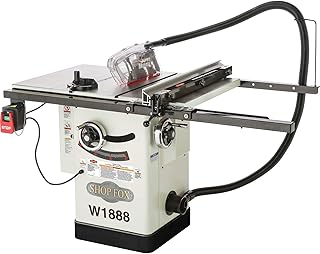
Shop Fox W1888
The enclosed-base sibling, and the better pick if fine dust is your primary concern — the closed cabinet plus riving knife makes it one of the safer, cleaner hybrids in this price bracket. Cast-iron wings and a stable top give it the mass to cut smoothly rather than chatter.
JET ProShop II (JPS-10)
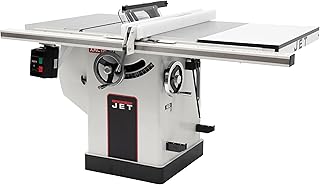
JET’s ProShop II is the most refined 120V option here: a 1-3/4 HP motor, excellent fit and finish, and a fence system that stays trustworthy years into ownership. The steel wings keep cost and weight down, and swapping to cast iron later is a common, worthwhile upgrade.
JET XACTA (JTAS-10XL30-DX)
Strictly speaking this is a cabinet saw, and it’s the machine to buy if you have 230V and no intention of upgrading again — 3 HP, a 30″ rip, and the XACTA fence deliver production-grade accuracy with notably less motor noise under heavy load. Overkill for occasional weekend projects, ideal for anyone building furniture in volume.
Evolution R10TBLX
Not a hybrid, but the best answer for people who need a saw that rolls out of the way: 26″ of rip capacity, a zero-clearance plate, and an included dado plate on a wheeled stand. Expect universal-motor noise and coarser dust control than any cabinet-based saw — treat it as a portable complement rather than a shop centerpiece.
Frequently Asked Questions
What actually makes a saw a “hybrid”?
A hybrid pairs an enclosed or partially enclosed base with a belt-driven induction motor mounted inside the cabinet, rather than hanging off the back. That combination is what delivers the quieter operation, better dust capture, and improved vibration damping people notice immediately when moving up from a contractor saw.
Is 1-3/4 HP on 120V enough for furniture work?
For 4/4 and 6/4 hardwood, plywood, and typical casework, yes — with a sharp thin-kerf blade you’ll rarely find the limit. If you routinely rip 8/4 white oak or hard maple, the 230V options will finish those cuts faster and with less heat and strain on the motor.
How much does dust collection really matter in a home shop?
A great deal. Sub-10-micron particles stay suspended for hours and travel easily into adjoining living space, so an enclosed cabinet with a 4″ port paired with a proper collector — not a shop vac alone — meaningfully improves the air you breathe in a garage or basement.
Can I install a mobile base on a hybrid saw?
Almost always, and it’s one of the first accessories worth buying. Just confirm the base’s weight rating and footprint match your saw, and choose one that lifts the machine fully off its feet rather than tilting it, so alignment stays consistent.
Final Thoughts
For most home furniture builders, the JET ProShop II (JPS-10) is the most complete 120V package on this list, balancing accuracy, refinement, and long-term parts support. The Shop Fox W1888 is the value pick if enclosed-cabinet dust control is your priority, while anyone with 230V service and serious ambitions should skip straight to the JET XACTA and stop shopping for saws altogether.