Key takeaways
- Ambient temperature range: Check the manufacturer’s stated operating range before anything else. Units rated only to about 90°F will run nearly continuously in an uninsulated summer garage, which shortens compressor life and multiplies noise exposure. Garage-tolerant models handle wider swings without the thermostat losing its reference point.
- Structure-borne noise, not just decibels: A published dB figure measures airborne sound in a lab. What travels into a bedroom above is vibration through the slab and studs. Look for a compressor mounted on rubber grommets, a rigid cabinet that doesn’t drum, and feet you can level precisely — then add an anti-vibration mat regardless.
- Refrigerant and efficiency: R600a (isobutane) systems generally run with smaller, smoother compressors and better efficiency than older refrigerant designs. Energy Star certification is a useful shorthand, but pair it with R600a if a quiet, steady cycle is your priority.
- Freezer compartment or none: A true freezer section adds versatility but also adds defrost cycles, which are the loudest, most irregular sounds a small fridge makes. If you only need cold drinks, a chiller compartment or a beverage-only cooler will be noticeably calmer at 2 a.m.
- Door swing and shelf format: Garages are tight, and a door that opens into a car bumper gets left ajar. A reversible door solves this permanently. Glass or slide-out shelves reduce how long the door stays open, which keeps the compressor from launching into a long, loud recovery run.
What's inside
Most garage fridge shopping starts with capacity and ends with price — and that’s exactly why so many buyers end up disappointed. A garage is a punishing place for a compact refrigerator: summer air that climbs past 100°F, winter nights that dip below the temperature range most thermostats were calibrated for, and concrete floors that broadcast every vibration straight into the framing of the house. If your garage shares a wall or ceiling with a bedroom, a nursery, or a home office where someone naps, that vibration matters more than the spec sheet suggests. I’ve spent years advising people on what quietly erodes their sleep, and low-frequency compressor hum transmitted through structure is one of the most commonly overlooked culprits.
This guide looks at compact refrigerators through two lenses at once: whether they can actually survive garage duty, and whether they’ll cycle quietly enough not to intrude on rest. Below you’ll find how to evaluate ambient temperature ratings, refrigerant type, mounting and isolation, and door configuration — followed by focused reviews of the six models worth your attention this year, plus answers to the questions that come up most often once the fridge is already humming away by the workbench.
As an Amazon Associate we earn from qualifying purchases.



How to Choose a Garage Mini Fridge (2026)
- Ambient temperature range: Check the manufacturer’s stated operating range before anything else. Units rated only to about 90°F will run nearly continuously in an uninsulated summer garage, which shortens compressor life and multiplies noise exposure. Garage-tolerant models handle wider swings without the thermostat losing its reference point.
- Structure-borne noise, not just decibels: A published dB figure measures airborne sound in a lab. What travels into a bedroom above is vibration through the slab and studs. Look for a compressor mounted on rubber grommets, a rigid cabinet that doesn’t drum, and feet you can level precisely — then add an anti-vibration mat regardless.
- Refrigerant and efficiency: R600a (isobutane) systems generally run with smaller, smoother compressors and better efficiency than older refrigerant designs. Energy Star certification is a useful shorthand, but pair it with R600a if a quiet, steady cycle is your priority.
- Freezer compartment or none: A true freezer section adds versatility but also adds defrost cycles, which are the loudest, most irregular sounds a small fridge makes. If you only need cold drinks, a chiller compartment or a beverage-only cooler will be noticeably calmer at 2 a.m.
- Door swing and shelf format: Garages are tight, and a door that opens into a car bumper gets left ajar. A reversible door solves this permanently. Glass or slide-out shelves reduce how long the door stays open, which keeps the compressor from launching into a long, loud recovery run.
The Best Garage Mini Fridges (2026) Reviewed
Igloo 3.2 Cu. Ft. Mini Fridge with Freezer
At 3.2 cubic feet with a genuine freezer section and adjustable temperature control, this is the most flexible pick for a garage that doubles as overflow storage. Expect audible defrost cycles, so site it against an exterior wall rather than beneath a bedroom.
Frigidaire Black Retro Mini Refrigerator (1.6 Cu. Ft.)
The retro cabinet is thick-walled and satisfyingly inert, which helps damp compressor resonance, and the side-mounted bottle opener is a genuinely practical touch in a workshop. Its 1.6 cubic feet suits drinks and lunch storage rather than bulk cooling.
BLACK+DECKER 2.5 Cu. Ft. Compact Refrigerator (BCRK25V)
My overall recommendation for noise-sensitive installations: Energy Star certification plus R600a refrigerant means shorter, gentler run cycles, and the chiller compartment covers cold storage without the disruptive defrost behavior of a full freezer.
Frigidaire EFR115 Mini Refrigerator
The slide-out shelves are the quiet star here — they let you retrieve what you need in seconds and close the door before warm garage air floods the cabinet. A dependable, unfussy choice for a 1.6 cubic foot footprint.
Electactic 130-Can Beverage Refrigerator
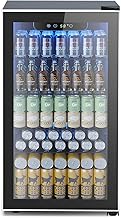
Purpose-built for drinks, with 3.2 cubic feet of rack space and no freezer to defrost, this is the calmest-running unit on the list over a full night. Treat it as a beverage cooler only, not a substitute for a refrigerator.
Frequently Asked Questions
Can a mini fridge in the garage really affect sleep?
Indirectly, yes. Low-frequency hum that transfers through a shared wall or floor can sit below the level you consciously notice while still producing micro-arousals that fragment sleep architecture. Isolating the unit from the slab addresses most of it.
What’s the simplest way to quiet one down?
Place it on a dense rubber anti-vibration mat, level all four feet so nothing rocks, and leave several inches of clearance behind and above the condenser. Avoid pushing it flush against drywall that faces a bedroom.
Will a mini fridge stop working in a cold garage?
It can. Below roughly 40°F, many thermostats sense adequate cold and stop cycling, which allows a freezer compartment to thaw. If your garage drops below freezing, either choose a garage-rated model or relocate the unit seasonally.
Does a freezer compartment matter for garage use?
Only if you’ll actually use it. Freezer sections add heat load, defrost noise, and energy draw. For drinks and snacks, a chiller compartment delivers what you need with less disruption.
Final Thoughts
For the best balance of garage durability and quiet operation, the BLACK+DECKER BCRK25V is my top overall pick thanks to its R600a system and defrost-free chiller design. Choose the Igloo 3.2 Cu. Ft. if you need real freezer capacity and can site it away from sleeping areas, and consider the Electactic beverage cooler if the fridge exists purely to keep drinks cold without ever intruding on the household’s rest.