Key takeaways
- Loft versus body weight: Under 6 inches, heavier sleepers and side sleepers will bottom out at the hip. Aim for 8–10 inches if this is a primary bed; 4–6 inches is adequate for guest use or for back sleepers under roughly 160 pounds.
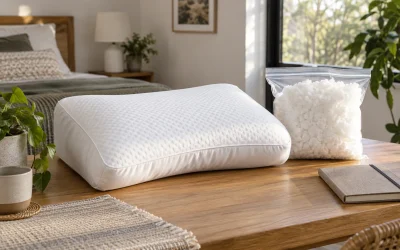
- Fill architecture: Layered high-density foam holds its shape longest and resists the trench that forms under your torso. Shredded foam feels more adaptive and moves easily, but settles unevenly unless you rotate and redistribute it every few weeks.
- Firmness honesty: “Medium firm” on a futon behaves noticeably firmer than the same label on a spring mattress, because there’s no coil unit absorbing load. Side sleepers should size up in loft rather than chasing softness.
- Heat and moisture path: Foam on a floor traps body vapor with nowhere to go, which invites mildew on the underside. Plan to stand the mattress up or fold it back weekly, and choose a removable, machine-washable cover.
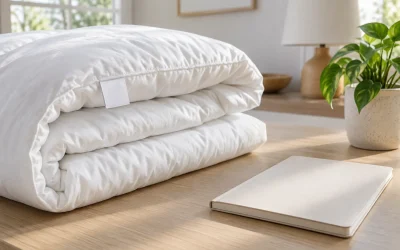
- Fold and storage behavior: Storage straps and a genuine tri-fold or roll design matter far more than listed weight. A queen futon that only folds in half needs about 30 by 60 inches of clear floor to live in — measure your closet before you commit.
What's inside
Queen futons occupy an odd corner of the sleep market. They’re asked to do two jobs that pull in opposite directions: compress into something you can shove in a closet, and still support 150–400 pounds of human body for eight hours a night. Most shoppers discover the tension the hard way — a mattress that felt plush in the unboxing video flattens into a pancake over the hip and shoulder within a month, and they wake up with the low-back ache that comes from sleeping in a hammock shape rather than a neutral spine.
The variables that actually predict comfort are foam density, total loft, and how the fill is structured internally — not thread count, not fabric name, and certainly not the marketing word “ergonomic.” Below I’ve assessed the leading queen-size options for 2026 against those criteria, with attention to who each one genuinely suits: nightly sleepers, occasional guests, floor-sleeping enthusiasts, or people who need the thing to double as a sofa. I’ve also flagged where a spec sheet oversells what the product can deliver.
As an Amazon Associate we earn from qualifying purchases.


🛒 Best Price Today on Amazon
Prime members get fast, free shipping on everything above, plus member-only deals. New members get a 30-day free trial — cancel anytime.
How to Choose a Queen Size Futon Mattress (2026)
- Loft versus body weight: Under 6 inches, heavier sleepers and side sleepers will bottom out at the hip. Aim for 8–10 inches if this is a primary bed; 4–6 inches is adequate for guest use or for back sleepers under roughly 160 pounds.
- Fill architecture: Layered high-density foam holds its shape longest and resists the trench that forms under your torso. Shredded foam feels more adaptive and moves easily, but settles unevenly unless you rotate and redistribute it every few weeks.
- Firmness honesty: “Medium firm” on a futon behaves noticeably firmer than the same label on a spring mattress, because there’s no coil unit absorbing load. Side sleepers should size up in loft rather than chasing softness.
- Heat and moisture path: Foam on a floor traps body vapor with nowhere to go, which invites mildew on the underside. Plan to stand the mattress up or fold it back weekly, and choose a removable, machine-washable cover.
- Fold and storage behavior: Storage straps and a genuine tri-fold or roll design matter far more than listed weight. A queen futon that only folds in half needs about 30 by 60 inches of clear floor to live in — measure your closet before you commit.
The Best Queen Size Futon Mattresses Reviewed (2026)
6th Generation Japanese Floor Futon, 9-Layer
The nine-layer high-density foam stack is the most structurally sound design here, giving genuinely even support across the shoulder-to-hip transition instead of the single dense slab most competitors use. This is the pick for nightly floor sleeping, particularly for couples, though expect a firm first week while the layers settle.
8 Inch Corduroy Futon with High-Resilience Foam
High-resilience foam rebounds faster than standard polyurethane, which means less of that stuck-in-a-mold sensation when you shift position at 3 a.m. The eight-inch loft is the sweet spot for a mattress that has to work as both a bed and a daytime sofa, and the corduroy cover holds up to repeated folding without pilling at the crease.
8″ Roll-Up Futon with Shredded Foam
Shredded fill makes this the easiest eight-incher to roll and stash, and it contours pleasantly around the shoulder for side sleepers. The tradeoff is maintenance: redistribute the fill by hand roughly monthly or you’ll develop a low spot exactly where you sleep.
MAXYOYO 6″ Extra Thick Tatami Pad
At six inches this is the most portable option that still qualifies as a real mattress rather than a topper, and the foldable tatami construction suits RVs, dorms, and rooms that convert back to living space each morning. Best for lighter back sleepers and short-stay guests; heavier side sleepers should move up to eight inches.
10″ Ultra Thick Futon Sofa Bed
Ten inches puts this closest to conventional mattress feel, with enough depth that the floor never announces itself through the foam. The weight and bulk make daily folding a chore, so treat it as a semi-permanent bed rather than a storable one.
Frequently Asked Questions
Can a queen futon replace a real mattress long term?
Yes, provided you choose eight inches or more with layered high-density foam and rotate it regularly. Thin shredded-fill models are better reserved for guests.
Do I need anything underneath it?
On hard flooring, a breathable mat or slatted platform prevents moisture buildup and extends foam life considerably. Carpet needs no barrier, but airing the mattress weekly still matters.
Why does it feel unpleasantly firm at first?
Compressed foam needs 48 to 72 hours to fully expand, and dense layers keep softening for two to three weeks of use. Judge comfort at the one-month mark, not on night one.
How do I clean it?
Unzip and machine-wash the cover cold; spot-clean the core with minimal water and dry it fully upright before folding, since trapped damp foam is where odor problems begin.
Final Thoughts
For nightly use, the 6th Generation 9-Layer futon offers the most durable support structure of anything in this group. If you need one surface to serve as both bed and sofa, the 8 Inch High-Resilience Corduroy model strikes the best balance of loft and foldability, while the MAXYOYO 6″ remains the smartest choice when portability and storage space drive the decision.