Key takeaways
- Tooth count: Match the count to the task. Blades in the 80–100 tooth range leave glass-smooth crosscuts in hardwood, melamine, and veneered plywood, while 40–60 tooth blades clear chips faster and are better suited to framing lumber, deep stock, and general shop work. Fine-finish blades cut slowly by design; forcing them is what burns edges.
- Kerf and plate thickness: Thin-kerf blades remove less material, which means less strain on the motor and less deflection on long miters. Full-kerf plates are stiffer and hold a truer line in dense stock. For most 15-amp miter saws, thin kerf is the sweet spot.
- Grind geometry: An alternate top bevel (ATB) grind slices wood fibers cleanly on both faces and is the standard for finish crosscutting. Steeper high-ATB grinds are gentler still on veneers and pre-finished panels; triple-chip grinds belong on laminates and non-ferrous metals, not on furniture-grade timber.
- Carbide quality and tip size: Not all carbide is equal. Higher-density micro-grain carbide holds a keen edge through more linear feet and survives more resharpenings, which matters more than the sticker price over a blade’s life. Look for substantial tip brazing rather than thin, minimal teeth.
- Arbor, plate treatment, and noise: Confirm your saw takes a 1-inch arbor before ordering, and favor blades with anti-vibration slots, laser-cut expansion gaps, and anti-friction coatings. These features reduce chatter and pitch buildup — and keep late-evening cuts noticeably quieter, which is no small thing if the shop shares a wall with someone sleeping.
What's inside
Anyone who has spent a weekend building a bed frame, a nightstand, or a set of floating shelves for a bedroom knows the moment of truth: the miter joint on the headboard. You measure twice, you clamp carefully, you pull the trigger — and the cut comes off the saw with fuzzy edges, torn grain along the veneer, or a face that refuses to sit flush against its mate. The saw usually isn’t the culprit. The blade is. A stock blade shipped in the box with a 12-inch miter saw is engineered as a compromise, and compromise is exactly what you don’t want on the pieces of furniture people see and touch every day in the room where they rest.
This guide looks at the 12-inch blades worth putting on your saw in 2026, with an emphasis on the kind of work that ends up in a bedroom: hardwood rails, mitered casework, plywood panels, and trim that has to close tight without filler. Below you’ll find the current standouts, a short buying framework covering tooth count, kerf, carbide grade, and arbor fit, plus honest notes on where each blade earns its keep — and where a cheaper option does the job just as well.
As an Amazon Associate we earn from qualifying purchases.
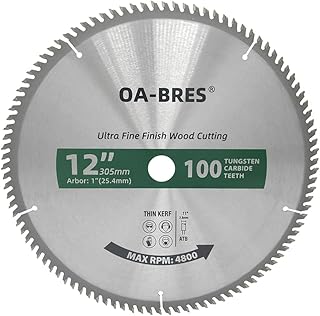


How to Choose a 12in Miter Saw Blade (2026)
- Tooth count: Match the count to the task. Blades in the 80–100 tooth range leave glass-smooth crosscuts in hardwood, melamine, and veneered plywood, while 40–60 tooth blades clear chips faster and are better suited to framing lumber, deep stock, and general shop work. Fine-finish blades cut slowly by design; forcing them is what burns edges.
- Kerf and plate thickness: Thin-kerf blades remove less material, which means less strain on the motor and less deflection on long miters. Full-kerf plates are stiffer and hold a truer line in dense stock. For most 15-amp miter saws, thin kerf is the sweet spot.
- Grind geometry: An alternate top bevel (ATB) grind slices wood fibers cleanly on both faces and is the standard for finish crosscutting. Steeper high-ATB grinds are gentler still on veneers and pre-finished panels; triple-chip grinds belong on laminates and non-ferrous metals, not on furniture-grade timber.
- Carbide quality and tip size: Not all carbide is equal. Higher-density micro-grain carbide holds a keen edge through more linear feet and survives more resharpenings, which matters more than the sticker price over a blade’s life. Look for substantial tip brazing rather than thin, minimal teeth.
- Arbor, plate treatment, and noise: Confirm your saw takes a 1-inch arbor before ordering, and favor blades with anti-vibration slots, laser-cut expansion gaps, and anti-friction coatings. These features reduce chatter and pitch buildup — and keep late-evening cuts noticeably quieter, which is no small thing if the shop shares a wall with someone sleeping.
The Best 12in Miter Saw Blade (2026)s Reviewed
DEWALT 12-Inch 100-Tooth Fine Finish (DWA112100)
A reliably excellent finish blade with tough, ultra-sharp carbide and a plate that stays flat under sustained use, making it the safe default for mitered furniture parts and pre-finished trim. It rewards a slow, steady feed rate; rush it in thick maple and you’ll see scorch marks.
Diablo 12″ x 80T Fine Finish (D1280X)
Diablo’s high-density carbide and thin-kerf plate deliver near-100-tooth surface quality with meaningfully less bogging on smaller saws, and the coating shrugs off resin far better than most. This is the blade I recommend when someone wants one all-rounder for both a miter saw and a table saw.
Freud LU86R012 12″ x 48T Thin Kerf
At 48 teeth, this is the workhorse of the group: fast, clean enough for most joinery, and genuinely versatile across ripping and crosscutting duties. Keep it mounted for construction and rough dimensioning, then swap to a finish blade for show surfaces.
WEN BL1280 12-Inch 80-Tooth
An honest value pick that produces respectable finish cuts in softwoods, plywood, and moderate hardwoods without asking much of your wallet. Expect a shorter service life than premium options, which makes it a smart choice for a single build or as a backup blade.
FOXBC 12-Inch 100-Tooth Polished Finish
A high-tooth-count budget contender that leaves a surprisingly polished edge on veneered panels and thin stock, with a standard 1-inch arbor and adequate anti-vibration detailing. Run it conservatively and clean it often to get the most from it.
Frequently Asked Questions
Is a 100-tooth blade always better than an 80-tooth?
No. More teeth mean smoother cuts but slower feed rates and more heat, so a 100-tooth blade is best reserved for finish crosscuts in thinner stock and sheet goods. For thick hardwood or repetitive cuts, 80 teeth is often the more practical choice.
How do I know when a blade needs sharpening?
Watch for increased feed pressure, burning on the cut face, fuzzy fibers along the edge, and a change in pitch as the blade enters the wood. Before sending it out, clean off pitch with a dedicated blade cleaner — resin buildup mimics dullness surprisingly well.
Can I use these blades on a table saw?
Several are rated for both, provided the arbor size and maximum RPM match your machine and the blade’s hook angle is appropriate. Very low or negative hook angles designed for miter saws will cut slowly and push back on a table saw rip.
Do thin-kerf blades sacrifice accuracy?
Only if the plate flexes. Quality thin-kerf blades use hardened, tensioned plates with stabilizing slots and hold a true line well; problems appear with cheap plates, warped stock, or aggressive side pressure during the cut.
Final Thoughts
For furniture-grade miters where the joint line will be visible forever, the Diablo D1280X offers the best balance of finish quality, motor-friendly thin kerf, and carbide longevity, with the DEWALT DWA112100 a close alternative if you want maximum tooth count for veneers and pre-finished panels. Pair either with the Freud LU86R012 as your everyday blade, and you’ll have a two-blade setup that covers everything from rough stock breakdown to the final, whisper-clean cut on a headboard.