Key takeaways
- Tooth count matched to the task: 40T handles rip cuts and construction stock without bogging; 60–80T is the sweet spot for crosscutting hardwood rails and stiles; 90–100T is reserved for veneered plywood, melamine, and trim where the cut face becomes the finished face. More teeth is not automatically better — too many on a deep rip cut means heat, burning, and a stalled motor.
- Grind geometry: An alternate top bevel (ATB) grind slices wood fibers on both sides of the kerf, which is what suppresses tearout on cross-grain cuts. High-ATB grinds cut cleanest in solid wood; triple-chip grinds last longer in abrasive sheet goods but leave a slightly coarser surface.
- Kerf thickness: Thin-kerf blades (roughly 0.098″) remove less material, load the motor less, and cut with noticeably less vibration and noise — a real consideration if your shop shares a wall with a sleeping household. Full-kerf blades resist deflection better on wide, tall stock.
- Arbor and plate quality: Confirm the 1-inch arbor matches your saw, then look at the plate itself. Laser-cut expansion slots, copper-filled anti-vibration channels, and a hardened, tensioned body keep the blade running flat and quiet as it heats up. A warped plate ruins accuracy no matter how sharp the carbide is.
- Carbide grade and resharpenability: Micro-grain C4 carbide holds an edge dramatically longer than budget tips, and thicker tips can be professionally resharpened several times — which usually makes a premium blade cheaper per cut than replacing three inexpensive ones.
What's inside
Anyone who has spent an afternoon building a headboard, a bed frame, or a set of nightstands knows the moment: the cut looks fine on the saw, but once the piece is standing up in the bedroom, the joint tells on you. A hairline gap at the mitered corner. Tearout along the edge of a walnut rail that no amount of sanding will fully bury. Nine times out of ten the saw isn’t the problem — the blade that shipped in the box is. Stock 12-inch blades are ground for framing lumber, not for the tight, glue-ready joinery that furniture demands.
This guide is written for people building things that live in a bedroom, where quiet operation, clean surfaces, and joints that stay tight through seasonal humidity swings actually matter. Below you’ll find twelve 12-inch miter saw blades worth owning in 2026, followed by a plain-English buying framework, in-depth notes on the five blades I reach for most, and answers to the questions that come up whenever someone upgrades from a stock blade for the first time.
As an Amazon Associate we earn from qualifying purchases.



How to Choose a 12 Blade For Miter Saw (2026)
- Tooth count matched to the task: 40T handles rip cuts and construction stock without bogging; 60–80T is the sweet spot for crosscutting hardwood rails and stiles; 90–100T is reserved for veneered plywood, melamine, and trim where the cut face becomes the finished face. More teeth is not automatically better — too many on a deep rip cut means heat, burning, and a stalled motor.
- Grind geometry: An alternate top bevel (ATB) grind slices wood fibers on both sides of the kerf, which is what suppresses tearout on cross-grain cuts. High-ATB grinds cut cleanest in solid wood; triple-chip grinds last longer in abrasive sheet goods but leave a slightly coarser surface.
- Kerf thickness: Thin-kerf blades (roughly 0.098″) remove less material, load the motor less, and cut with noticeably less vibration and noise — a real consideration if your shop shares a wall with a sleeping household. Full-kerf blades resist deflection better on wide, tall stock.
- Arbor and plate quality: Confirm the 1-inch arbor matches your saw, then look at the plate itself. Laser-cut expansion slots, copper-filled anti-vibration channels, and a hardened, tensioned body keep the blade running flat and quiet as it heats up. A warped plate ruins accuracy no matter how sharp the carbide is.
- Carbide grade and resharpenability: Micro-grain C4 carbide holds an edge dramatically longer than budget tips, and thicker tips can be professionally resharpened several times — which usually makes a premium blade cheaper per cut than replacing three inexpensive ones.
The Best 12 Blade For Miter Saw (2026)s Reviewed
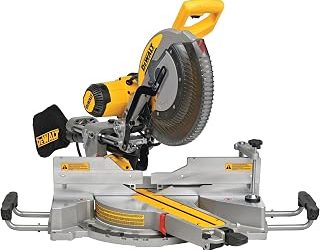
DEWALT 12-Inch 100-Tooth Fine Finish (DWA112100)
This is the blade I hand to someone who wants a predictable, no-drama upgrade: the tungsten carbide teeth leave a surface on maple and oak trim that needs little more than a scuff-sand before finishing. It’s happiest on crosscuts and miters in stock under about 3 inches thick — push it through deep rips and you’ll feel it work.
FOXBC 12-Inch 100-Tooth Polished Finish
A genuine value standout for anyone cutting cabinet-grade plywood or pre-finished bed rails, where chip-out on the veneer face is the difference between a tight reveal and a visible flaw. The polished plate sheds pitch well, which keeps friction and burning down over long sessions.
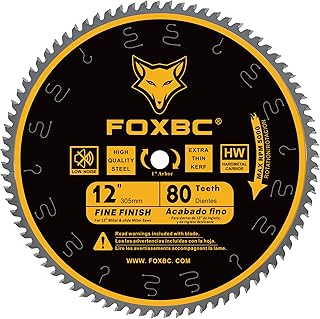
FOXBC 12-Inch 80-Tooth Fine Finish Crosscut
My pick for the most useful single blade in a furniture shop: 80 teeth is enough to leave a clean, glue-ready shoulder on hardwood while still clearing chips fast enough to avoid heat marks in cherry. If you only want to change blades once a month, start here.
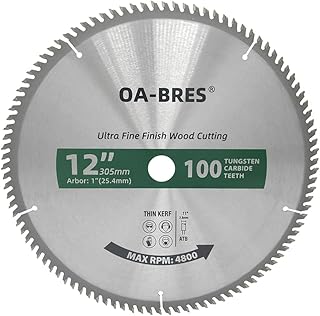
12-Inch 100-Tooth ATB TCT Ultra Fine Finish
The high ATB grind is the story on this one — it shears cross-grain fibers cleanly enough that mitered picture-frame and drawer-front joints close without a witness line. Keep it away from nails, staples, and reclaimed stock; those fine bevels are delicate by design.
ANGELSWORD 12-Inch 40T + 60T Two-Pack
An unusually sensible starter kit: the 40-tooth handles ripping and rough breakdown, the 60-tooth covers general crosscutting and light finish work, and together they cost less than most single premium blades. Fit and finish are a step below the name brands, but the pairing teaches you exactly why tooth count matters.
Frequently Asked Questions
How often should I replace or sharpen a 12-inch blade?
Sharpen when the cut starts requiring noticeably more feed pressure, when you see burn marks on clean stock, or when tearout appears where it didn’t before. A quality blade typically survives three to five professional sharpenings; cheap blades are usually cheaper to replace.
Can I use a 100-tooth blade for everything?
You can, but you shouldn’t. Fine-tooth blades have tiny gullets that can’t evacuate chips from thick or wet stock, which causes heat buildup, burning, and premature dulling. Keep a 40T or 48T blade mounted for rough work.
Is a thin-kerf blade worth it on a 12-inch saw?
Usually yes. Less material removal means lower load, less vibration, and a quieter cut — the Freud LU86R012 thin-kerf general purpose blade is a good example of how much smoother a properly tensioned thin plate feels on a sliding miter saw.
Why are my miters still gapping with a new blade?
Almost always the saw, not the blade. Verify that the fence is square to the table, the detents are calibrated, and the workpiece is held firmly against the fence without deflecting mid-cut. A sharp blade exposes alignment errors rather than hiding them.
Final Thoughts
If you build furniture and want one blade that earns its keep, the FOXBC 80-Tooth crosscut blade is the most versatile choice here — clean enough for visible joinery, tough enough for daily hardwood work. Step up to the DEWALT DWA112100 when veneered panels and finish trim are the priority, and keep the Freud LU86R012 thin-kerf on hand for smooth, low-vibration general-purpose cutting when you’d rather not wake the whole house.