Key takeaways
- Steel gauge and frame welds: 16-gauge steel is the practical floor for daily professional use. Thinner shells flex under loaded drawers, and once a cabinet racks out of square, the slides never run true again. Check whether corners are welded or simply riveted.
- Drawer slides and per-drawer rating: Ball-bearing slides rated at 90–100 lbs per drawer are what separate a tool chest from a filing cabinet. Deep bottom drawers should still glide when loaded with impact guns and breaker bars, not just hand tools.
- Casters and real-world mobility: Look for 5-inch or larger casters with at least two locking swivels. Small wheels catch on expansion joints, cords, and drain grates — the exact obstacles a garage floor is full of.
- Work surface you’ll actually use: Solid hardwood tops absorb impact and won’t telegraph scratches into your paintwork the way bare steel does. If you assemble, press, or tap on the chest, a 1.2-inch wood top is worth the premium.
- Power, pegboard, and security: Integrated outlets end the extension-cord sprawl, pegboards get frequently grabbed tools out of drawers entirely, and a single-point lock matters in any shared or shop environment.
What's inside
Ask a working mechanic what wears them down and the answer is rarely the hard jobs. It’s the small friction: the fourth trip across the bay to find a 10mm, the drawer that sticks in humid weather, the stack of sockets balanced on a fender because there’s nowhere else to put them. That friction accumulates, and it follows people home. As someone who spends most days talking with clients about recovery and sleep quality, I’ve noticed a pattern worth naming — people who finish a shift feeling scattered tend to keep replaying the day at 1 a.m. A workspace that closes cleanly at the end of a job helps the mind close too.
That’s the lens I’ve applied to this guide. Below you’ll find rolling tool chests suited to real mechanical work — heavy drawer loads, mobility across concrete, lockable storage, and integrated power. I’ve weighed steel gauge, slide quality, top surface material, and total capacity, then flagged who each unit actually suits. Whether you’re outfitting a professional bay or finally reclaiming a corner of the garage, the goal is the same: everything has a home, and you leave knowing where it is.
As an Amazon Associate we earn from qualifying purchases.




How to Choose a Tool Chest For Mechanics (2026)
- Steel gauge and frame welds: 16-gauge steel is the practical floor for daily professional use. Thinner shells flex under loaded drawers, and once a cabinet racks out of square, the slides never run true again. Check whether corners are welded or simply riveted.
- Drawer slides and per-drawer rating: Ball-bearing slides rated at 90–100 lbs per drawer are what separate a tool chest from a filing cabinet. Deep bottom drawers should still glide when loaded with impact guns and breaker bars, not just hand tools.
- Casters and real-world mobility: Look for 5-inch or larger casters with at least two locking swivels. Small wheels catch on expansion joints, cords, and drain grates — the exact obstacles a garage floor is full of.
- Work surface you’ll actually use: Solid hardwood tops absorb impact and won’t telegraph scratches into your paintwork the way bare steel does. If you assemble, press, or tap on the chest, a 1.2-inch wood top is worth the premium.
- Power, pegboard, and security: Integrated outlets end the extension-cord sprawl, pegboards get frequently grabbed tools out of drawers entirely, and a single-point lock matters in any shared or shop environment.
The Best Tool Chest For Mechanics (2026)s Reviewed
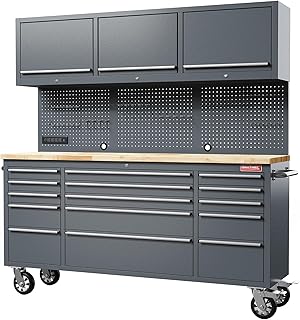
HAUTMEC 72″ Rolling Tool Chest, 15 Drawers
This is the most complete package here: 16-gauge steel, a solid oak top, three upper cabinets, ETL-listed power strip, and a pegboard with 51 hooks. If you want one unit to serve as storage, workbench, and charging station for a full professional tool set, this is the configuration I’d point to first.
Garvee 60″ Rolling Tool Chest, 10 Drawers
A 1,750-lb load rating and a 60-inch footprint make this the sweet spot for a two-car garage that still needs to park cars. The built-in charging station and pegboard cover most daily-driver tasks without the bay space a 72-inch chest demands.
72″ Rolling Tool Chest, 1.2″ Solid Wood Top
The 18-inch-deep drawers and thick hardwood surface make this the better choice for anyone doing genuine bench work — pressing bearings, rebuilding calipers, laying out a disassembled assembly. Fifteen drawers plus an outlet and pegboard keep the surface clear while you work.
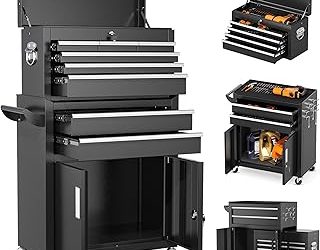
8-Drawer Rolling Tool Chest, Detachable Top
The detachable top box is the standout feature: lift it off and carry it to the job, or leave it seated for a full-height chest. Drawer liners and tray dividers come included, which is a meaningful cost saving over buying organization separately.
5-Drawer Rolling Tool Chest Cart
The right answer for mobile diagnostics, side work, or a first serious upgrade from a plastic toolbox. It locks, it rolls easily, and it holds a solid core hand-tool set without committing floor space you don’t have.
Frequently Asked Questions
How many drawers do I actually need?
Most home mechanics are well served by 8 to 10 drawers; professionals running full metric and SAE sets plus specialty tools should plan on 15 or more. Err upward — chests fill faster than anyone predicts.
Is a wood top better than steel?
For hands-on work, yes. Hardwood dampens impact, protects finished parts you set down, and can be sanded and re-oiled after years of abuse. Steel is easier to wipe clean but shows every mark.
Can these be moved on a loaded chest?
Yes, provided you buy adequate casters. Distribute heavy items in the lowest drawers, close everything before moving, and always lock the swivels once positioned.
Does assembly require help?
Larger 60- and 72-inch units arrive heavy and awkward; plan on a second person for uncrating and caster installation even when the cabinet itself ships assembled.
Final Thoughts
For a full professional setup, the HAUTMEC 72″ chest delivers the most capability per dollar, while the 72″ solid wood top model is the one I’d choose for serious bench work. If space or budget is tighter, the Garvee 60″ strikes an excellent balance — and whichever you pick, the real return is walking out of the garage with nothing left unfinished on your mind.