Key takeaways
- Buying a home blood pressure monitor for the first time is mostly a hardware decision: cuff size, display, memory, power source.
Buying a home blood pressure monitor for the first time is mostly a hardware decision: cuff size, display, memory, power source, and whether it talks to a phone. If you are new to these devices, the sheer number of near-identical listings can be confusing, and the marketing language on the product pages tends to lean on medical-sounding phrases that tell you little about how the device is built or how pleasant it is to use every morning.
This guide stays on the buyer side. It does not interpret readings or make health claims, and it is not a substitute for guidance from a clinician or the manufacturer’s instructions. Instead it compares six upper-arm monitors under 150 dollars by the features stated in their listing titles: cuff range, screen, memory, number of user profiles, and connectivity. Where a title is cut off or garbled, confirm details on the listing. In 2026, as before, the right first monitor is the one that fits your arm and that you will actually use on a routine.
Quick Picks
Our top picks


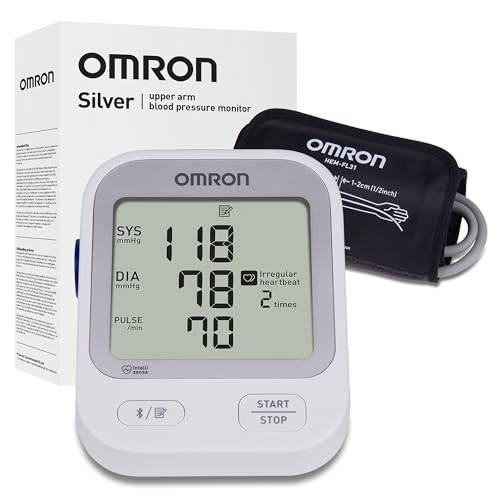
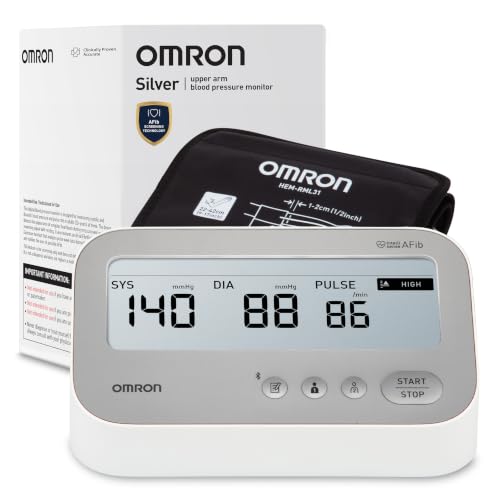


As an Amazon Associate we earn from qualifying purchases at no extra cost to you.
| Product | Best for | Key spec from the title |
|---|---|---|
| OMRON Evolv Wireless Monitor | Phone-connected home use | Wireless, upper arm cuff, app connection |
| Adjustable Arm Cuff Monitor with Storage Bag | Simple operation and travel storage | 8.7 to 16.5 inch cuff, LED backlight display |
| Basic Care Wide Range Monitor | Larger arms and a no-frills setup | Wide range arm cuff, intelligent inflation |
| Accurate Upper Arm Monitor, Black | Two people sharing one device | Large LCD, dual user, 120 sets memory |
| No-Wrap Upper Arm Monitor | Easy cuff placement | Auto-fit 8.7 to 15.7 inch arms, 3 users |
| iHealth Track Pro | App sync with a large cuff range | Full-view LED screen, 8.7 to 16.5 inch cuff |
How to Choose
Start with cuff size
The cuff is the most important physical spec. Listings quote a range in inches, commonly 8.7 to 16.5 inches for adjustable cuffs, which is meant to cover a wide span of upper-arm circumferences. Measure your upper arm with a soft tape and compare it with the range, leaving a little margin at each end. A cuff that is clearly too small or too large for your arm is a poor fit for any device, no matter how many features it has. If you share the monitor, make sure the range suits every user. Measure at the same spot each time, roughly midway between the shoulder and the elbow, and note the number on a scrap of paper that lives next to the device so you can check the fit against the cuff markings. Cuff markings or index lines, when present, are there to confirm a proper fit, so look for them in the listing photos.
Look at the display and controls
A beginner benefits from a large screen with big digits and a backlight, since you may read the monitor in a dim bedroom or first thing in the morning. One-button operation reduces mistakes. Titles that mention a full-view LED or a large LCD are describing exactly this. Voice prompts, where listed, are a bonus for people with limited vision, but confirm on the listing since they are rarely stated in titles. Also look at the tubing and the cuff connector: a tube that is long enough to reach a chair or table comfortably makes daily use less awkward, and a sturdy connector is the part that tends to wear first on budget devices. A clear, printed quick-start guide in the box helps a beginner as much as any feature.
Memory, users, and apps
Memory capacity is quoted as a number of stored sets, such as 120 or 199, sometimes split across two users. A monitor with multiple user profiles keeps each person’s history separate, which matters in a household. App connectivity lets you export history to a phone, which some buyers find handy for sharing logs with a clinician. If you prefer paper, a device with plenty of on-board memory and no app is perfectly fine.
Power, portability, and listing language
Check whether the monitor runs on batteries, an adapter, or a USB cable, and whether the adapter is included. A storage bag is useful for keeping the cuff and tube tidy. Be careful with listing language such as clinically validated, FDA-cleared, or physician endorsed: these are statements made by sellers, and the listing is the place to confirm what documentation exists. Treat them as prompts to verify, not as proof of anything.
The 6 Best Options
OMRON Evolv Wireless Monitor
The Evolv is listed as a wireless upper-arm monitor from a widely known brand, aimed at home use and connected to a phone app. For a beginner who likes the idea of keeping a history on a phone and wants a recognizable name on the box, that is the appeal. The listing leans heavily on brand reputation and endorsement language, which is worth treating as marketing and checking against the product documentation.
- Wireless connection to a phone app means less manual note-taking.
- A well-known maker usually means plenty of setup guides and support material.
- Trade-off: the cuff range is not clear in the title, so confirm that it fits your arm on the listing.
Skip it if you do not want to use a phone app at all, or if your upper arm falls outside the cuff range stated on the listing.
Adjustable Arm Cuff Monitor with Storage Bag
This unbranded-style listing highlights an adjustable cuff for arms from 8.7 to 16.5 inches, an LED backlit display, and a storage bag, pitched as easy to operate. The cuff range is generous, and the bag makes it simple to keep the cuff, tube, and monitor together between uses or on a trip. It reads as a practical, no-frills pick for first-timers who want the basics without an app.
- A wide adjustable cuff range covers many upper-arm sizes.
- The backlit display is easy to read in low light or early in the morning.
- Trade-off: with a generic listing, confirm the memory capacity and power details on the listing.
Skip it if you want a familiar brand name, or an app that stores your readings automatically on your phone.
Basic Care Wide Range Monitor
This store-brand monitor advertises a wide-range arm cuff, intelligent inflation technology, home use, and indicator and irregular-heartbeat features as listed in its title. For buyers with larger arms, or who simply want a straightforward store-brand device, the wide cuff range is the main selling point. It is the kind of monitor that keeps the buying decision simple and the setup short.
- A wide-range cuff suits a broad span of arm sizes.
- Automatic inflation reduces the manual steps in each use.
- Trade-off: the title is long and partly cut off, so confirm memory and display specs on the listing.
Skip it if you want app syncing, if you need multiple user profiles, or if you would rather buy from a specialist health brand.
Accurate Upper Arm Monitor, Black
This listing stresses a large LCD, a dual-user mode with 120 sets of memory, and an adjustable cuff, with a black finish. Two profiles with their own stored sets make it a fit for couples or parents who share one device, so each person’s history stays separate rather than mixing in a single long list. The large screen is a plus for anyone who prefers big digits.
- Dual-user mode keeps two people’s histories separate.
- A large LCD is easy to read at a glance, even from a few feet away.
- Trade-off: the title uses words like accurate and clinically validated, which are seller claims to verify on the listing.
Skip it if more than two people will use the device, or if you want wireless sync with a phone.
No-Wrap Upper Arm Monitor
This one centers on a no-wrap design: a cuff that auto-fits arms from 8.7 to 15.7 inches with one-touch operation and room for three users with 199 memories each. The no-wrap shape appeals to people who struggle to fasten a conventional cuff on their own, since the arm slides in rather than being wrapped around. The multi-user memory suits a household.
- Easier cuff placement for people who find wrapping awkward.
- Three user profiles with large memory capacity suit a family.
- Trade-off: the cuff range tops out at 15.7 inches, narrower than some rivals.
Skip it if your arm is near or above the top of the stated range, or if you want the flexibility of a traditional adjustable wrap that can stretch to unusual arm sizes at either end of the range.
iHealth Track Pro
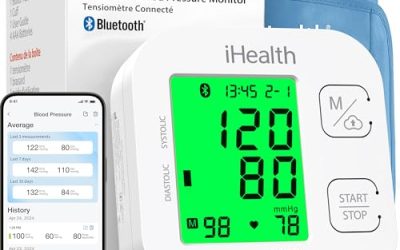
The Track Pro is an upper-arm monitor with app sync, a full-view LED screen, and an 8.7 to 16.5 inch adjustable cuff suited to larger adult arms, according to the title. App syncing keeps a history on your phone without manual notes, and the wide cuff range covers many arm sizes. It suits people who already track other things on their phone and want one more entry in the same place.
- App sync keeps a running record on a phone.
- The full-view LED screen is easy to read.
- Trade-off: it relies on a companion app, which some buyers would rather avoid.
Skip it if you do not want to pair a monitor with a phone, or if you prefer a device that works entirely on its own screen.
Which One Fits Your Situation
You are buying for the first time and want simple
The adjustable cuff monitor with a storage bag keeps things straightforward with a backlit screen and a wide cuff range. It makes sense when you want to learn the routine before deciding whether you need extra features, and the storage bag keeps the cuff from tangling in a drawer.
Two people will share it
The dual-user listing, or the no-wrap model with three profiles, separates histories for a household. In a shared home that matters more than any extra screen feature, because mixed-up records are hard to untangle later, and a quick label on the user buttons avoids mistakes.
You like apps
The iHealth Track Pro and the OMRON Evolv are the app-connected picks in this list. Make sure your phone is compatible before you order, and decide up front whether you are comfortable creating an account to use the app.
You have a larger arm
Check the cuff range first. The Basic Care wide-range listing and the 8.7 to 16.5 inch options are the ones to compare.
Common Mistakes
- Skipping the arm measurement before buying.
- Treating marketing words like accurate or clinically validated as proof.
- Buying a wireless model without checking phone compatibility.
- Ignoring the power source and forgetting batteries or an adapter.
- Sharing a single-user device and mixing up histories.
Related guides
- Infrared Thermometer For Beginners Under $100
- Digital Thermometer For Beginners Under $100
- Ergonomic Pillow For Beginners Under $100
Frequently Asked Questions
How do I choose the right cuff?
Measure your upper arm and pick a monitor whose stated range includes that number with a little margin.
Do I need an app?
No. An app is a convenience for storing history, and a monitor with on-board memory works fine without one.
Should I trust listing claims about validation?
Treat them as a reason to check the documentation, and follow the manufacturer’s instructions and a clinician’s guidance for how to use the device.
What is the benefit of multiple user profiles?
They keep each person’s stored sets separate, which makes shared use less confusing.
More from Amazon
Programs that pair well with the guide above. Offers and eligibility are set by Amazon and may change.
Collect the home and kitchen items you want in one registry that guests can shop from.
Create a wedding registrySet up recurring deliveries of everyday items on eligible products. Terms and savings are set by Amazon.
Explore Subscribe & SaveFree shipping on eligible items, Prime Video and more. Eligible new members can start with a free trial.
Start a Prime free trialAudiobooks and podcasts to listen to on the go. Eligible new members can start with a free trial.
Try Audible freeAs an Amazon Associate we earn from qualifying purchases.