Key takeaways
- The first question when choosing the best blood pressure monitor under 150 dollars is not which brand, it is which cuff fits your arm.
The first question when choosing the best blood pressure monitor under 150 dollars is not which brand, it is which cuff fits your arm. An upper-arm monitor only works as intended when the cuff wraps your arm correctly, so cuff range, memory for more than one person, and a display you can read without glasses matter more than long feature lists. This guide centers on upper-arm models and the fit questions that decide whether one suits a household.
It is written for buyers in 2026 who want a home unit to keep on a shelf, and it is not medical advice. Nothing here promises accuracy or tells you what a reading means, because neither can be judged from a product title. Talk to a clinician about targets, readings, and symptoms, and follow the maker’s manual for use. Two wrist models from the original group are left out, since wrist units are covered in a separate guide.
Quick Picks
Our top picks


As an Amazon Associate we earn from qualifying purchases at no extra cost to you.
| Product | Best for | Key spec from the title |
|---|---|---|
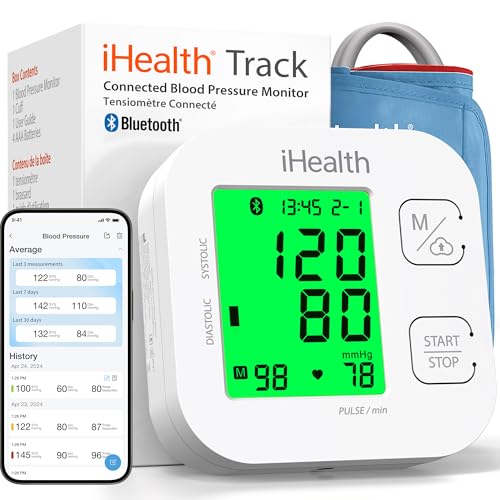
| iHealth Track smart upper arm | Phone-synced logs | Bluetooth, wide-range cuff, iOS and Android |
| Oklar upper arm monitor | Two-person homes | 2×120 memory, large LED display, 8.7 to 15.7 inch cuff |
| Sinocare upper arm monitor | One-button simplicity | 8.6 to 16.5 inch cuff, dual user, one-button |
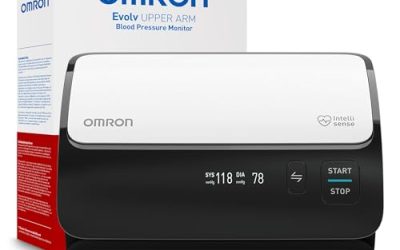
| OMRON Bronze upper arm | Brand-name familiarity | Upper arm cuff, clinically validated wording |
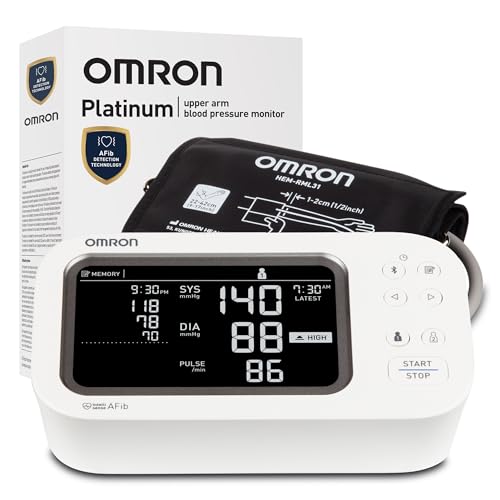
| OMRON Platinum upper arm | Same family, higher tier | Upper arm cuff, clinically validated wording |
| Alcedo talking monitor | Low-vision users | Talking function, large LCD, 8.7 to 16.5 inch cuff |
How to Choose
Measure your arm before you shop
Wrap a soft tape measure around your bare upper arm, midway between shoulder and elbow, and note the circumference in inches. Keep the tape snug but not tight, and measure the arm you plan to use, since the two can differ slightly. Cuff ranges in these titles run from roughly 8.6 to 16.5 inches. A cuff that is too small or too large changes the result, which is why a wide-range cuff is worth paying attention to. If your arm is near an edge of the range, look for a model with a larger cuff option rather than hoping it will work. Check the manual for how the cuff should sit, usually about an inch above the elbow crease, with the tube running down the inside of the arm.
Memory, users, and logs
Two-user memory with 120 or more readings per person suits couples who share a monitor. Bluetooth models send readings to a phone app, which is easier to share with a clinician than a paper log, but it adds an account and a phone requirement. A basic memory with a clear date and time stamp is enough for many households, as long as you can find it quickly. If more than one person uses the unit, make sure each person has a separate slot and that everybody knows which button selects theirs.
Display, voice, and operation
A large backlit or LED display helps older users and dim bedrooms. A talking function reads the result aloud, a real accessibility feature for low vision. One-button operation reduces mistakes, but fewer buttons also mean fewer features. Check that the monitor can run on batteries or an adapter you will actually use, since a dead unit at the wrong moment is useless. Some models accept an AC adapter, which is handy for a bedside spot where batteries tend to run down unnoticed.
What titles cannot tell you
Phrases such as “clinically validated” or “FDA cleared” are the maker’s wording, and the listing page is where to read what they cover. Neither is a promise about how a monitor will perform on your arm. Pair any purchase with proper technique from the manual: sit still, feet flat, arm supported at heart level, and avoid talking while the cuff inflates. Rest for a few minutes beforehand, skip caffeine and exercise just before, and take readings at similar times of day so they are easier to compare with a clinician.
The 6 Best Options
iHealth Track smart upper arm monitor
iHealth Track is a Bluetooth upper-arm monitor with a wide-range cuff described as fitting standard to large adult arms, and it works with iOS and Android. It is the pick for people who want readings logged in an app and shared easily with a clinician rather than copied into a notebook. The wide cuff range is the feature to look at first for larger arms, and the app is the feature to look at first if you dislike paper logs.
- Strength: Bluetooth sync with iOS and Android.
- Strength: wide-range cuff for standard to large arms.
- Trade-off: it depends on a phone and an app, which not everyone wants.
Skip it if you prefer a stand-alone unit with no app, or if you do not want to manage another account on your phone.
Oklar upper arm blood pressure monitor
Oklar lists FDA clearance wording, a 2×120 memory for two users, a large LED display, and an adjustable cuff from 8.7 to 15.7 inches. It suits a two-person household that wants separate memories and a screen that is easy to read from a few feet away. The cuff range is slightly narrower at the top than some competitors, so measure your arm before you decide, and read the listing for what the clearance wording covers.
- Strength: two-user memory with 120 readings each.
- Strength: large LED display for easy reading.
- Trade-off: the upper end of the cuff range stops at 15.7 inches.
Skip it if your upper arm is larger than the stated range, or if you want phone connectivity and app logs.
Sinocare upper arm blood pressure monitor
Sinocare offers an adjustable cuff from 8.6 to 16.5 inches, one-button operation, and a dual-user setup. The wider range covers more arms than most in this tier, and the single button keeps it easy for family members who are not comfortable with gadgets. It is a plain, practical choice for a shared home where nobody wants to read a long manual before taking a measurement.
- Strength: broad cuff range up to 16.5 inches.
- Strength: one-button operation with dual-user memory.
- Trade-off: the title is cut off, so confirm display size and power options.
Skip it if you want app syncing, voice output, or a larger display, since the title mentions none of them. Its strength is breadth of fit and simple operation, so judge it on those two points alone.
OMRON Bronze upper arm monitor
OMRON Bronze is an upper-arm monitor from a widely known brand, and the listing uses clinically validated wording that is the maker’s own statement. The entry tier of the OMRON line is the pick for people who prefer a familiar name and straightforward operation over a long feature list. The title is cut off, so confirm memory, cuff range, and power details on the page before you buy.
- Strength: established brand with a clear upper-arm design.
- Strength: simple positioning as an everyday home monitor.
- Trade-off: key specs such as cuff range are not visible in the title.
Skip it if you need voice output or Bluetooth, or if your arm is outside the standard cuff size and you cannot confirm a larger cuff.
OMRON Platinum upper arm monitor
OMRON Platinum belongs to the same family at a higher tier, with the same upper-arm design and clinically validated wording in the title. Buyers who like the brand but want more than the entry model can consider it, though the title gives no detail on what the extra tier adds. Read the listing closely and compare the feature tables of the two models to see what actually differs.
- Strength: same familiar-brand upper-arm form as the Bronze.
- Strength: higher tier suggests added features worth checking.
- Trade-off: the title does not say what the added tier includes.
Skip it if the extra features are not clear on the listing, or if you would rather keep things as simple as possible. Comparing two near-identical brand tiers by title alone is guesswork, which is a reason to read both listings in full.
Alcedo talking blood pressure monitor
Alcedo pairs a large LCD with a talking function, a 2×120 memory, and a large cuff for arms up to 16.5 inches. The voice output reads results aloud, a real aid for low vision, and the large screen helps everyone else. Battery wording is cut off in the title, so confirm power options before ordering, and look for volume controls if the unit will be used in a quiet bedroom.
- Strength: talking function reads the result aloud.
- Strength: large LCD and a cuff range up to 16.5 inches.
- Trade-off: the title cuts off on battery details.
Skip it if you want a silent unit, a phone-synced log, or a monitor with a smaller footprint for a drawer. Voice output also reads aloud in shared rooms, so privacy-minded users may want to find out how to mute it.
Which One Fits Your Situation
A couple sharing one monitor
The Oklar and the Sinocare both offer dual-user memory. Pick the Sinocare for a wider cuff range or the Oklar for its large LED display. Agree on a simple routine so each person selects the right user slot before pressing start.
Someone with a larger upper arm
Start with the Sinocare or the Alcedo, which list cuffs up to 16.5 inches, or the iHealth Track with its wide-range cuff. Measure first and confirm on the listing.
Low vision or hearing aids in daily use
The Alcedo’s talking function reads out results, which can be easier than reading a screen. Check the volume options on the listing, and ask whoever helps with the readings to try the voice prompt before you commit.
Someone who wants logs to share
The iHealth Track syncs with a phone app, which helps when you want to show readings to a clinician. Remember that the app needs a phone with Bluetooth turned on, so it is less convenient for a household that shares a single basic phone.
Common Mistakes
- Skipping the arm measurement and buying a cuff that is too small or too large.
- Measuring over a sleeve or while talking, which changes the reading, or taking one right after a walk up the stairs.
- Treating a single number as a diagnosis instead of asking a clinician.
- Choosing app features the household will never use.
- Forgetting spare batteries or the correct adapter.
Related guides
- Wrist Blood Pressure Monitor Under $150
- Pillows For Sleeping On Back And Side
- Memory Foam Pillows For Side Sleepers
Frequently Asked Questions
Is an upper-arm monitor better than a wrist one?
Many clinicians favor upper-arm cuffs for home use, but your own clinician is the right person to ask. Fit and technique matter for both types, and upper-arm models usually offer a wider choice of cuff sizes, which is the point of this guide.
How do I know the cuff fits?
Measure your arm and compare it to the cuff range on the listing. The cuff should wrap snugly at heart level without gaps or pinching.
Does “FDA cleared” mean a monitor is accurate?
It is the maker’s wording about a regulatory status. It is not a promise about your readings, so read the listing and follow the manual.
Can this guide tell me what my readings mean?
No. This guide covers buying features only. Ask a clinician about targets, symptoms, and what to do about any reading.
More from Amazon
Programs that pair well with the guide above. Offers and eligibility are set by Amazon and may change.
Collect the home and kitchen items you want in one registry that guests can shop from.
Create a wedding registrySet up recurring deliveries of everyday items on eligible products. Terms and savings are set by Amazon.
Explore Subscribe & SaveFree shipping on eligible items, Prime Video and more. Eligible new members can start with a free trial.
Start a Prime free trialAudiobooks and podcasts to listen to on the go. Eligible new members can start with a free trial.
Try Audible freeAs an Amazon Associate we earn from qualifying purchases.