Key takeaways
- Fiber type: Polypropylene and polyester dominate outdoor use because the fibers are hydrophobic — water sits on them rather than wicking in. Natural jute and cotton look beautiful for a fortnight and then rot. If you want the linen aesthetic, buy a synthetic that mimics the slub texture rather than the real thing.
- Denier and weight: On by-the-yard canvas, look for 600D construction and a listed weight around 220gsm. Denier describes yarn thickness; higher numbers resist abrasion from chair feet and grit. Anything markedly lighter belongs on a tent, not a floor.
- UV rating over water rating: Almost every outdoor fabric repels water adequately. Far fewer hold colour. Prioritise explicit fade and UV resistance — a UPF50+ designation is a strong signal — because sun damage is irreversible and shows up as a chalky, washed-out patch within one season.
- Drainage and backing: Flat-weave and open-back constructions let water pass through and air-dry from both sides. Solid rubber backings trap humidity against decking, which encourages mildew and can stain composite boards. Non-slip is worth having; fully sealed is usually not.
- Cleanability: Choose something you can hose, scrub, and in smaller sizes machine-wash. Stain-resistant treatments matter far less than the ability to actually flush debris out of the weave without the rug taking three days to dry.
What's inside
Anyone who has tried to turn a patio into a genuine retreat knows the frustration: you invest in the loungers, the shade, the string lights — and then the rug underfoot goes chalky after one summer, curls at the corners, or holds damp long enough to smell of pond water by August. Outdoor textiles fail in ways indoor ones never do, because they’re fighting UV radiation, temperature swings, and moisture that has nowhere to go. As someone who spends a great deal of time helping people engineer restful spaces, I’d argue the floor matters more than most people credit. Texture underfoot is one of the first sensory cues your nervous system registers when you step outside to unwind, and a stiff, gritty, or sun-bleached surface quietly undermines the whole effect.
This guide looks at outdoor rug fabric from two directions. First, the finished rugs — woven polypropylene and linen-look constructions that survive a season of shoes, rain, and dog naps. Second, the fabric by the yard, which is the option most people overlook: marine-grade canvas and Oxford polyester that let you bind your own runner, patch a worn edge, or make matching cushion covers so the whole space reads as one deliberate room rather than a collection of leftovers. Below you’ll find what actually separates durable outdoor fabric from optimistic marketing, followed by my picks.
As an Amazon Associate we earn from qualifying purchases.



How to Choose a Fabric For Outdoor Rug (2026)
- Fiber type: Polypropylene and polyester dominate outdoor use because the fibers are hydrophobic — water sits on them rather than wicking in. Natural jute and cotton look beautiful for a fortnight and then rot. If you want the linen aesthetic, buy a synthetic that mimics the slub texture rather than the real thing.
- Denier and weight: On by-the-yard canvas, look for 600D construction and a listed weight around 220gsm. Denier describes yarn thickness; higher numbers resist abrasion from chair feet and grit. Anything markedly lighter belongs on a tent, not a floor.
- UV rating over water rating: Almost every outdoor fabric repels water adequately. Far fewer hold colour. Prioritise explicit fade and UV resistance — a UPF50+ designation is a strong signal — because sun damage is irreversible and shows up as a chalky, washed-out patch within one season.
- Drainage and backing: Flat-weave and open-back constructions let water pass through and air-dry from both sides. Solid rubber backings trap humidity against decking, which encourages mildew and can stain composite boards. Non-slip is worth having; fully sealed is usually not.
- Cleanability: Choose something you can hose, scrub, and in smaller sizes machine-wash. Stain-resistant treatments matter far less than the ability to actually flush debris out of the weave without the rug taking three days to dry.
The Best Fabric For Outdoor Rug (2026)s Reviewed
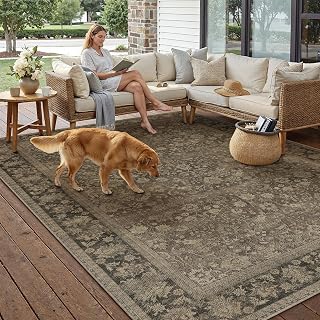
Nourison Home Aloha Indoor/Outdoor Rug, 7′ x 10′
A well-proven flat-weave in a generous size that anchors a full seating group without the pinched look of an undersized 5×7. The green multi-colour palette hides pollen and leaf litter remarkably well, and the low pile sheds water quickly — a practical choice for a covered porch used year-round.
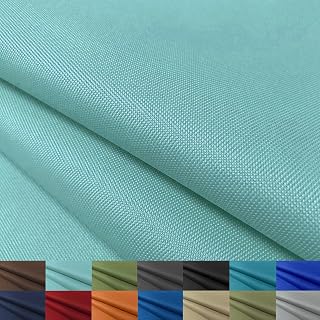
Waterproof Canvas Fabric by the Yard, Pale Turquoise
This is the specification sheet I’d point most DIY buyers toward: 600D, 78T, 220gsm, and a stated UPF50+ rating, which is unusually transparent for by-the-yard goods. At 58 inches wide it’s ideal for binding a custom runner or matching cushion covers to an existing rug.
Outdoor Waterproof Upholstery Fabric by the Yard, Gray
A 600D polyester Oxford canvas in a neutral grey that disappears into almost any palette. It’s stiffer than the turquoise option, which makes it better suited to structured cushion boxes and chair covers than to anything you want to drape softly.
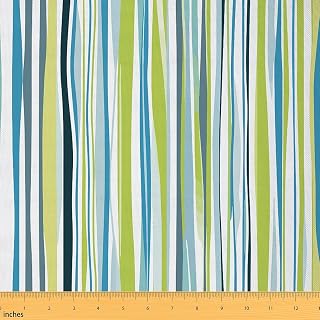
Feelyou Striped Waterproof Outdoor Fabric, Green Blue
The rippled geometric stripe gives you pattern without the visual noise of a floral, and the green-blue colourway is genuinely calming in evening light — useful if the space doubles as a wind-down spot. Best used as accent yardage rather than a full floor covering.
Brown Linen-Look Washable Area Rug, 6′ x 9′
The most convincing linen imitation here, with a subtle slub texture and a non-slip base that stays put on smooth stone. Being fully washable makes it the sensible pick for entryways and high-traffic thresholds where grit arrives daily.
Frequently Asked Questions
Can I leave an outdoor rug out all winter?
You can, but you shouldn’t if you can avoid it. Synthetics tolerate cold fine; the damage comes from prolonged moisture trapped underneath and from freeze-thaw cycles working grit into the fibers. Roll and store it dry.
Does waterproof fabric make a rug feel plasticky?
Coated canvas does. Woven polypropylene and linen-look constructions don’t, because the water resistance comes from the fiber itself rather than a surface film. If underfoot comfort matters, choose woven over coated.
How much yardage do I need for a custom runner?
At 58 inches wide, one yard yields roughly a 2′ x 4.5′ finished piece after hems. Buy an extra half-yard for binding tape and mistakes — seam allowance on outdoor fabric should be generous, since raw edges fray under UV.
Will an outdoor rug damage my deck?
Only if it can’t breathe. Lift and hose the rug monthly, let the boards dry fully, and avoid solid rubber backings on composite decking, which can trap moisture and leave shadow marks.
Final Thoughts
For most patios, the Nourison Home Aloha 7′ x 10′ is the straightforward answer — right scale, forgiving colourway, proven flat-weave. If you want the softer, more restful look of linen without the rot, the brown linen-look 6′ x 9′ washable rug delivers it convincingly, and the Waterproof Canvas by the Yard in pale turquoise is the fabric I’d reach for to tie cushions, runners, and repairs into a single coherent outdoor room.