Key takeaways
- Stool or ottoman with storage: smaller footprint for tight spaces.
- Medical-grade shower seat or transfer bench: for those with mobility needs, selected with professional advice.
- Open shelving unit with a cushion: flexible and often cheaper, but less concealed storage.
A bathroom bench with storage suits households that want a seat for drying off, putting on shoes or applying skincare, along with hidden space for towels and supplies, and the right style depends on how damp the room is and how much floor space you have. Slatted teak or bamboo benches suit wet areas and walk-in showers, lidded storage benches suit bedrooms-adjacent bathrooms with moderate humidity, and cubby or shelf benches suit open storage of rolled towels. Check weight capacity, material and anti-slip feet before buying, and treat any bench used for support as seating only unless the maker states otherwise.
Our top picks


As an Amazon Associate we earn from qualifying purchases at no extra cost to you.
Bench Styles at a Glance
| Style | Best for | Key traits | Limits |
|---|---|---|---|
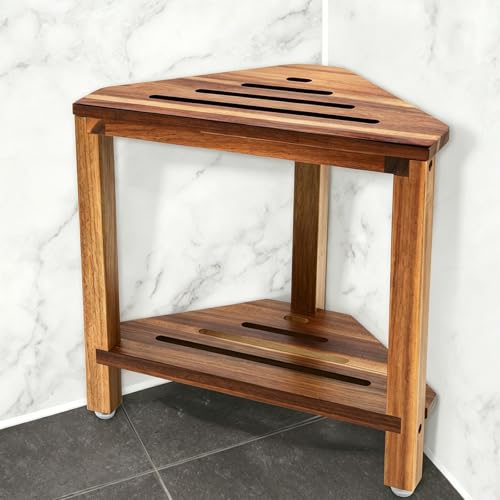
| Teak or bamboo slatted bench with shelf | Wet or steamy bathrooms and near-shower use | Slats drain water; lower shelf holds towels or baskets | Needs wiping and occasional oiling; open storage |
| Lidded storage bench | Hiding spare towels and supplies | Hinged seat, closed box | Can trap moisture; lids need a safety hinge |
| Cubby or shelf bench | Rolled towels and baskets in easy reach | Open compartments under a seat | Less concealed; items can collect damp |
| Bench with drawers | Organized small items | Pull-out drawers | Drawer tracks can rust or swell in damp rooms |
| Upholstered storage bench | Dry or well-ventilated bathrooms | Padded seat, soft look | Fabric absorbs moisture; not for wet zones |
| Wall-mounted fold-down seat with shelf | Small bathrooms and shower areas | Folds flat, saves floor space | Needs solid wall support; weight limit applies |
Makers and Lines
Several brands list bath benches. Teak and bamboo bench lines are commonly sold by bath accessory makers, and some list water-resistant finishes and non-slip feet. Furniture-style storage benches are sold by home-furnishing brands, flat-pack makers and bath furniture specialists; some list moisture-resistant finishes. Accessibility-focused brands list shower seats and benches with defined weight capacity and non-slip tips. Product lines change, so take sizes and capacity from the current maker listing rather than from a third-party summary.
What to Look for
Material and humidity
Teak and bamboo are widely used where water is present, because makers describe them as resistant to moisture when finished properly. Solid wood and plywood with a sealed finish are used for cabinet-style benches. Fabric-covered benches belong in dry, ventilated rooms. If you use a lidded bench, wipe the inside periodically to avoid dampness, and let towels dry before storing.
Weight capacity and stability
The maker lists the maximum weight. Choose a bench with a comfortable margin above the heaviest user, and place it on a level floor. Non-slip feet or rubber caps help on wet tile. Seat height and width should suit the people using it, and a bench with a wide base is steadier than a narrow one.
Safety for wet floors and mobility needs
A bathroom bench is not the same as a medical shower seat or transfer bench. If you or a family member has balance problems, mobility limits or recent surgery, ask a doctor or occupational therapist about suitable equipment rather than relying on a general-purpose storage bench. Always follow the maker’s use instructions and do not stand on the bench.
Lid and drawer safety
Choose lids with a soft-close or safety hinge to protect fingers and to prevent slamming. Keep small items out of reach of young children if a lid might trap them, and check that the bench has ventilation if the maker lists it.
Size and clearance
Measure width and depth, and leave clearance for doors, the tub and toilet. A typical bench is wide enough for one or two people to sit, and benches under 14 inches deep suit narrow rooms. Check the maker’s dimensions and the usable internal space.
Budget Tiers
| Tier | What you typically get | Trade-offs |
|---|---|---|
| Budget | Flat-pack or lightweight benches with a shelf or box | Engineered wood; assembly; limited moisture tolerance |
| Mid-range | Bamboo or teak benches, plywood storage benches with sealed finishes | Good for humid rooms; some need maintenance oil |
| Premium | Solid teak, furniture-grade storage benches, custom sizes | Heavier, longer lead times, higher care awareness |
Pick X If You…
| Pick this | If you… |
|---|---|
| Teak or bamboo slatted bench | Have a damp room or want a seat next to the shower |
| Lidded storage bench | Want hidden storage in a moderately humid room |
| Cubby bench | Prefer towels on display and easy to reach |
| Bench with drawers | Need organized small items |
| Upholstered bench | Have a dry, ventilated bathroom and prefer a softer seat |
| Wall-mounted fold-down seat | Have very little floor space and solid wall framing |
Alternatives
- Stool or ottoman with storage: smaller footprint for tight spaces.
- Medical-grade shower seat or transfer bench: for those with mobility needs, selected with professional advice.
- Open shelving unit with a cushion: flexible and often cheaper, but less concealed storage.
Care Notes
Wipe water off after showers and let the bench dry. For teak and bamboo, follow the maker’s oiling or sealing advice. Tighten screws occasionally and check the feet for wear. Do not use harsh abrasive cleaners unless the maker allows them, and keep fabric benches away from direct splashes.
Choosing by Room and Household
Start with how the bench will be used. In a family bathroom, a bench near the tub can help children sit while drying off, but a slippery floor and a lightweight bench can be a hazard, so look for non-slip feet and a wide base. In a primary bathroom, a bench at the foot of a vanity can double as a seat for skincare or putting on shoes. In a small bathroom, a narrow bench or a fold-down seat uses less floor.
Think about what you want to store. Towels need airflow, so open cubbies and slatted shelves dry them better than closed boxes. Toiletries and spare rolls are better in lidded compartments where they are out of sight. Heavy bottles belong on the lowest shelf, and anything that can be harmed by damp should be kept in a closed container or elsewhere.
Placement Tips
- Keep the bench clear of the door swing and out of the walkway.
- Leave a gap from the tub or shower so water does not collect under it.
- On tile, use rubber pads or the supplied feet to reduce sliding.
- If the room is very humid, wipe underneath and around the feet regularly.
Check the assembly instructions. Wooden benches often use screws and cam locks that can loosen over time, so tighten them periodically. If the bench has a lid, confirm that the hinges support the lid in an open position, and keep fingers clear when closing it.
Questions to Ask Before Ordering
- Is the finish described as suitable for damp rooms?
- What is the maximum weight, and is it for seating only?
- Are the feet non-slip, and can they be replaced?
- Does the lid have a safety hinge?
Maintenance and Longevity
A bathroom bench lasts longest when it is allowed to dry. Wipe standing water from slats and lids after showers, run the exhaust fan, and lift towels and baskets off the shelf occasionally so air can move underneath. For teak, makers often describe either leaving it to weather to a silver tone or applying a teak oil to keep the golden color, so follow the care sheet for your piece. Bamboo benefits from a gentle clean and a check for splits. Tighten screws and replace worn feet to keep the bench stable.
If you notice mold or a musty smell in a closed storage compartment, empty it, clean it with a mild cleaner suitable for the finish and let it dry fully with the lid open. Persistent dampness suggests the room needs better ventilation. If the bench wobbles or cracks under load, stop using it and contact the maker.
Choosing by Room and Household
Start with how the bench will be used. In a family bathroom, a bench near the tub can help children sit while drying off, but a slippery floor and a lightweight bench can be a hazard, so look for non-slip feet and a wide base. In a primary bathroom, a bench at the foot of a vanity can double as a seat for skincare or putting on shoes. In a small bathroom, a narrow bench or a fold-down seat uses less floor.
Think about what you want to store. Towels need airflow, so open cubbies and slatted shelves dry them better than closed boxes. Toiletries and spare rolls are better in lidded compartments where they are out of sight. Heavy bottles belong on the lowest shelf, and anything that can be harmed by damp should be kept in a closed container or elsewhere.
Placement Tips
- Keep the bench clear of the door swing and out of the walkway.
- Leave a gap from the tub or shower so water does not collect under it.
- On tile, use rubber pads or the supplied feet to reduce sliding.
- If the room is very humid, wipe underneath and around the feet regularly.
Check the assembly instructions. Wooden benches often use screws and cam locks that can loosen over time, so tighten them periodically. If the bench has a lid, confirm that the hinges support the lid in an open position, and keep fingers clear when closing it.
Questions to Ask Before Ordering
- Is the finish described as suitable for damp rooms?
- What is the maximum weight, and is it for seating only?
- Are the feet non-slip, and can they be replaced?
- Does the lid have a safety hinge?
Frequently Asked Questions
Is teak or bamboo better for a bathroom bench?
Both are commonly used for damp rooms. Teak is often described as naturally oily and durable, and bamboo is lighter and typically more affordable. Check the finish and care instructions on the product you choose.
Can I put a storage bench inside the shower?
Only if the maker states it is suitable for wet use. Many lidded or upholstered benches are made for the dry side of the bathroom and may swell or mold if soaked. Slatted teak or bamboo styles are typically the ones sold for shower use.
How much weight can a bathroom bench hold?
It varies by model, so look for the stated capacity in the listing. Choose one with a margin above the heaviest user. Do not stand on it unless the maker says it is allowed.
How do I keep towels dry in a storage bench?
Store only dry towels, leave the lid open occasionally to air the box, and run the exhaust fan after showers. If the maker lists ventilation holes or a moisture-resistant finish, use them as designed. Wipe the interior if it becomes damp.
Is a bathroom bench suitable for someone with limited mobility?
A general storage bench is not designed as medical equipment. Ask a doctor or occupational therapist about a shower seat or transfer bench rated for the user’s needs, and follow the maker’s instructions.
What size bench fits a small bathroom?
Narrow benches under about 14 inches deep, wall-mounted fold-down seats and small stools with storage suit tight rooms. Measure clearance for door swing, tub and toilet. Check the maker’s listed dimensions before ordering.