Key takeaways
- Match the material to your maintenance appetite: Acacia and other hardwoods need oiling once or twice a season to hold their color; skip it and they silver out and eventually check. HDPE and powder-coated steel ask for nothing but soap and water. Be honest about which person you are.
- Check the surface temperature behavior: Dark metal and dark HDPE absorb heat aggressively in direct afternoon sun. If your patio faces west and you want to linger through dusk, lean toward lighter grays, wood tops, or plan on an umbrella — which means checking for a pre-cut umbrella hole.
- Look at the frame and fasteners, not just the top: Most outdoor table failures start at the joinery. Stainless or coated hardware, welded rather than bolted stress points, and a genuine multi-stage powder coat matter more than the tabletop’s thickness spec.
- Size for the seat count you actually host: Allow roughly 24 inches of table edge per diner plus room to pull a chair back. A 61-inch rectangle seats six snugly; 84 inches seats six comfortably or eight when you need it. Undersized tables get abandoned.
- Prioritize slatted or vented tops in wet climates: Standing water is the enemy of every material. Slatted HDPE and gapped wood tops drain and dry fast; solid tops with a lip trap water and accelerate coating failure.
What's inside
Most people shopping for an outdoor dining table start with color and shape, then discover eighteen months later that the surface has cupped, chalked, or grown a rust bloom where the fasteners meet the frame. Material is the variable that actually determines whether a table survives a decade of sun cycles, freeze-thaw, and sprinkler overspray — and it’s the one that gets the least attention at checkout. Wood, powder-coated metal, and HDPE (high-density polyethylene) each fail in different ways, and each rewards a completely different maintenance temperament.
I come to this from an unusual direction: I spend my working life on sleep and circadian health, and the single most underrated intervention I recommend is a reliable place to eat dinner outside. Evening light exposure at low angles, cooler air on the skin, and a meal that isn’t eaten in front of a screen all nudge the body toward an earlier, deeper sleep onset. A wobbling, splintering, too-hot-to-touch table quietly kills that habit. Below I break down how each material behaves in the real world, what to check before you buy, and which specific tables from this year’s lineup earn their keep.
As an Amazon Associate we earn from qualifying purchases.


How to Choose a Material For Outdoor Dining Table (2026)
- Match the material to your maintenance appetite: Acacia and other hardwoods need oiling once or twice a season to hold their color; skip it and they silver out and eventually check. HDPE and powder-coated steel ask for nothing but soap and water. Be honest about which person you are.
- Check the surface temperature behavior: Dark metal and dark HDPE absorb heat aggressively in direct afternoon sun. If your patio faces west and you want to linger through dusk, lean toward lighter grays, wood tops, or plan on an umbrella — which means checking for a pre-cut umbrella hole.
- Look at the frame and fasteners, not just the top: Most outdoor table failures start at the joinery. Stainless or coated hardware, welded rather than bolted stress points, and a genuine multi-stage powder coat matter more than the tabletop’s thickness spec.
- Size for the seat count you actually host: Allow roughly 24 inches of table edge per diner plus room to pull a chair back. A 61-inch rectangle seats six snugly; 84 inches seats six comfortably or eight when you need it. Undersized tables get abandoned.
- Prioritize slatted or vented tops in wet climates: Standing water is the enemy of every material. Slatted HDPE and gapped wood tops drain and dry fast; solid tops with a lip trap water and accelerate coating failure.
The Best Material For Outdoor Dining Table (2026)s Reviewed
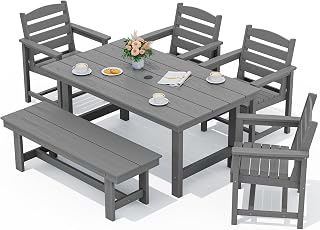
SERWALL 84″ HDPE Rectangular Dining Table
This is the closest thing to a buy-it-once option in the category: HDPE won’t rot, splinter, absorb moisture, or need refinishing, and at 84 inches it comfortably handles six with room to stretch to eight. The pre-cut umbrella hole is essential here, because it lets you actually use the table during the golden-hour window when eating outside does the most for your sleep timing.
MFSTUDIO 61″ Metal Table with Umbrella Hole
A well-executed hybrid — wrought iron frame for rigidity, polywood-style top for weather resistance — that gives you the visual weight of metal without a solid metal surface that scorches in July. The 61-inch footprint suits mid-sized decks and balconies where an 84-inch table would eat the entire circulation path.
Devoko 6-Person Acacia Wood Dining Table
Acacia is dense, naturally oil-rich, and genuinely handsome in walnut brown, making this the pick for anyone who wants a table that reads as indoor furniture and can migrate inside for winter. Commit to seasonal oiling, or accept a weathered gray patina as the intended look.
Flamaker Acacia Wood Dining Table for 6
The acacia top over a steel frame is a smart division of labor — the wood handles the warmth and tactility, the steel handles the structural load and keeps seasonal movement from loosening the joints. It’s a strong value proposition if you want wood without wood’s wobble.
HDPE 5-Piece Outdoor Dining Set for 4
For smaller households, buying the table and four chairs as a coordinated HDPE set removes the guesswork of matching seat height to table height, and the 300-pound per-chair rating is reassuring rather than aspirational. The waterproof wood-grain surface reads warmer than flat plastic from a few feet away.
Frequently Asked Questions
Is HDPE really better than wood outdoors?
For pure longevity with zero maintenance, yes. Wood wins on tactile warmth and repairability — a scratched acacia top can be sanded and re-oiled, while a gouged HDPE slat is permanent.
Do I need to cover the table in winter?
HDPE and quality powder-coated metal can overwinter uncovered in most climates. Wood benefits significantly from a breathable cover or indoor storage; trapped moisture under a non-breathable tarp is worse than no cover at all.
How does eating outside affect sleep?
Evening outdoor light and cooler ambient temperature both reinforce circadian signaling, and unscreened meals tend to end earlier — which pushes sleep onset earlier too. The furniture matters only insofar as it makes the habit effortless.
Does a bench save space?
Yes — benches tuck fully under the table and eliminate the chair-clearance zone on one side, which can reclaim two feet of walkway on a narrow deck. The SERWALL dining set with bench is built around exactly this logic.
Final Thoughts
If you want to buy once and stop thinking about it, the SERWALL 84″ HDPE table is the most defensible choice in this group — inert, generously sized, and umbrella-ready. Choose the Flamaker acacia table if you want real wood with a stable steel frame and don’t mind seasonal oiling, or the MFSTUDIO 61″ metal table if your space demands a smaller footprint without giving up rigidity. Any of the three will still be standing when the habit of eating dinner outdoors has quietly rearranged your evenings.