Key takeaways
- Sliding vs. fixed: A slider crosscuts roughly 12–13 inches, enough for shelf boards and wide aprons. A fixed compound saw is lighter, cheaper, quieter, and takes up far less wall depth — plenty if you mostly cut trim, legs, and framing stock.
- Single vs. dual bevel: Dual bevel tilts both directions, so you flip the saw head instead of flipping the workpiece. On crown moulding and long casing, that saves real time and prevents the flip-side layout mistakes that produce firewood.
- Cut-line indication: Shadow-line LEDs cast the blade’s own silhouette and never need calibrating. Lasers are brighter in dim shops but drift and require alignment. Either beats squinting, and both reduce the fatigue that creeps in during long sessions.
- Detents and fence squareness: Nine positive stops are standard; what matters is whether they’re accurate out of the box and whether the fence is machined flat. Check both with a reliable square before your first project, and shim if needed.
- Noise, dust, and shop hours: Brushless cordless saws run noticeably quieter than 15-amp universal motors. Pair any saw with a shop vac at the port, wear real hearing protection, and set a cutoff time — precision work after 10 p.m. is usually work you’ll redo.
What's inside
Most people don’t buy a 10-inch miter saw because they want a miter saw. They buy one because a bookshelf came out crooked, or because a room full of baseboard has to meet at corners that aren’t actually 90 degrees, and hand-cutting has stopped being charming. The frustration is rarely about power — nearly every saw in this class has enough of it. It’s about repeatability: whether cut number forty lands where cut number one did, and whether the tool tells you the truth about the angle you dialed in.
There’s a second thing furniture builders underrate, and I say this as someone who spends most of my working life on rest and recovery: a 10-inch saw is loud, it’s usually indoors or in an attached garage, and it invites late-night sessions. Fatigue degrades fine motor control and depth perception well before you notice it, and a spinning carbide blade is an unforgiving place to learn that. So this guide weighs the usual things — slide capacity, bevel range, blade quality, cut-line accuracy — but also noise character, dust control, and whether the saw is calm enough to use without waking the house or leaving you wired at midnight. Below are the models worth your money in 2026.
As an Amazon Associate we earn from qualifying purchases.


How to Choose a Miter Saw 10 Inch (2026)
- Sliding vs. fixed: A slider crosscuts roughly 12–13 inches, enough for shelf boards and wide aprons. A fixed compound saw is lighter, cheaper, quieter, and takes up far less wall depth — plenty if you mostly cut trim, legs, and framing stock.
- Single vs. dual bevel: Dual bevel tilts both directions, so you flip the saw head instead of flipping the workpiece. On crown moulding and long casing, that saves real time and prevents the flip-side layout mistakes that produce firewood.
- Cut-line indication: Shadow-line LEDs cast the blade’s own silhouette and never need calibrating. Lasers are brighter in dim shops but drift and require alignment. Either beats squinting, and both reduce the fatigue that creeps in during long sessions.
- Detents and fence squareness: Nine positive stops are standard; what matters is whether they’re accurate out of the box and whether the fence is machined flat. Check both with a reliable square before your first project, and shim if needed.
- Noise, dust, and shop hours: Brushless cordless saws run noticeably quieter than 15-amp universal motors. Pair any saw with a shop vac at the port, wear real hearing protection, and set a cutoff time — precision work after 10 p.m. is usually work you’ll redo.
The Best Miter Saw 10 Inch (2026)s Reviewed
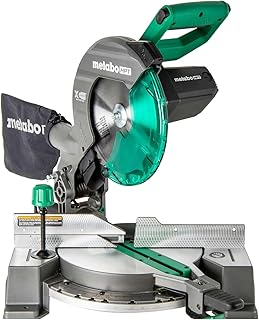
Metabo HPT MultiVolt 36V Sliding Miter Saw (C3610DRAQA)
The most refined saw here: cordless dual-bevel sliding capability with a brushless motor that’s audibly gentler than corded competitors, plus an AC adapter option so the battery isn’t a bottleneck. If you work in an attached garage or share walls with sleeping people, this is the one I’d point you to first.
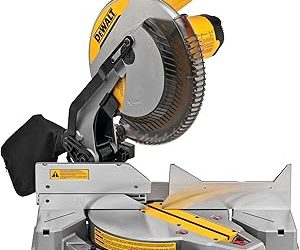
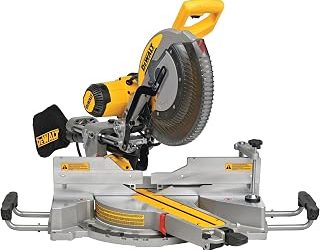
DEWALT Single Bevel Compound Miter Saw (DWS713)
A fixed compound saw that earns its reputation on fundamentals — a stout fence, honest detents, and cuts that stay square across months of use. At roughly 35 pounds it moves easily between shop and job site, and it’s the smartest pick for anyone building furniture from stock under 8 inches wide.
DOVAMAN Dual Bevel 10-Inch Sliding Miter Saw
Remarkable value: dual bevel, LED shadow line, two-speed control for switching between hardwood and softer material, and three TCT blades included. Expect to spend twenty minutes squaring the fence and checking detents, after which the accuracy holds up better than the price suggests.
DOVAMAN Updated 10-Inch Sliding Miter Saw
The single-bevel sibling, with the same 3.5 x 13.4-inch cut capacity and ambidextrous controls that suit left-handed users unusually well. Choose it over the dual-bevel version only if you rarely cut crown or long bevelled trim.
Hoteche 10-Inch Sliding Compound Miter Saw
A budget slider with a 15-amp motor and laser guide that handles wood and light metal competently. It’s the loudest and roughest-running saw on this list, so treat it as an occasional-use tool rather than a daily driver.
Frequently Asked Questions
Is 10 inches enough, or should I go to 12?
For furniture, 10 inches is usually ideal. Blades cost less, spin truer, deflect less, and cut more cleanly. Step up to 12 inches only if you routinely cut thick posts or deep crown.
Do I need to replace the included blade?
Yes, for finish work. A 60–80 tooth fine-finish blade dramatically reduces tearout on plywood and hardwood. Keep the stock 40-tooth blade for framing and rough stock.
How loud are these saws?
Peak levels commonly land in the 95–105 dB range — above the threshold for hearing damage. Muffs or plugs are mandatory, and consider your neighbours’ and household’s schedule before an evening cutting session.
Can I use one indoors?
Only with dust management. Connect a shop vac to the port, and if you’re cutting MDF or treated lumber, work outdoors or wear a respirator — fine dust lingers in living spaces and disrupts sleep quality more than people expect.
Final Thoughts
If budget allows, the Metabo HPT MultiVolt C3610DRAQA is the best all-round 10-inch saw of 2026 — quiet, accurate, and genuinely dual bevel. The DEWALT DWS713 remains the sensible choice for furniture makers who don’t need slide capacity, and the DOVAMAN Dual Bevel slider delivers the most capability per dollar if you’re willing to tune it before the first cut.