Key takeaways
- Swing and throat depth: Swing is twice the distance from spindle center to the column, so a 12-inch machine reaches the middle of a 12-inch board. For headboard panels and wide case sides, that extra reach matters far more than horsepower.
- Spindle travel: Look for at least 2 inches of quill stroke, and closer to 3¼ inches if you plan on through-drilling bed rails or thick tenon stock. Short travel means repositioning mid-hole, which is where alignment goes to die.
- Speed range and adjustment method: Large Forstner bits want 250–500 RPM; small twist bits in maple want upwards of 2,500. Variable-speed dials are worth the premium if you switch bits constantly; stepped pulleys are fine if you batch your operations.
- Table quality and tilt: A generous cast-iron table with a machined surface and 45° bevel in both directions gives you angled boring for splayed legs and canted slats. Thin stamped tables flex under clamping pressure and undermine everything upstream.
- Runout and build mass: Cast-iron heads and bases damp vibration, which shows up directly as cleaner hole walls. If a machine feels light enough to slide across the bench, it will chatter in dense hardwood.
What's inside
Anyone who has tried to bore a clean mortise for a bed rail or drill perfectly square dowel holes for a nightstand with a handheld drill knows the frustration: the bit wanders, the hole drifts a few degrees off vertical, and suddenly a headboard that should sit flush against the wall leans like a bad idea. Bedroom furniture is unforgiving in this way. A wobbly frame telegraphs every movement through the mattress, and the joint that squeaks at 2 a.m. is almost always the one that was drilled by eye. Precision at the drill press is not a matter of woodworking vanity — it is the difference between a bed that disappears beneath you and one that reminds you it exists all night long.
This guide looks at benchtop drill presses through that lens: which machines hold true through hardwood, which have the speed range for both delicate brad-point work and large Forstner bores, and which are honestly overkill for someone building two or three pieces a year. We compare six options across swing capacity, spindle travel, motor output, table adjustability, and the small conveniences — lasers, LED lighting, tool-free belt changes — that make a Saturday in the shop feel shorter. Below you’ll find a buying framework, individual assessments, and answers to the questions that come up most often from readers building their own bedroom sets.
As an Amazon Associate we earn from qualifying purchases.


How to Choose a Drill Press Woodworking (2026)
- Swing and throat depth: Swing is twice the distance from spindle center to the column, so a 12-inch machine reaches the middle of a 12-inch board. For headboard panels and wide case sides, that extra reach matters far more than horsepower.
- Spindle travel: Look for at least 2 inches of quill stroke, and closer to 3¼ inches if you plan on through-drilling bed rails or thick tenon stock. Short travel means repositioning mid-hole, which is where alignment goes to die.
- Speed range and adjustment method: Large Forstner bits want 250–500 RPM; small twist bits in maple want upwards of 2,500. Variable-speed dials are worth the premium if you switch bits constantly; stepped pulleys are fine if you batch your operations.
- Table quality and tilt: A generous cast-iron table with a machined surface and 45° bevel in both directions gives you angled boring for splayed legs and canted slats. Thin stamped tables flex under clamping pressure and undermine everything upstream.
- Runout and build mass: Cast-iron heads and bases damp vibration, which shows up directly as cleaner hole walls. If a machine feels light enough to slide across the bench, it will chatter in dense hardwood.
The Best Drill Press Woodworking (2026)s Reviewed
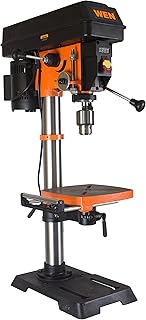
WEN 12-Inch Benchtop Drill Press (DP1263V)
The strongest all-around choice here: a 6.2-amp variable-speed motor with a proper 12-inch swing, plus laser crosshairs and LED task lighting that genuinely help when you’re squinting at a layout line on dark walnut. If you’re building full bedroom sets rather than one-off projects, this is the machine that will keep up.
JET Benchtop Drill Press (JWDP-12)
JET’s 12-inch variable-speed unit is the precision pick, with noticeably lower runout and a smoother quill feel than anything else in this group. It costs more, but for joinery-critical work — mortising jigs, doweled case construction — the accuracy is immediately apparent in your fit-up.
SKIL 10-Inch 5-Speed Benchtop Drill Press (DP9505-00)
A thoughtful middle option with laser alignment, integrated work light, and a genuinely useful digital depth display that takes the guesswork out of repeat stopped holes. The 10-inch swing handles most nightstand and dresser components comfortably.
WOODSKIL 8-Inch Benchtop Drill Press
An induction motor at this size and price is unusual and welcome — it runs quieter and cooler than the universal motors typical of small presses. The 45° beveling cast-iron table and ½-inch keyed chuck make it a capable starter machine for smaller components.
WEN 8-Inch 5-Speed Cast Iron Drill Press (4206T)
The sensible entry point: compact, heavier than its footprint suggests, and accurate enough for dowels, shelf pins, and hardware boring. Its limits are swing and spindle travel, so plan on handheld methods for anything wide or deep.
Frequently Asked Questions
Do I really need a drill press to build a bed?
You can build one without, but square, repeatable holes are what keep bolted rail-to-post connections tight over years of use. A drill press is the single most direct upgrade to joint longevity.
Is 8 inches of swing enough?
For nightstands, drawer hardware, and leg joinery, yes. For centering holes in wide panels or headboard blanks, you’ll eventually want 10 or 12 inches.
Are laser guides worth anything?
They speed up rough positioning but should never replace lowering the bit to your layout mark for final alignment. Treat them as convenience, not calibration.
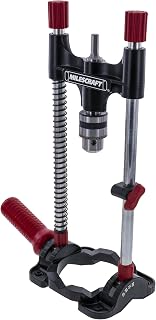
What about a portable drilling guide instead?
The Milescraft DrillMate is a smart supplement for on-site work and holes in assembled pieces — situations no benchtop press can reach. It complements a drill press rather than replacing one.
Final Thoughts
For most readers building bedroom furniture at home, the WEN DP1263V delivers the best balance of capacity, speed control, and price. Choose the JET JWDP-12 if joinery accuracy is your priority and budget allows, or the WEN 4206T if you’re starting small and want a dependable, honest machine to learn on.