Key takeaways
- Decibels at your pillow, not at 23 feet: Manufacturer ratings are measured at distance under light load. Every doubling of distance drops perceived volume noticeably, so a unit rated 58–61 dB placed 20+ feet away and behind a barrier lands closer to conversational background level. Anything advertised above 65 dB should be treated as a daytime-only machine.
- Overnight thermal load: Calculate what you actually need between midnight and sunrise. A 13,500 BTU RV air conditioner typically demands 2,800–3,500 running watts plus a startup surge; a fan, CPAP, and 12V fridge together may need under 300. Buying for the daytime peak when your real need is nighttime cooling leads to an oversized, louder unit.
- Pure sine wave output: Non-negotiable for CPAP and BiPAP machines, white noise generators, and anything with a humidifier heater plate. Modified sine wave introduces harmonic distortion that can cause audible buzzing and, in some cases, erratic device behavior — precisely what you don’t want at 3 a.m.
- Carbon monoxide shutoff and placement discipline: Any gas unit you run near a sleeping space must have automatic CO detection, and it still belongs well away from windows, vents, and awnings. CO poisoning presents as headache and drowsiness — symptoms sleepers dismiss as ordinary tiredness, which is exactly what makes it dangerous.
- Silent-by-design alternatives: Lithium power stations make no noise, no exhaust, and no vibration. LiFePO4 chemistry offers roughly 3,000+ cycles versus a few hundred for older lithium-ion, making it the better long-term choice if you camp frequently.
What's inside
Anyone who has spent a night in an RV knows the truth that spec sheets rarely mention: the thing most likely to ruin your trip isn’t a dead battery, it’s a bad night’s sleep. A generator droning six feet from your bunk at 68 decibels sits right in the frequency range that fragments deep sleep, and campers routinely wake up groggy, blaming the mattress. Meanwhile, shutting the unit off means no fan, no CPAP, no climate control — and heat above roughly 68–70°F is one of the most reliable ways to shred sleep architecture. Buyers get caught between two bad outcomes: noise or discomfort.
This guide approaches portable RV generators the way a sleep specialist approaches a bedroom — as an acoustic and thermal environment first, a power system second. Below you’ll find inverter generators quiet and clean enough to run overnight, plus battery-based power stations that produce literally zero sound for those who want silence non-negotiable. We look at decibel figures at realistic camp distances, runtime at the loads that actually matter after dark, sine wave quality for medical devices, and safety features that let you sleep without one ear open.
As an Amazon Associate we earn from qualifying purchases.


How to Choose a Portable Rv Generator (2026)
- Decibels at your pillow, not at 23 feet: Manufacturer ratings are measured at distance under light load. Every doubling of distance drops perceived volume noticeably, so a unit rated 58–61 dB placed 20+ feet away and behind a barrier lands closer to conversational background level. Anything advertised above 65 dB should be treated as a daytime-only machine.
- Overnight thermal load: Calculate what you actually need between midnight and sunrise. A 13,500 BTU RV air conditioner typically demands 2,800–3,500 running watts plus a startup surge; a fan, CPAP, and 12V fridge together may need under 300. Buying for the daytime peak when your real need is nighttime cooling leads to an oversized, louder unit.
- Pure sine wave output: Non-negotiable for CPAP and BiPAP machines, white noise generators, and anything with a humidifier heater plate. Modified sine wave introduces harmonic distortion that can cause audible buzzing and, in some cases, erratic device behavior — precisely what you don’t want at 3 a.m.
- Carbon monoxide shutoff and placement discipline: Any gas unit you run near a sleeping space must have automatic CO detection, and it still belongs well away from windows, vents, and awnings. CO poisoning presents as headache and drowsiness — symptoms sleepers dismiss as ordinary tiredness, which is exactly what makes it dangerous.
- Silent-by-design alternatives: Lithium power stations make no noise, no exhaust, and no vibration. LiFePO4 chemistry offers roughly 3,000+ cycles versus a few hundred for older lithium-ion, making it the better long-term choice if you camp frequently.
The Best Portable Rv Generator (2026)s Reviewed
Champion 4500-Watt RV Ready Inverter Generator
This is the most complete answer for anyone who needs air conditioning through a summer night, delivering enough headroom for a 13,500 BTU unit’s startup surge while staying in the low-60s decibel range under moderate load. The three-year warranty and widely available parts network matter more than enthusiasts admit — reliability is a sleep feature.
BLAVOR Portable Power Station 1600W
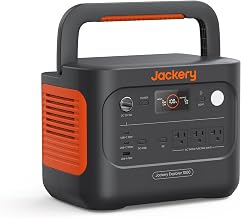
For campers whose priority is genuine silence, this LiFePO4 station runs a CPAP, fan, and lighting through a full night without a single decibel of mechanical noise, and its 1,024Wh capacity handles a small evening cooling load. The built-in solar panel is supplementary rather than a full recharge solution, so pair it with a larger array or vehicle charging for multi-day trips.
Champion 4000-Watt RV Ready Inverter Generator
The lighter, more manageable sibling — a sensible pick if your rig runs a smaller AC unit or you’re mostly powering a fridge, fan, and devices. Same quiet technology and warranty backing, with a weight and footprint that one person can reposition to a quieter spot without help.
maXpeedingrods MXR4000 Inverter Generator
The Bluetooth monitoring is more than a gimmick here: checking fuel level and load from inside the RV means you’re not stepping outside at 2 a.m. and fully waking yourself up. Integrated CO alarm makes this a reasonable choice for campers running gas power near a sleeping area.
Oxseryn 4400 Watts Inverter Generator
An open-frame design trades some acoustic damping for better cooling and easier servicing, so plan on placing it farther out with a barrier if you intend to run it overnight. ECO mode meaningfully reduces both noise and consumption at the low loads typical of after-dark use.
Frequently Asked Questions
How loud is too loud to sleep near?
Sustained noise above roughly 40 dB at the sleeping position is associated with measurable sleep disruption, even when people don’t fully wake. A 60 dB generator placed 25–30 feet away with the RV wall between you often lands in an acceptable range; most campgrounds also enforce quiet hours that prohibit generator use overnight.
Can I run a CPAP off a power station all night?
Usually yes. A CPAP without heated humidification draws roughly 30–60 watts, so a 1,000Wh station has substantial margin. Turn off the humidifier and heated tube to extend runtime dramatically — those elements can triple consumption.
Do I need 3,500 watts if I only camp in mild weather?
No, and buying smaller is often the better sleep decision. Without air conditioning, a modest inverter generator or a large battery station covers a full night quietly and cheaply.
Is a solar generator enough on its own?
A compact 220Wh unit like the 300W solar station handles phones, lights, and a fan — genuinely useful for tent-adjacent or minimalist setups — but it won’t run cooling. Match capacity honestly to your climate.
Final Thoughts
If you need cooling to sleep, the Champion 4500-Watt RV Ready inverter generator is the most dependable choice, with the Champion 4000-Watt version serving smaller rigs at less weight. If silence outranks air conditioning in your priorities, the BLAVOR 1600W LiFePO4 station eliminates the noise problem entirely — and for many campers, that’s the upgrade that finally makes RV nights restful.