Key takeaways
- Weight and structure: Mature wisteria is genuinely heavy and its stems thicken and twist with real force. Reserve it for bolted timber or steel pergolas with 4×4 posts minimum; lightweight aluminium kits and lattice-topped gazebos are better matched to mandevilla or jasmine.
- Scent timing: If the pergola is where you unwind in the evening, prioritise vines that release fragrance at dusk. Jasmine intensifies after sundown; wisteria peaks in warm midday air. Many people happily plant both for coverage across the day.
- Hardiness zone honesty: Check your zone before you fall in love. Wisteria floribunda handles roughly zones 5–9. Mandevilla is a zone 9–11 perennial and must be grown as an annual or overwintered indoors elsewhere — treat it as a container plant if you’re colder.
- Shade density you actually want: Full canopy blackout feels oppressive and traps heat and humidity. Aim for filtered light: train stems along alternating beams rather than every rafter, and thin the top growth once a season so air still moves through.
- Patience versus instant effect: Live rooted starts give you a head start and usually flower in two to four years. Seed-grown vines cost a fraction as much and suit anyone comfortable waiting a season for real coverage. Decide which trade-off you’d rather live with before ordering.
What's inside
Most people shop for pergola vines with their eyes. They picture a canopy of blossom, buy whatever looks best in a photo, and end up with a structure that’s either bare by August or so densely tangled it turns the patio into a dim, airless box. The gap between the imagined pergola and the actual one usually comes down to three things nobody mentions on the plant tag: how fast the vine covers overhead beams, how much scent it throws after sunset, and whether it will still be alive in year three.
I come at this from an unusual direction — I spend my working life on sleep and recovery, and outdoor rest spaces are wildly underrated tools for both. Dappled afternoon light supports healthy circadian signalling, gentle plant movement and rustle give the nervous system something low-stakes to attend to, and evening fragrance is one of the few sensory cues that reliably shifts people out of alert mode. So this guide rates climbing plants for a pergola on the qualities that make a shaded structure genuinely restorative: canopy quality, night-time scent, maintenance load, and long-term reliability. Below you’ll find the picks worth your money in 2026, plus how to match one to your climate and your structure.
As an Amazon Associate we earn from qualifying purchases.




How to Choose a Climbing Plants For A Pergola (2026)
- Weight and structure: Mature wisteria is genuinely heavy and its stems thicken and twist with real force. Reserve it for bolted timber or steel pergolas with 4×4 posts minimum; lightweight aluminium kits and lattice-topped gazebos are better matched to mandevilla or jasmine.
- Scent timing: If the pergola is where you unwind in the evening, prioritise vines that release fragrance at dusk. Jasmine intensifies after sundown; wisteria peaks in warm midday air. Many people happily plant both for coverage across the day.
- Hardiness zone honesty: Check your zone before you fall in love. Wisteria floribunda handles roughly zones 5–9. Mandevilla is a zone 9–11 perennial and must be grown as an annual or overwintered indoors elsewhere — treat it as a container plant if you’re colder.
- Shade density you actually want: Full canopy blackout feels oppressive and traps heat and humidity. Aim for filtered light: train stems along alternating beams rather than every rafter, and thin the top growth once a season so air still moves through.
- Patience versus instant effect: Live rooted starts give you a head start and usually flower in two to four years. Seed-grown vines cost a fraction as much and suit anyone comfortable waiting a season for real coverage. Decide which trade-off you’d rather live with before ordering.
The Best Climbing Plants For A Pergola (2026)s Reviewed
Wisteria Floribunda Live Plants (3-Pack)
Three rooted starts is the right number for a standard two-post-per-side pergola, letting you plant at opposite corners and meet in the middle for even overhead coverage rather than one lopsided mass. Expect vigorous vertical growth in the first two seasons and commit to a late-winter prune — this is the pick for anyone who wants a serious, long-lived flowering canopy and has a sturdy structure to carry it.
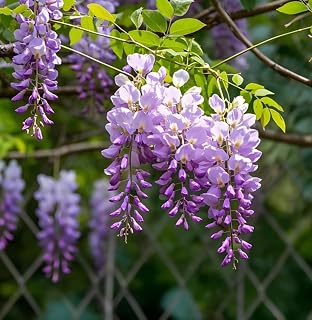
Blue Wisteria Live Plant, 2.5″ Pot
A sensible single-plant entry point if you’re testing whether wisteria suits your site before committing to a trio, and the small pot size establishes quickly when planted into good soil in spring. The blue-violet racemes read as cool and calming overhead, which is exactly what you want above a lounge chair or hammock.
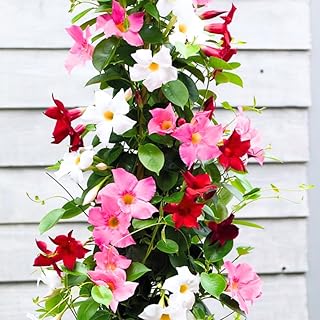
Mixed Mandevilla Live Plants (3-Pack)
The best choice for lighter pergolas and container growing, since mandevilla twines without the crushing weight of woody vines and blooms almost continuously through heat. In zones 9–11 it’s a true perennial; everywhere else, treat these as a spectacular seasonal screen you can move indoors before frost.
Climbing Jasmine Seeds (410 Seeds)
If evening fragrance is the goal, this is the highest-value purchase on the list — a generous seed count means you can sow along the full run of a pergola or fence line and thin to the strongest seedlings. The evergreen habit holds structure through winter, and the scent after dark is the single most effective wind-down cue in this roundup.
Wisteria Floribunda Live Plants (2-Pack)
The pragmatic option for smaller pergolas, arbours, or a single feature side where three plants would compete for root space. Same fast-growing floribunda stock, just scaled to a structure that doesn’t need full four-corner coverage.
Frequently Asked Questions
How long until a climbing plant covers a pergola?
Live wisteria starts typically deliver useful overhead coverage in two to three seasons and reliable flowering by year three or four. Mandevilla covers a light structure within a single warm season, and jasmine grown from seed generally needs one establishing year before it climbs in earnest.
Will flowering vines attract wasps to my seating area?
Bees are the main visitors, and they’re focused on blossom rather than people. Keep the densest flowering mass toward the outer edges of the pergola and away from where drinks and food sit, and the overlap is minimal.
Is wisteria too aggressive for a pergola?
It’s vigorous, not unmanageable. Two prunes a year — a hard cut in late winter and a tidy-up of whippy summer growth — keeps it well-behaved. What it genuinely will not tolerate is a flimsy structure, so build or buy accordingly.
Can I grow these in containers on a deck?
Mandevilla and jasmine both perform well in large pots with a trellis or wire guide up to the pergola beams. Wisteria can be container-grown but needs a substantial planter and regular root pruning, which is why it’s often trained as bonsai instead.
Final Thoughts
For a substantial timber pergola you plan to keep for decades, the Wisteria Floribunda 3-Pack is the strongest long-term investment, with the 2-Pack covering smaller structures just as well. Pair either with the Climbing Jasmine Seeds along one side for evening fragrance, and if you’re working with a lightweight frame or containers, the Mixed Mandevilla trio gives you a full season of colour without asking anything of your rafters.