Key takeaways
- Canopy density over growth speed: A vine that races up the posts but leafs out thinly gives you stripes of glare instead of shade. Look for overlapping, broad-leaved growth — that’s what lowers surface temperature underneath and keeps light soft enough for an afternoon rest.
- Structural weight tolerance: Mature woody climbers can carry hundreds of pounds and expand with real force. Match aggressive species like wisteria to bolted posts and substantial beams; save the lightweight annuals and tender perennials for lattice, wire, or a slimmer modern pergola.
- Fragrance timing: Some vines release scent in the evening rather than midday. If you use your pergola to wind down, that nighttime release is a feature — a consistent, pleasant scent cue can become part of a reliable pre-sleep routine. If anyone in the household is scent-sensitive or asthmatic, choose an unscented foliage vine instead.
- Attachment method and cleanup: Twiners need something to wrap; adhesive climbers grip surfaces directly and can mark masonry or paint. Consider drop as well — heavy petal fall means more sweeping around seating and cushions.
- Hardiness and honesty about your zone: Tropical climbers put on a spectacular single season in cold regions but won’t return. Decide upfront whether you want a permanent green architecture or a container display you overwinter or replace.
What's inside
Most people shop for pergola vines with a picture in their head: dappled light, a slow afternoon, maybe a nap that actually happens. Then reality arrives. The vine they bought grows in three directions except up, scorches by July, drops sticky debris onto the cushions, or attracts a permanent cloud of wasps directly above the chair they wanted to rest in. As someone who spends most of my working life on sleep environments — light, temperature, sound, scent — I can tell you that an outdoor rest space fails for the same reasons a bedroom does. Too much glare. Too much radiant heat. Too much stimulation at exactly the wrong hour.
This guide looks at climbing vines for pergolas through that lens. Which species build a genuine canopy dense enough to cut solar load, which ones flower without turning your seating area into a pollinator highway, which release fragrance in the evening when your nervous system is most receptive to it, and which will quietly pry apart a cedar beam if you look away for two seasons. Below you’ll find the options I’d actually plant, plus a buying framework for matching a vine to your climate, your structure, and the kind of rest you’re trying to protect.
As an Amazon Associate we earn from qualifying purchases.




How to Choose a/an Climbing Vines For Pergola (2026)
- Canopy density over growth speed: A vine that races up the posts but leafs out thinly gives you stripes of glare instead of shade. Look for overlapping, broad-leaved growth — that’s what lowers surface temperature underneath and keeps light soft enough for an afternoon rest.
- Structural weight tolerance: Mature woody climbers can carry hundreds of pounds and expand with real force. Match aggressive species like wisteria to bolted posts and substantial beams; save the lightweight annuals and tender perennials for lattice, wire, or a slimmer modern pergola.
- Fragrance timing: Some vines release scent in the evening rather than midday. If you use your pergola to wind down, that nighttime release is a feature — a consistent, pleasant scent cue can become part of a reliable pre-sleep routine. If anyone in the household is scent-sensitive or asthmatic, choose an unscented foliage vine instead.
- Attachment method and cleanup: Twiners need something to wrap; adhesive climbers grip surfaces directly and can mark masonry or paint. Consider drop as well — heavy petal fall means more sweeping around seating and cushions.
- Hardiness and honesty about your zone: Tropical climbers put on a spectacular single season in cold regions but won’t return. Decide upfront whether you want a permanent green architecture or a container display you overwinter or replace.
The Best Climbing Vines For Pergola (2026)s Reviewed
Boston Ivy Vine Seeds (50 Seeds)
For pure shade performance, Boston ivy is hard to beat — the leaves shingle over each other into a near-solid green roof that measurably cools the space beneath and blocks sightlines from neighbors. Just site it thoughtfully: it climbs by adhesive pads, so keep it on posts and beams rather than siding you plan to repaint.
Thunbergia Grandiflora Sky Vine (Pack of 2)
The blue trumpet vine covers ground fast with substantial foliage and produces soft sky-blue flowers that read as calming rather than loud — a real consideration if you’re trying to keep the space visually restful. It’s genuinely vigorous in warm climates and works as a fast privacy screen along one pergola side.
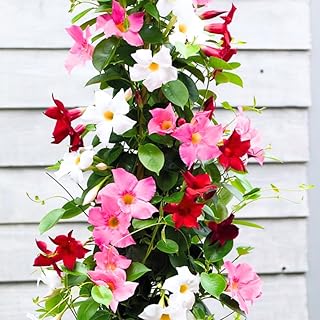
Mixed Mandevilla Live Plants (3 Plants)
Mandevilla is the container-friendly pick: glossy, tidy, long-blooming, and easy to train up a corner post without threatening the structure. In zones 9–11 it’s a warm-hardy perennial; everywhere else, treat it as a seasonal display or bring pots inside before frost.
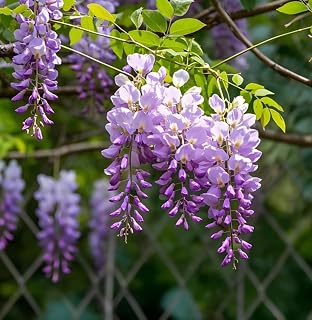
Wisteria Floribunda Live Plants (3 Plants)
Nothing else produces that cascading, filtered-light ceiling — wisteria is the classic pergola vine for good reason, and the spring bloom is genuinely spectacular. It is also the most demanding choice here: build for real weight, prune twice a year, and expect a few seasons before flowering.
Climbing Jasmine Seeds (410 Seeds)
This is my recommendation for anyone using the pergola as a wind-down space, because jasmine’s fragrance intensifies in the evening and pairs naturally with a consistent bedtime routine. The evergreen growth in mild climates means you keep some screening year-round rather than staring at bare wire in January.
Frequently Asked Questions
Which vine gives the most shade fastest?
Boston ivy and Thunbergia build usable coverage quickest, typically within one to two growing seasons. Wisteria eventually creates the heaviest canopy but takes several years to get there.
Will flowering vines attract too many bees over my seating?
Any nectar-rich bloomer will draw pollinators. If that’s a concern, choose a foliage-first vine like Boston ivy for the area directly above chairs, and place flowering vines on the outer posts.
Can climbing vines damage a pergola?
Woody twiners like wisteria genuinely can, through weight and expansion. Use metal or heavy timber, avoid wrapping vines around thin members, and prune on schedule rather than reactively.
Do scented vines actually help with sleep?
Fragrance alone won’t fix insomnia, but a pleasant, consistent evening scent works well as a routine cue, and the cooler, dimmer space a vine canopy creates supports the natural drop in body temperature that precedes sleep.
Final Thoughts
If your priority is shade and privacy, start with the Boston Ivy seeds; if you want a fragrant evening retreat, the Climbing Jasmine seeds are the better investment; and if you have a substantial structure and patience for the payoff, the Wisteria Floribunda plants deliver the pergola canopy everyone else is imitating.