Key takeaways
- CFM at 90 PSI: This single number decides everything. Most HVLP guns want 4–6 CFM sustained at 90 PSI; buy below that and you will get dry spray, tiger stripes, and a compressor that never stops running. Check the rating at 90 PSI, not the inflated “peak” figure.
- Tank volume: A larger tank does not create air, but it stores enough of it to smooth out pressure dips between panels and — critically for noise — lets the motor rest longer between cycles. Twenty gallons and up is the comfortable zone for whole-car work; 6–8 gallons suits panel repairs.
- Measured decibel rating: Treat anything above 80 dB as unsuitable for a home attached to bedrooms. The 66–70 dB models are transformative, and the difference is not subtle: perceived loudness roughly halves for every 10 dB reduction.
- Oil-free versus lubricated: Oil-free pumps eliminate the risk of oil mist contaminating your finish and need almost no maintenance, which is why nearly every quiet model uses them. Lubricated pumps run cooler and last longer under heavy commercial duty cycles.
- Mobility and drainage: Large wheels matter if you roll the unit outside to isolate the noise, and an accessible tank drain valve matters because moisture in the tank means moisture in your paint. Both are worth checking before you buy.
What's inside
Anyone who has run a compressor in an attached garage knows the real cost of the wrong machine: a 90-decibel motor kicking on at 7 a.m. travels straight through drywall, up the stairs, and into the bedroom where someone is still asleep. I spend most of my working life studying how ambient noise fragments sleep architecture — the brief arousals people never remember but always feel — and household equipment is one of the most overlooked offenders. Automotive spray work makes it worse, because painting a panel properly means the compressor cycles for long stretches rather than a quick ten-second burst.
The good news is that the compressor market has quietly reorganized itself around this problem. Oil-free induction motors, insulated shrouds, and larger tanks that reduce cycling frequency have brought several models down into the 66–70 dB range, roughly the level of ordinary conversation. This guide looks at compressors capable of feeding an HVLP or LVLP spray gun through a full basecoat and clearcoat job, and weighs each one on the two things that matter most: whether it can actually keep up with the gun, and whether it will wreck the rest of the household’s rest while it does.
As an Amazon Associate we earn from qualifying purchases.


How to Choose a/an Air Compressor To Paint A Car (2026)
- CFM at 90 PSI: This single number decides everything. Most HVLP guns want 4–6 CFM sustained at 90 PSI; buy below that and you will get dry spray, tiger stripes, and a compressor that never stops running. Check the rating at 90 PSI, not the inflated “peak” figure.
- Tank volume: A larger tank does not create air, but it stores enough of it to smooth out pressure dips between panels and — critically for noise — lets the motor rest longer between cycles. Twenty gallons and up is the comfortable zone for whole-car work; 6–8 gallons suits panel repairs.
- Measured decibel rating: Treat anything above 80 dB as unsuitable for a home attached to bedrooms. The 66–70 dB models are transformative, and the difference is not subtle: perceived loudness roughly halves for every 10 dB reduction.
- Oil-free versus lubricated: Oil-free pumps eliminate the risk of oil mist contaminating your finish and need almost no maintenance, which is why nearly every quiet model uses them. Lubricated pumps run cooler and last longer under heavy commercial duty cycles.
- Mobility and drainage: Large wheels matter if you roll the unit outside to isolate the noise, and an accessible tank drain valve matters because moisture in the tank means moisture in your paint. Both are worth checking before you buy.
The Best Air Compressor To Paint A Car (2026)s Reviewed
Klutch 29-Gallon Air Compressor
With 5.1 CFM at 90 PSI and a 175 PSI ceiling, this is the only unit here I would trust to spray an entire vehicle without pausing to let pressure recover. It is the loudest option in the group, so plan on running it in a detached space or during waking hours — but for genuine capability, it is the clear winner.
VEVOR 13-Gallon Air Compressor
The 66 dB rating is the quietest in this roundup, and 4.6 SCFM at 90 PSI is enough for most LVLP guns doing panels and bumpers. This is the compressor I recommend to people whose workshop shares a wall with a bedroom.
8.1 Gallon Ultra Quiet Air Compressor
A 4.52 CFM output from a 1.5 HP motor at 70 dB is a genuinely efficient combination, though the 115 PSI maximum and small tank mean more frequent cycling on long passes. Best suited to spot repairs and single-panel refinishing.
8 Gallon Quiet Oil Free Air Compressor
At 68 dB with 4.2 CFM and a bundled hose, this is the most complete starter package for someone stepping into automotive paint for the first time. Expect to work panel by panel rather than continuously.
MZB 6.4 Gallon Ultra Quiet Air Compressor
The smallest tank here, but 70 dB operation and built-in wheels make it easy to position and easy to live with. Think touch-ups, wheels, and trim rather than full respray work.
Frequently Asked Questions
How much CFM do I really need to paint a car?
Check your spray gun’s specification sheet and add roughly 30 percent headroom. Most HVLP guns need 4–6 CFM at 90 PSI sustained; LVLP guns are more forgiving and often run happily on 3–4 CFM.
Will a quiet compressor actually protect someone’s sleep?
It helps considerably. Sleep disruption is driven by sudden increases in sound level rather than steady background noise, and a 68 dB compressor behind a closed garage door typically arrives at the bedroom well below the threshold that triggers arousals — unlike an 85 dB unit.
Do I need an air dryer or filter?
Yes. An inline water separator and filter are non-negotiable for paint work, regardless of which compressor you choose, because compressed air always carries moisture that will blister your finish.
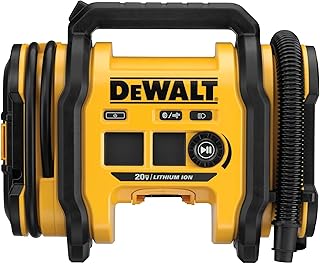
Can the DEWALT DCC020IB be used for painting?
No. It is a cordless tire inflator designed for short high-pressure bursts, and it cannot deliver the sustained volume a spray gun requires. It is excellent as a companion tool for tires and air mattresses.
Final Thoughts
If you have the space and can isolate the noise, the Klutch 29-Gallon is the compressor that will actually finish a full respray without compromise. For most home users — particularly those working in an attached garage while others sleep — the VEVOR 13-Gallon strikes the best balance of 66 dB operation and usable output, with the 8 Gallon Quiet Oil Free model a strong budget alternative for panel work.