Key takeaways
- Capacity with margin: Add both sleepers’ weight, then look for a rating at least 30–40% higher. A 475–500 lb stand isn’t overkill for two adults — that headroom is what keeps the fabric from stretching taut and flattening the supportive curve over months of use.
- Spreader bar or gathered end: Spreader-bar hammocks stay open and flat, which suits side-by-side lounging, reading, and easy entry. Gathered-end (camping style) hammocks wrap around you and are far better for actual overnight sleep, because they let you lie diagonally without shoulder squeeze. Neither is “better” — they solve different problems.
- Stand footprint and stability: Measure your space before you buy. A 9-foot stand needs roughly 11 feet of clearance in practice. Look for anti-tip crossbars, wide-set feet, and a heavy-gauge steel frame; wobble is the fastest way to ruin the rocking sensation that makes hammocks calming in the first place.
- Fabric and thermal comfort: Cotton and quilted polyester breathe well and feel soft for daytime rest, but hold moisture outdoors. Ripstop nylon dries fast and packs small, though it can feel clammy in humidity. If you plan to nap in direct afternoon sun, prioritize a lighter color and an open weave.
- Setup and portability: Tool-free assembly in 10–15 minutes is now standard on quality stands. If you’ll move the hammock between deck and yard, confirm it disassembles into carry-bag sections rather than requiring a full rebuild each time.
What's inside
Sharing a hammock sounds effortless until you’re actually in one. Two bodies mean roughly double the load, a shifting center of gravity, and a fabric bed that either cradles you both in a gentle diagonal or dumps you into a hot, folded cocoon in the middle. From a sleep-wellness perspective this matters more than most shoppers expect: the reason a hammock feels so restorative is that a properly hung one supports the spine in a shallow, continuous curve and adds a slow rocking motion that measurably slows breathing and quiets the nervous system. Get the geometry wrong and you lose all of that, along with your afternoon.
This guide is written for buyers who want a two-person hammock they’ll actually nap in — not one that sits folded in the garage. Below you’ll find the models worth considering in 2026, along with the specifications that determine whether a hammock becomes a genuine rest space or a novelty. We look at weight capacity and how much of it is real usable headroom, spreader bar design, stand stability, fabric breathability, and how each option behaves indoors versus on a patio or a trail.
As an Amazon Associate we earn from qualifying purchases.




How to Choose a 2-Person Hammock (2026)
- Capacity with margin: Add both sleepers’ weight, then look for a rating at least 30–40% higher. A 475–500 lb stand isn’t overkill for two adults — that headroom is what keeps the fabric from stretching taut and flattening the supportive curve over months of use.
- Spreader bar or gathered end: Spreader-bar hammocks stay open and flat, which suits side-by-side lounging, reading, and easy entry. Gathered-end (camping style) hammocks wrap around you and are far better for actual overnight sleep, because they let you lie diagonally without shoulder squeeze. Neither is “better” — they solve different problems.
- Stand footprint and stability: Measure your space before you buy. A 9-foot stand needs roughly 11 feet of clearance in practice. Look for anti-tip crossbars, wide-set feet, and a heavy-gauge steel frame; wobble is the fastest way to ruin the rocking sensation that makes hammocks calming in the first place.
- Fabric and thermal comfort: Cotton and quilted polyester breathe well and feel soft for daytime rest, but hold moisture outdoors. Ripstop nylon dries fast and packs small, though it can feel clammy in humidity. If you plan to nap in direct afternoon sun, prioritize a lighter color and an open weave.
- Setup and portability: Tool-free assembly in 10–15 minutes is now standard on quality stands. If you’ll move the hammock between deck and yard, confirm it disassembles into carry-bag sections rather than requiring a full rebuild each time.
The Best 2-Person Hammocks of 2026, Reviewed
ANAGOO 2 Person Hammock with Stand (500 lb)
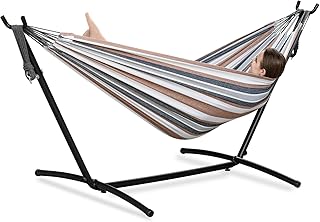
The 500 lb rating and anti-tip spreader bars make this the most confidence-inspiring pick for two full-size adults, and the adjustable height is genuinely useful — lowering the hang point deepens the sag and improves lumbar support. Tool-free setup in about ten minutes means it’s realistic to move seasonally between a sunroom and a patio.
GAFETE 12ft 2 Person Hammock with Hardwood Spreader Bar
The quilted fabric and removable pillow make this the best choice if you want something that reads as furniture rather than gear, and the 12-foot length gives two people room to stagger their positions instead of competing for the center. The side pocket is a small touch that keeps phones and books off the floor during a nap.
2 Person Hammock with Stand, 475 lbs, Dark Grey
A no-nonsense heavy-duty option that gets the fundamentals right: a stable steel frame, honest capacity, and a neutral color that hides outdoor dust well. It’s the value pick for buyers who care about durability over extras.
Double Portable Hammock with Curved Spreader Bar
The curved bar is the standout feature here — it lifts the edges slightly, which noticeably reduces the tipping sensation when one person climbs in or shifts position. Included balance ropes add another layer of reassurance for nervous first-timers or households with kids.
Sunyear Camping Hammock with Net
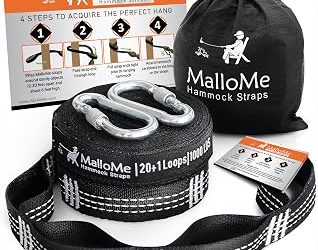
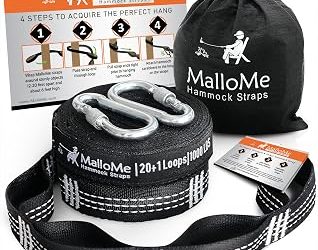
This is the only true sleep-anywhere option on the list: gathered ends, an integrated bug net, and 10-foot straps that let you dial in the ideal 30-degree hang angle between trees. For actual overnight rest outdoors, its diagonal lay beats any spreader-bar model.
Frequently Asked Questions
Can two adults really sleep in one hammock overnight?
Comfortably, rarely — every shift transfers to the other person, which fragments sleep. Two people can nap together happily, but for overnight rest most couples do better with two single hammocks hung nearby.
Are hammocks actually good for your back?
A correctly hung hammock supports the spine evenly and eliminates the pressure points that firm mattresses create. Problems come from over-tight hanging, which forces the body flat and compresses the shoulders.
How far apart should the anchor points be?
Aim for a span two to three feet longer than the hammock, with straps angled around 30 degrees from horizontal. That produces the gentle banana curve you want rather than a taut, unstable plank.
Can I leave a hammock with a stand outside year-round?
The steel stand usually tolerates it with occasional rust treatment, but the fabric shouldn’t. Bring the bed indoors between uses, or expect UV fading and mildew within a single season.
Final Thoughts
For most households, the ANAGOO 2 Person Hammock with Stand is the safest all-around choice thanks to its 500 lb capacity and anti-tip design, while the GAFETE 12ft model is the one to pick if comfort and a furniture-like finish matter most. If your priority is genuine outdoor sleep rather than backyard lounging, the Sunyear Camping Hammock remains the smarter buy.