Key takeaways
- Base oil and resin content: Tung-oil-based blends with added polymers cure harder and shed water better than straight linseed formulas, which matters most on horizontal surfaces like armrests and tabletops that collect rain.
- UV absorbers: Sun exposure, not moisture, is what greys teak fastest. A finish that explicitly lists UV inhibitors will hold its colour through a full summer instead of fading by August.
- Finish tone: Golden and amber oils deepen the wood’s warmth; transparent matte oils leave teak looking close to its natural silvery-honey state. Decide which you want before you open the can, because reversing it means sanding.
- Coverage per bottle: A six-piece dining set with a table typically drinks 30–50 oz per full treatment. Buying a 16 oz bottle for a large set means running out mid-project and risking visible lap lines.
- Prep requirements: Oil cannot penetrate through mildew, old finish, or oxidised fibre. If your furniture is already grey, budget for a cleaner and brightener rather than expecting oil alone to restore it.
What's inside
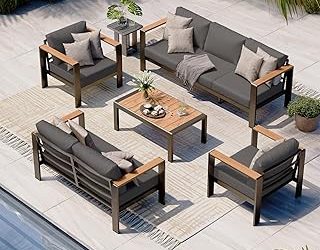
Ask anyone who guards their rest carefully and they’ll tell you the same thing: a good evening needs somewhere to land. For a lot of us, that place is a chaise or a low bench on the patio during the hour before bed — the stretch where the light drops, the phone goes inside, and the nervous system finally downshifts. The trouble is that untreated teak doesn’t hold up to that nightly ritual. Sun bleaches it, dew soaks into it, and within a season the wood you sit on to unwind feels dry, splintery, and faintly grey. Nobody lingers on furniture that’s turned scratchy.
Teak oil is the cheapest fix for that problem, but the category is genuinely confusing. Products labelled “teak oil” rarely contain teak oil at all — most are blends of linseed or tung oil thinned with solvents, and the formulations behave very differently depending on whether you want a warm amber tone, an invisible matte seal, or a full restoration of wood that’s already weathered. Below, I’ve pulled together the finishes worth your money in 2026, plus the buying criteria that actually predict how a can will perform on a patio set that lives outdoors year-round.
As an Amazon Associate we earn from qualifying purchases.


How to Choose a Teak Oil For Patio Furniture (2026)
- Base oil and resin content: Tung-oil-based blends with added polymers cure harder and shed water better than straight linseed formulas, which matters most on horizontal surfaces like armrests and tabletops that collect rain.
- UV absorbers: Sun exposure, not moisture, is what greys teak fastest. A finish that explicitly lists UV inhibitors will hold its colour through a full summer instead of fading by August.
- Finish tone: Golden and amber oils deepen the wood’s warmth; transparent matte oils leave teak looking close to its natural silvery-honey state. Decide which you want before you open the can, because reversing it means sanding.
- Coverage per bottle: A six-piece dining set with a table typically drinks 30–50 oz per full treatment. Buying a 16 oz bottle for a large set means running out mid-project and risking visible lap lines.
- Prep requirements: Oil cannot penetrate through mildew, old finish, or oxidised fibre. If your furniture is already grey, budget for a cleaner and brightener rather than expecting oil alone to restore it.
The Best Teak Oils For Patio Furniture (2026) Reviewed
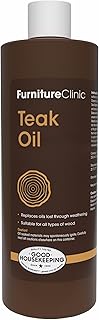
Furniture Clinic Teak Oil
A refined, low-odour oil that soaks in readily and dries to a genuinely natural matte rather than the plasticky sheen some blends leave behind. At 17 oz it’s best suited to a bench, a pair of loungers, or annual touch-ups on a set you already maintain.
Nordicare Teak Oil for Outdoor Furniture
The practical choice for anyone treating a full dining set, since 84.5 oz covers a large project without the awkward mid-job refill. It’s forgiving to apply and works across acacia and oak as well as teak, which is useful if your patio is a mix of woods.
STAR BRITE Premium Golden Teak Oil
Marine-grade pedigree shows here: tung oil polymers plus UV absorbers make this the most weather-resistant option in the group, and it dries fast enough to recoat the same afternoon. Expect a distinctly warm golden cast, which flatters older teak beautifully but will shift the tone of pale new wood.
Furniture Clinic Teak Care Kit
If your furniture has already gone silver-grey, this is the honest starting point — cleaner and brightener first, oil second, in the order the wood actually needs. It costs more than a bottle of oil alone but delivers restoration rather than a patchy seal over dead fibre.
Protect Aqua Teak Oil
A transparent, water-repellent finish that preserves teak’s natural colour instead of darkening it, making it well matched to modern furniture and indoor pieces like shower benches. Application is straightforward, though larger sets will need more than one 16.8 oz bottle.
Frequently Asked Questions
How often should I oil patio furniture?
Twice a year in full sun, once a year in shade or covered areas. Watch the wood rather than the calendar — when water stops beading and the surface looks chalky, it’s time.
Does teak actually need oiling?
Structurally, no. Teak’s natural oils protect it for decades untreated. Oiling is about appearance and surface comfort, which is exactly the point if you sit on it every evening.
Can I oil damp furniture?
No. Give it 48 hours of dry weather after cleaning. Oil applied over trapped moisture cures unevenly and can encourage mildew beneath the film.
Why did my oiled furniture develop black spots?
Almost always mildew feeding on the oil itself, usually in shaded, poorly ventilated spots. Clean with a dedicated teak cleaner, let it dry fully, and apply thinner coats next time.
Final Thoughts
For most patios, the STAR BRITE Premium Golden Teak Oil offers the best weather protection per dollar, while Nordicare is the sensible pick if you’re treating a full set in one weekend. If your furniture has already weathered to grey, start with the Furniture Clinic Teak Care Kit — restoring the wood properly is what turns a patio back into somewhere you’ll actually want to sit as the day winds down.