Key takeaways
- Wood species and finish: Western red cedar is the benchmark for outdoor structures — naturally rot- and insect-resistant, dimensionally stable, and light enough that a two-person crew can raise beams safely. Factory-stained reddish-brown or dark finishes buy you a season or two before you need to re-seal; unfinished cedar will silver attractively but wants a UV-blocking oil within the first year.
- Roof style versus your goal: Slatted trellis roofs deliver the dappled, moving shade that makes afternoon rest comfortable and lets plants climb. Arched roofs add height and airflow. Hardtop metal roofs give you true rain shelter but eliminate light filtering entirely — great for a dining zone, less ideal for a daybed or hammock.
- Wind rating and anchoring hardware: Look for a published wind rating and included concrete anchors or ground stakes. A pergola that rattles in a gust is a pergola you will lie awake listening to. Anchoring into concrete footings or a properly fastened deck frame matters more than post thickness alone.
- Footprint versus usable space: Subtract roughly 18 inches per side for post placement and beam overhang when planning furniture. A 10′ x 12′ structure comfortably holds a lounger and side table or a four-seat dining set — not both. Larger 12′ x 20′ and 12′ x 24′ spans let you separate a quiet corner from the social one.
- Assembly reality check: Expect four to twelve hours and at least two people for most cedar kits. Pre-drilled, numbered components and clear hardware bagging are worth paying for; check whether the manufacturer supplies a wind-rating-compliant hardware set or expects you to source lag bolts locally.
What's inside
As a sleep-wellness practitioner, I spend most of my working hours talking about mattresses, blackout curtains, and bedtime routines — and almost as much time reminding people that good sleep is built during daylight. Morning and late-afternoon light exposure anchors your circadian rhythm; unbroken glare and 95-degree afternoons do the opposite, driving people indoors where artificial light flattens the signals their body clock depends on. A wood pergola is one of the few backyard structures that solves this elegantly. It filters light instead of blocking it, creating dappled shade cool enough to sit in for an hour without wilting, and it gives you a defined outdoor room your nervous system can learn to associate with winding down.
The trouble is that pergola shopping punishes the unprepared. Listings blur cedar with pressure-treated pine, “kit” can mean anything from pre-drilled beams to a pile of raw lumber, and roof styles range from open rafters that shed no rain to solid metal panels that turn the whole structure into a pavilion. This guide covers what actually matters — species and finish, roof geometry, wind and anchoring specs, footprint versus usable seating area, and assembly realism — then walks through the standout wood pergolas worth your attention in 2026, with notes on which ones genuinely support restful outdoor time versus which are better suited to grilling and entertaining.
As an Amazon Associate we earn from qualifying purchases.



How to Choose a/an Wood Pergola (2026)
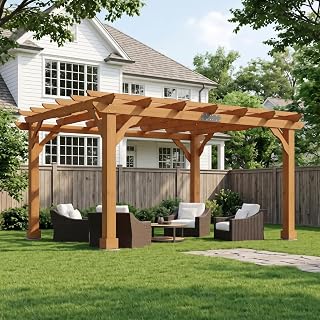
- Wood species and finish: Western red cedar is the benchmark for outdoor structures — naturally rot- and insect-resistant, dimensionally stable, and light enough that a two-person crew can raise beams safely. Factory-stained reddish-brown or dark finishes buy you a season or two before you need to re-seal; unfinished cedar will silver attractively but wants a UV-blocking oil within the first year.
- Roof style versus your goal: Slatted trellis roofs deliver the dappled, moving shade that makes afternoon rest comfortable and lets plants climb. Arched roofs add height and airflow. Hardtop metal roofs give you true rain shelter but eliminate light filtering entirely — great for a dining zone, less ideal for a daybed or hammock.
- Wind rating and anchoring hardware: Look for a published wind rating and included concrete anchors or ground stakes. A pergola that rattles in a gust is a pergola you will lie awake listening to. Anchoring into concrete footings or a properly fastened deck frame matters more than post thickness alone.
- Footprint versus usable space: Subtract roughly 18 inches per side for post placement and beam overhang when planning furniture. A 10′ x 12′ structure comfortably holds a lounger and side table or a four-seat dining set — not both. Larger 12′ x 20′ and 12′ x 24′ spans let you separate a quiet corner from the social one.
- Assembly reality check: Expect four to twelve hours and at least two people for most cedar kits. Pre-drilled, numbered components and clear hardware bagging are worth paying for; check whether the manufacturer supplies a wind-rating-compliant hardware set or expects you to source lag bolts locally.
The Best Wood Pergola (2026)s Reviewed
Backyard Discovery Beaumont 12′ x 10′ Cedar Pergola
The Beaumont is the most complete package here: a genuine high-wind rating, all-season cedar construction, and a built-in PowerPort that lets you run a fan or a warm, low-color-temperature lamp without draping extension cords across the lawn. If you want one structure that works for evening reading and Saturday dinners alike, start here.
BlueWish 10′ x 12′ Cedar Patio Pergola
A straightforward, solidly framed slatted-trellis pergola that hits the sweet spot for a single seating zone on a deck or patio. The lattice spacing throws the kind of shifting shade that keeps a lounger usable through mid-afternoon, and the structure feels reassuringly rigid once anchored.
Jocisland 12′ x 24′ Premium Cedar Pergola
At 24 feet long, this is the pick for anyone who wants distinct zones — a quiet end for rest, the other for dining. The reddish-brown premium cedar and included ground stakes make it feel considered rather than improvised, though budget a full day and a helper for assembly.
12′ x 20′ Hardtop Gazebo with Double Metal Roof
The double metal roof and corner shelving make this the choice for genuine weather protection and outdoor cooking. Just be clear-eyed about the tradeoff: you gain rain shelter and lose the filtered daylight that makes an open pergola so restorative.
AMERLIFE 12′ x 10′ Cedar Wood Pergola
A heavy-duty frame in solid cedar with a well-executed slatted roof and a warm red-brown finish that looks finished from day one. It’s the tidiest compromise between substantial build quality and a footprint that suits an average patio.
Frequently Asked Questions
Can a pergola actually improve my sleep?
Indirectly but meaningfully. Regular daylight exposure — especially in the morning and again before sunset — strengthens circadian signaling, and a shaded outdoor space makes that exposure sustainable in hot or bright climates. A comfortable evening spot outdoors also helps you decompress away from screens, which is one of the more reliable levers on sleep onset.
Does a slatted pergola roof keep rain off?
No. Slatted and trellis roofs manage sun and heat, not precipitation. If you need dry space, choose a hardtop model or plan to add a retractable canopy or waterproof shade sail beneath the rafters.
How long will a cedar pergola last?
Well-anchored, properly sealed cedar routinely lasts 15 to 20 years or more. Re-apply a UV-protective exterior oil or stain every two to three years, keep the post bases clear of soil and mulch, and inspect hardware each spring.
Do I need a permit?
It depends on your municipality, structure size, and whether it’s freestanding or attached to the house. Many jurisdictions exempt small freestanding open-roof structures, but setback rules and HOA design guidelines still apply. Check before you order.
Final Thoughts
For most buyers, the Backyard Discovery Beaumont is the smartest all-around investment — the wind rating and integrated PowerPort make it the easiest pergola to turn into a genuinely restful evening space. If you have the yard for it, the Jocisland 12′ x 24′ lets you carve out a quiet retreat separate from the entertaining zone, while the AMERLIFE 12′ x 10′ delivers heavy-duty cedar construction on a footprint that fits a typical patio without overwhelming it.