Key takeaways
- Most window fans are designed for vertical sliding (double-hung) windows. Casement and sliding windows often need a different product or a custom panel.
- Seat the fan in the opening, then lower the sash onto the frame and extend the side panels until they meet the window frame. Use any locking pins or brackets the maker supplies.
- Seal the gaps. Foam weather stripping or the supplied cushions reduce drafts, rain and insects.
- Do not leave the fan running in the rain. Water on a plugged-in electric appliance is a hazard. Unplug it and move it in if a storm is forecast, as the maker’s instructions advise.
- Keep curtains, blinds and cords clear of the blades and the air intake.
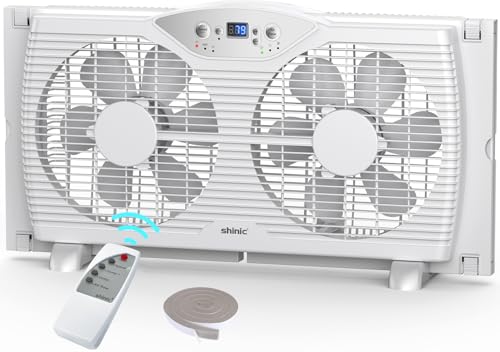
A twin-fan reversible window unit with a remote suits most bedrooms and living rooms, a single-fan expandable model suits a small or narrow window, and a plain manual box fan suits shoppers who rarely change the airflow direction. A reversible window fan can pull cooler evening air in or push stale, warm air out, and a remote lets you change speed or direction from the sofa or bed without reaching across the room. This guide explains how to choose between the common designs, what to look for in the listed specifications, and how to install and care for one safely.
Our top picks


As an Amazon Associate we earn from qualifying purchases at no extra cost to you.
At a Glance: Window Fan Types Compared
| Type | Best for | Typical features the makers list | Limits |
|---|---|---|---|
| Twin-fan expandable (remote) | Bedrooms, home offices, wider windows | Two fan blades, side panels that slide to fit, several speeds, reversible airflow, remote handset | Needs a window opening wide enough for the panels; heavier than single-fan units |
| Single-fan reversible (remote) | Small or narrow windows, kitchens, studios | One larger blade, adjustable side extenders, thermostat or timer on some models | Lower total airflow than twin designs |
| Manual twin-fan (no remote) | Budget-minded shoppers who set the fan once | Rocker or dial controls, expandable panels | You must walk over to change settings |
| Box fan placed in window | Occasional use, renters with odd windows | Basic speeds, lightweight | Not designed to seal the opening; gaps let in insects and rain |
| Smart or app-connected window fan | Shoppers who want scheduling and phone control | Wi-Fi control, timers, sometimes temperature sensing | Extra setup; some features depend on a phone app |
Established makers of window fans include Lasko, Bionaire, Holmes, Air King and Comfort Zone, and several lesser-known brands sell similar twin-fan designs. Because model lines change often, treat the feature list on the maker’s own product page as the reference for what a given unit offers, and compare listed airflow, window-size range and control type rather than relying on the name alone.
Why Reversible Airflow Matters
A reversible fan has two jobs. In the evening, when outdoor air drops below indoor temperature, running it in intake mode pulls cooler air into the room. During the day, or when cooking, running it in exhaust mode pushes warm or stale air outdoors. The most common cooling strategy people describe is to use two windows: one fan blowing in on the shady side, and another window cracked open on the opposite side so air flows through the room. Some twin-fan models can run one blade in and the other out at the same time, which helps move air through a single-window room.
Check that the direction control is on the remote as well as the fan body. Some units only let you reverse at the unit itself, which defeats much of the convenience. Reviewers who cover window fans commonly point out that a remote is most useful for bedroom use, where you may want to dial the speed down after falling asleep without getting up.
What to Look for in the Specifications
Window size range
Expandable panels slide out to fill the gap between the fan frame and the window sash. Makers publish a minimum and maximum window width, and a minimum window height. Measure the opening inside the frame before you shop. If your window is narrower than the stated minimum, the fan will not seat properly; if it is wider than the maximum, you will leave gaps that let in rain and insects.
Airflow rating
Airflow is usually stated in cubic feet per minute (CFM), and some makers give separate figures for each speed. Higher is not always better: a high rating often comes with more noise. For a bedroom, look at the lowest speed and see how the maker describes it. For a larger living room, a higher top rating helps move air through the space. Compare CFM figures only between products that state them under the same conditions.
Number of speeds and extra modes
Three speeds are common on basic units; some models list more, plus a timer or a thermostat that turns the fan on and off around a set temperature. A timer is handy for sleeping, since the fan can stop after a set period. A thermostat mode helps when you are out, but read the manual to understand how it behaves when the room reaches the target.
Noise
Makers rarely publish decibel readings for window fans, so independent reviewers are the better source. Expect some sound from any two-blade unit. Seating the fan firmly in the window and using the cushioned seals or foam strips provided can reduce rattling from the frame.
Remote design
Look for a remote with a battery compartment you can open easily, clearly marked buttons for speed and direction, and a place to park the remote on the fan or beside the bed. Some remotes are infrared and need a line of sight to the fan; others use a different wireless method. If you have a window high up or across the room, confirm the stated remote range in the manual.
Who Should Pick What
| Pick this if… | Choose |
|---|---|
| You want to change speed and direction from bed | A reversible twin-fan model with a remote that includes a direction button |
| Your window is narrow or small | A single-fan unit with adjustable extenders, after checking the stated minimum width |
| You want the lowest cost and rarely adjust it | A manual twin-fan model with dial controls |
| You want scheduling and phone control | An app-connected model, and read what features still work without the app |
| You have a sliding or casement window | Check the manual first; many window fans are designed only for double-hung windows |
| Noise matters most | Read independent noise comments and choose a model with a quiet low setting |
Budget Tiers
Budget
Entry-level units usually have manual controls, a few speeds and a simple reversing switch, or none at all. They cool a room adequately for occasional use, but the plastic frames can feel flexible and the fit around the sash may need extra weather stripping.
Mid-range
This is where most remote-equipped reversible models sit. Makers add a handheld remote, more speeds, a timer and sturdier extenders. For most households this tier balances features and durability.
Premium
Premium units tend to add app control, temperature sensing, quieter motors, better panels or a more refined frame. They make sense if you run the fan every night in warm months or if the fan is the main way you cool a room.
Installation and Fit Notes
- Most window fans are designed for vertical sliding (double-hung) windows. Casement and sliding windows often need a different product or a custom panel.
- Seat the fan in the opening, then lower the sash onto the frame and extend the side panels until they meet the window frame. Use any locking pins or brackets the maker supplies.
- Seal the gaps. Foam weather stripping or the supplied cushions reduce drafts, rain and insects.
- Do not leave the fan running in the rain. Water on a plugged-in electric appliance is a hazard. Unplug it and move it in if a storm is forecast, as the maker’s instructions advise.
- Keep curtains, blinds and cords clear of the blades and the air intake.
Safety and Care
Read the instruction manual before installing. Fans should be plugged directly into a wall outlet that matches the electrical rating on the label, and extension cords are generally discouraged by manufacturers for heavy-draw appliances. If the plug, cord or housing is damaged, stop using the fan and contact the maker or a qualified electrician. If you have children or pets, choose a model with guards that meet the maker’s safety standards and place it where small hands cannot reach the blades. Look for the listing mark of a recognized safety testing laboratory on the product label if that matters to you.
For cleaning, unplug the fan and wipe the grille and blades with a slightly damp cloth. Dust on the blades reduces airflow and can raise noise. Do not immerse the unit in water. Store it in a dry place in the cool season, and remove the remote batteries if you will not use it for months so they do not leak.
Alternatives to Consider
- Tower or pedestal fans: They do not seal a window, but they move air inside the room and can pair with a window fan that exhausts hot air.
- Whole-house or attic fans: A better fit if you want to ventilate an entire home, though installation is more involved and often needs professional help.
- Portable air conditioners: For humid or very hot climates, a window fan alone may not be enough, and an air conditioner removes heat and moisture more effectively.
- Ceiling fans: They provide steady air movement in occupied rooms and work well alongside open windows.
Frequently Asked Questions
Do reversible window fans really cool a room?
They move air rather than chill it, so they work best when outdoor air is cooler than indoor air. Pulling in evening air and exhausting warm air can lower the room temperature noticeably on mild nights. On very hot or humid days an air conditioner is the more effective option.
Can I use a window fan in a casement or sliding window?
Most window fans are made for double-hung windows. Some makers sell models or accessory panels for other window types, so read the product page and manual for the stated window styles before buying.
Is it better to blow air in or out?
Blowing in is useful when outdoor air is cooler than the room, such as evenings. Blowing out helps remove hot air, cooking smells or stale air. Opening a second window on the far side helps air flow through the space.
How loud are window fans?
Noise varies by model and speed, and makers seldom publish decibel figures. Independent reviewers are a better source. Using the lowest speed and sealing the frame well can reduce humming and rattling.
Are window fans safe to leave on overnight?
Many people use them overnight, and some models include a timer. Follow the manual, plug the fan directly into a suitable outlet, keep cords and curtains clear, and stop use if you notice damage, a burning smell or unusual noise. A qualified electrician can help with any wiring concerns.
How do I keep insects out?
Seal the gaps around the extenders with weather stripping or the supplied cushions. Some fans mount outside a screen or alongside one, and the maker’s instructions will show the intended setup.