Key takeaways
- Cooling technology: Thermoelectric (Peltier) units are near-silent and vibration-free, making them the better bedside neighbor, but they only cool to roughly 30–40°F below ambient and can’t freeze. Compressor fridges hold true temperatures and make ice, at the cost of a cycling hum you’ll notice at 2 a.m.
- Noise floor and cycle pattern: Look for units rated at or under 38–40 dB. Equally important is how the compressor starts — a soft ramp-up is far less sleep-disruptive than an abrupt click-and-surge, because sudden onset noise is what triggers cortical arousals.
- Placement clearance and vibration path: Compressors need two to four inches of rear and side airflow, both for efficiency and to keep waste heat off your bed. Never let the cabinet touch a bed frame, desk, or hollow wardrobe; put a dense rubber mat underneath to decouple it from the floor.
- Light discipline: Interior bulbs, illuminated logos, and mirror LEDs all emit in the short-wavelength range that suppresses melatonin. Prefer units with no exterior light, a dimmable setting, or a panel you can cover with a small square of blackout tape.
- Capacity versus room heat: A 3+ cubic foot fridge with a freezer is genuinely useful, but it’s also a small space heater running all night. In a room without independent climate control, a compact 2.6 cu ft unit or a personal cooler often produces better sleep than the extra storage is worth.
What's inside
Dorm rooms are sleep environments first and storage units second, but almost nobody shops for a mini fridge that way. As a sleep-wellness consultant, I spend a lot of time in small bedrooms diagnosing why a student who “goes to bed at eleven” is still awake at one. Surprisingly often, the culprit is humming in the corner: a compressor cycling on every twenty minutes, a bright blue LED bleeding onto the pillow, or a unit shoved against the bed frame so vibration travels straight through the mattress. Fragmented sleep rarely announces itself. It shows up as a 9 a.m. lecture that refuses to stick.
That’s the lens for this guide. I’ve prioritized acoustic behavior, thermoelectric versus compressor cooling, vibration transfer, light pollution, and heat dumped back into a room that’s already too warm to sleep well in — then weighed those against the practical realities of shared square footage, RA rules, and move-out day. Below are six units worth considering for 2026, from a 6-liter bedside cooler to a 3.2 cubic foot two-door fridge, with notes on which sleeper each one actually suits.
As an Amazon Associate we earn from qualifying purchases.


How to Choose a Mini Fridge For Dorms (2026)
- Cooling technology: Thermoelectric (Peltier) units are near-silent and vibration-free, making them the better bedside neighbor, but they only cool to roughly 30–40°F below ambient and can’t freeze. Compressor fridges hold true temperatures and make ice, at the cost of a cycling hum you’ll notice at 2 a.m.
- Noise floor and cycle pattern: Look for units rated at or under 38–40 dB. Equally important is how the compressor starts — a soft ramp-up is far less sleep-disruptive than an abrupt click-and-surge, because sudden onset noise is what triggers cortical arousals.
- Placement clearance and vibration path: Compressors need two to four inches of rear and side airflow, both for efficiency and to keep waste heat off your bed. Never let the cabinet touch a bed frame, desk, or hollow wardrobe; put a dense rubber mat underneath to decouple it from the floor.
- Light discipline: Interior bulbs, illuminated logos, and mirror LEDs all emit in the short-wavelength range that suppresses melatonin. Prefer units with no exterior light, a dimmable setting, or a panel you can cover with a small square of blackout tape.
- Capacity versus room heat: A 3+ cubic foot fridge with a freezer is genuinely useful, but it’s also a small space heater running all night. In a room without independent climate control, a compact 2.6 cu ft unit or a personal cooler often produces better sleep than the extra storage is worth.
The Best Mini Fridges For Dorms (2026) Reviewed
Frigidaire EFMIS171 Retro Portable Personal Fridge (Pink)
This is a thermoelectric personal cooler, which is exactly why I recommend it to light sleepers and anyone in a shared room: no compressor means no cycling and no vibration traveling into the mattress. Treat it as a six-can bedside unit for water, medication, and skincare rather than a grocery fridge, and appreciate that the AC/DC adapter makes move-in and road trips painless.
Frigidaire EFR840 Retro Mini Fridge with Freezer
At 3.2 cubic feet with a true second door, this is the storage workhorse of the group, and the separated freezer compartment means you open the fridge side less often — which keeps the compressor from working overtime at night. Site it across the room from the bed on a rubber pad, and the retro shell earns its keep as furniture rather than appliance clutter.
EUHOMY 3.2 Cu Ft Two-Door Mini Fridge
EUHOMY’s two-door build offers the same generous capacity in a plainer black cabinet, with a reversible door that solves the awkward corner placements dorms specialize in. Reported operating noise sits in the high-30s decibel range, which is quiet for a compressor unit, though I’d still keep at least three feet between it and the headboard.
2.6 Cu Ft Compact Fridge with Freezer
The smaller footprint and low-noise, energy-efficient design make this my pick for rooms where the fridge has to live within arm’s reach of the bed. You trade about half a cubic foot of space for meaningfully less waste heat and a shorter compressor duty cycle — a good bargain in a warm, poorly ventilated building.
Frigidaire EFR321-AMZ 3.1 Cu Ft Stainless Steel Mini Fridge
A single-door 3.1 cu ft unit with a small chiller shelf, this Platinum Series model runs steadily and looks deliberate in a stainless finish that hides fingerprints better than gloss. Choose it if you want capacity without a second door swinging into a tight walkway.
Frequently Asked Questions
How far should a mini fridge be from my bed?
Aim for at least three feet for any compressor unit, ideally with the exhaust side facing away from you. Thermoelectric coolers like the EFMIS171 can sit on a nightstand safely, since they produce no vibration and only mild warmth.
Will a mini fridge actually keep me awake?
It can. The issue isn’t loudness but variability — intermittent noise and sudden onset cause more arousals than steady sound at the same volume. If you’re sensitive, a fan or white-noise machine that masks the compressor’s start is more effective than trying to find a silent fridge.
Is a freezer compartment worth it in a dorm?
Only if you’ll use it. Freezer sections raise energy draw and run time, and in most dorm fridges they hold temperatures closer to a chiller than a true freezer. If you mostly store drinks, yogurt, and leftovers, skip it.
Do skincare fridges belong in a bedroom?
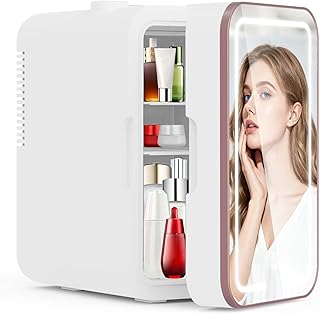
They’re pleasant and harmless, with one caveat: the illuminated mirror. Use the YLFU 6L unit’s dimmable LED at its lowest setting in the evening, or better, don’t use the mirror function within an hour of bed, since bright light at close range is a reliable way to delay sleep onset.
Final Thoughts
If sleep quality is your priority, the Frigidaire EFMIS171 personal fridge is the safest bedside choice — silent, cool enough for drinks and serums, and completely vibration-free. For students who need real storage, the Frigidaire EFR840 delivers the most usable capacity with a genuine freezer compartment, while the 2.6 Cu Ft compact model is the smarter pick in a cramped or already-warm room where less waste heat matters more than an extra shelf. Whichever you choose, give it breathing room, park it on a rubber mat, and tape over the indicator light. Those three minutes of setup do more for your sleep than any spec on the box.