Key takeaways
- 40,000 lb static (typical value tiles): fine for passenger cars, bikes, storage.
- 80,000 lb rolling load (RaceDeck Free-Flow): built for jack stands, floor jacks, and heavy trucks that pivot in place.
- Rolled vinyl at 2.2–2.8 mm: excellent under parked vehicles, but avoid twisting tires on a hot day and never set a jack stand directly on it without a steel plate.
What's inside
Most garage flooring advice starts and ends with tire marks. I come at it from a different direction: I spend my working life helping people sleep better, and an surprising number of the culprits I chase down live one wall or one ceiling away from the bed. Garages are the noisiest, most chemically active, most temperature-volatile rooms in the average house — and in modern floor plans, they’re frequently tucked beneath a bedroom or sharing a stud bay with one. The surface you put on that concrete slab changes how sound travels, how much solvent smell drifts through the door gasket, and how often you’re out there at 11 p.m. scrubbing something that could have wiped clean in ten seconds.
So this guide covers the practical buying decisions — tiles versus rolls versus absorbent mats, load ratings, drainage, thickness, install difficulty — with an extra lens most reviews skip: which options are quiet, low-odor, and low-maintenance enough that your garage stops interfering with the rest of the house. Below are the picks I keep coming back to, followed by what actually separates them.
As an Amazon Associate we earn from qualifying purchases.




First Decide: Tiles, Roll, or Absorbent Mat
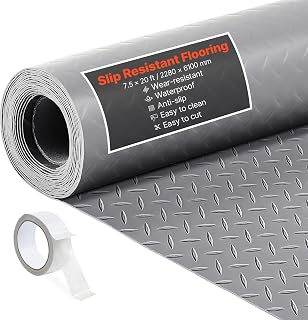
These three formats solve different problems. Interlocking tiles snap together over bare concrete, tolerate slab imperfections, and can be lifted individually if one gets damaged — the SnapLock RaceDeck Free-Flow and Swisstrax Ribtrax PRO tiles are the commercial-grade end of this category, while the 48-pack Garage Floor Tiles Interlocking set is the budget entry point. Rolled vinyl like the VEVOR Garage Floor Roll (7.5 × 20 ft) or the 8×20 FT Diamond Plate roll gives you a seamless, sealed surface that’s easier to sweep and far quieter underfoot than rigid tile. Absorbent containment mats such as the Garage Mats Oversize 8.8 × 22 ft parking mat exist for one job: catching snowmelt, road salt, and drips before they reach the slab or get tracked indoors.
The Noise Factor Nobody Mentions
Hard polypropylene tiles on concrete create a hollow drum. Roll a toolbox across them at night and the impact energy couples straight into the slab and up through the framing. If bedrooms sit above or beside the garage, a continuous vinyl roll (2.2–2.8 mm) damps that considerably, and a fabric-topped containment mat damps it more. If you want tiles anyway — and there are good reasons to — put a mat or rubber runner in the traffic lane where you actually walk and wheel things. Small change, real difference in a 6 a.m. departure.
Match Load Rating to Real Use
- 40,000 lb static (typical value tiles): fine for passenger cars, bikes, storage.
- 80,000 lb rolling load (RaceDeck Free-Flow): built for jack stands, floor jacks, and heavy trucks that pivot in place.
- Rolled vinyl at 2.2–2.8 mm: excellent under parked vehicles, but avoid twisting tires on a hot day and never set a jack stand directly on it without a steel plate.
Rolling load matters more than static load for most people, because that’s what happens when a wheel concentrates weight on a single edge.
Drainage, Moisture, and Air Quality
Open-grid tiles like the Free-Flow design let water, mud, and melt drain through to the slab and evaporate — ideal in snow country, where a sealed floor traps a puddle under the car for hours. The tradeoff is that solids fall through and eventually need a lift-and-hose. Sealed rolls keep the slab pristine but hold liquid on the surface until you squeegee it. Either way, trapped dampness plus warm concrete equals mildew, and mildew odor migrating through the garage-to-house door is a genuine sleep irritant for anyone with reactive airways.
Off-Gassing and the Break-In Period
New PVC rolls almost always smell for the first week or two. That smell is plasticizer off-gassing, and in an attached garage it finds its way indoors. Unroll new flooring on a warm, dry day, leave the overhead door open for several hours, and let it acclimate 24–48 hours before parking on it — warm vinyl also relaxes flat and hides its shipping creases. Polypropylene tiles are essentially odorless out of the box, which is a real advantage if your garage shares air with living space.
Tips
- Measure your slab, then add 5% for cuts and mistakes; tile packs cover 48 sq ft each, so plan in whole packs.
- Degrease and fully dry the concrete first — the double-sided tape supplied with rolls will not hold on dusty or oily slabs.
- Start tile layout from the most visible corner and work toward the wall, so cut pieces end up hidden behind storage.
- Keep four to six spare tiles from your original batch; dye lots shift between production runs.
Frequently Asked Questions
Will a garage floor covering trap moisture and damage my concrete?
Sealed rolls can trap vapor if your slab has no vapor barrier beneath it. If you see persistent dark patches or efflorescence, choose open-grid tiles instead so the concrete can breathe.
Can I install over cracked or uneven concrete?
Interlocking tiles bridge minor cracks and mild unevenness well. Rolled vinyl telegraphs every ridge and pebble, so grind high spots and patch low ones before laying it down.
How do I clean each type?
Rolls sweep and mop like sheet vinyl. Tiles handle a hose or pressure washer, but lift a few periodically to clear grit underneath. Absorbent parking mats go in a large-capacity washing machine or get hosed and hung.
Do hot tires damage these floors?
Quality polypropylene tiles resist hot-tire pickup. Thin vinyl can scuff or stain from aggressive summer tire compounds, so look for the thicker 2.8 mm rolls if you park a performance car.
Conclusion
Choose open-grid tiles like RaceDeck Free-Flow or Swisstrax Ribtrax PRO if you deal with snowmelt, heavy loads, or an imperfect slab; choose a thickened diamond-plate roll if you want a seamless, quiet, easy-sweep surface; and add an absorbent parking mat if your real enemy is winter drips tracking into the house. Whichever way you go, install it dry, air it out before you park on it, and put something soft in the walking lane — your slab will last longer, and the people sleeping above it will never know the garage is there.