Key takeaways
- Measured noise, not marketing noise: Look for a published dB figure. Anything at or under 70 dB is conversation-level and won’t carry through a floor; unrated units frequently sit in the mid-80s, which is where sleep disruption begins for anyone in an adjacent room.
- SCFM at 90 PSI: This is the only air-delivery number that matters. Match it to your thirstiest tool — impact wrenches and orbital sanders typically want 4 SCFM or more, while brad nailers barely sip.
- Duty cycle: A 75% duty cycle means the pump can run three-quarters of any given period. Higher duty cycles mean fewer long recovery stretches, which in practice means shorter total run time and less cumulative noise.
- Vertical versus horizontal tank: Vertical designs claim a fraction of the floor space, an advantage in a garage that doubles as storage. Horizontal units sit lower and roll more stably over thresholds.
- Drain access and oil-free pumps: An automatic or easy-access drain valve is what keeps you actually draining condensate. Oil-free pumps skip the oil changes entirely — slightly noisier by nature, but far more likely to still be working in year five.
What's inside
Air compressors have a reputation problem in the home, and it isn’t about power — it’s about noise. As someone who spends most of my working life helping people protect their sleep, I hear the same complaint from homeowners again and again: the garage workshop sits under a bedroom, or shares a wall with a nursery, and every burst of the pump resets somebody’s night. A 20-gallon tank is the sweet spot for serious DIY work, but it’s also large enough that the motor cycles hard, and older belt-drive units can push past 90 dB — loud enough to be measured in lost sleep rather than decibels.
This guide looks at 20-gallon compressors through that dual lens: can it actually run your framing nailer, impact wrench, or spray gun, and can it do so without turning your home into a place nobody can rest in? I’ve weighted quiet operation, duty cycle, tank orientation, and maintenance burden, and I’ve included a few smaller units worth considering if your projects are lighter than you think they are. Below are the models that earned a place.
As an Amazon Associate we earn from qualifying purchases.



How to Choose a 20 Gallon Air Compressor (2026)
- Measured noise, not marketing noise: Look for a published dB figure. Anything at or under 70 dB is conversation-level and won’t carry through a floor; unrated units frequently sit in the mid-80s, which is where sleep disruption begins for anyone in an adjacent room.
- SCFM at 90 PSI: This is the only air-delivery number that matters. Match it to your thirstiest tool — impact wrenches and orbital sanders typically want 4 SCFM or more, while brad nailers barely sip.
- Duty cycle: A 75% duty cycle means the pump can run three-quarters of any given period. Higher duty cycles mean fewer long recovery stretches, which in practice means shorter total run time and less cumulative noise.
- Vertical versus horizontal tank: Vertical designs claim a fraction of the floor space, an advantage in a garage that doubles as storage. Horizontal units sit lower and roll more stably over thresholds.
- Drain access and oil-free pumps: An automatic or easy-access drain valve is what keeps you actually draining condensate. Oil-free pumps skip the oil changes entirely — slightly noisier by nature, but far more likely to still be working in year five.
The Best 20 Gallon Air Compressor (2026)s Reviewed
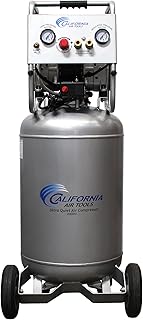
California Air Tools 20020AD Ultra Quiet 20-Gallon
At a rated 70 dB, this is the compressor I recommend without hesitation to anyone whose workshop shares structure with a bedroom — it’s roughly the volume of a dishwasher, and the automatic drain valve removes the one maintenance task people reliably forget. The oil-free 2.0 HP pump and wheeled frame make it a genuinely livable shop tool rather than an event.
Klutch 20-Gallon, 2 HP, 175 PSI
The strongest performance-per-dollar pick here: 4.2 SCFM at 90 PSI and a 175 PSI maximum give you real headroom for impact tools, and the 75% duty cycle keeps recovery gaps short. It’s noticeably louder than the California unit, so treat it as a daytime, detached-garage machine.
Klutch 20-Gallon Vertical (Second Configuration)
Mechanically the same well-sorted package, and worth checking both listings since availability and shipping cost often differ. The vertical footprint and large wheels are the standout practical features for a crowded garage.
VEVOR 13-Gallon, 66 dB
Rated quieter than anything else on this list and delivering a surprising 4.6 SCFM at 90 PSI, this is the smart compromise if you can accept a 125 PSI ceiling and a smaller tank. The thickened steel body feels a class above its price.
Craftsman 2-Gallon Hot Dog
Not a 20-gallon machine, and not pretending to be — but for tire top-ups, upholstery staples, and furniture assembly work, it’s light enough to carry one-handed and quick enough to justify keeping alongside a larger unit.
Frequently Asked Questions
Is a 20-gallon compressor too loud for a home with young children?
Not if you choose carefully. A 70 dB ultra-quiet model in a closed garage is unlikely to wake a sleeping child; a standard 85–90 dB unit very likely will, especially during the lighter sleep stages that dominate the second half of the night.
Can I run it in the evening?
With a quiet oil-free model, yes. Beyond raw volume, the issue is intermittency — the sudden onset of a motor cycling on is more arousing to a sleeping brain than steady sound, so batch loud work before bedtime routines begin.
Do I need 20 gallons for furniture projects?
Usually not. Brad nailers, staplers, and pin nailers run comfortably on 13 gallons or less. Choose 20 gallons if you also spray finishes or use air sanders, which drain a tank quickly.
How often should I drain the tank?
After every session, or let an automatic valve handle it. Trapped condensate corrodes the tank from the inside and is the leading cause of premature failure.
Final Thoughts
If your workshop sits anywhere near where people sleep, the California Air Tools 20020AD is the clear choice — quiet, low-maintenance, and capable enough for most home projects. For maximum air delivery in a detached space, the Klutch 20-Gallon delivers more capability per dollar than anything else here, while the VEVOR 13-Gallon splits the difference elegantly for finish and furniture work.