Key takeaways
- Tooth count vs. task: Roughly 24–40 teeth for framing platform beds and cutting long stock; 60–80 for visible casework; 100–120 for pre-finished plywood, veneered panels, and mitered trim on headboards where any chipping shows.
- Kerf thickness: Thin-kerf blades remove less material, load the motor less, and are the right call on 10-inch saws and sliders. Full-kerf blades resist deflection on heavy hardwood but demand more power and waste more of expensive walnut or white oak.
- Grind geometry: ATB (alternate top bevel) slices cross-grain cleanly and is the default for furniture. Negative or low hook angles matter enormously on sliding saws, where an aggressive blade will self-feed and climb — a genuine safety issue, not a finish issue.
- Arbor and diameter fit: Confirm 5/8-inch arbor compatibility and match diameter exactly to your saw. Never mount an undersized blade to gain clearance; you lose cut capacity and blade support in one move.
- Carbide grade and plate quality: Denser micrograin carbide holds its edge through more cuts, and laser-cut expansion slots keep the plate flat and quieter under heat. A blade that stays true vibrates less, which means smoother surfaces and noticeably less shriek in a garage attached to a bedroom.
What's inside
Ask anyone who has built their own bed frame at two in the morning because sleep wasn’t coming anyway: the bedroom is the one room in the house where craftsmanship is felt rather than seen. A nightstand drawer that sticks, a headboard joint that creaks when you shift your weight, a slat that rattles against its ledger — these are micro-disturbances, and micro-disturbances are what fragment sleep architecture long before anyone consciously wakes. As someone who spends most days advising people on sleep environments and most weekends building them, I’ve come to a slightly unfashionable conclusion: the blade on your miter saw has more influence over your sleep quality than most of the gadgets marketed for it. Torn end grain forces gap-filling glue joints. Gap-filling glue joints move. Movement makes noise. Noise wakes you at 3 a.m.
This guide looks at miter saw blades strictly through that lens — bedroom-grade joinery on hardwood, softwood, plywood, and pre-finished melamine, with the tear-out control that lets you assemble tight, silent, long-lived furniture. Below you’ll find the blades I reach for when the workpiece is destined for a room where someone needs to rest, plus a buying framework that keeps you from overspending on tooth counts you’ll never use.
As an Amazon Associate we earn from qualifying purchases.


How to Choose a/an Blades For Miter Saw (2026)
- Tooth count vs. task: Roughly 24–40 teeth for framing platform beds and cutting long stock; 60–80 for visible casework; 100–120 for pre-finished plywood, veneered panels, and mitered trim on headboards where any chipping shows.
- Kerf thickness: Thin-kerf blades remove less material, load the motor less, and are the right call on 10-inch saws and sliders. Full-kerf blades resist deflection on heavy hardwood but demand more power and waste more of expensive walnut or white oak.
- Grind geometry: ATB (alternate top bevel) slices cross-grain cleanly and is the default for furniture. Negative or low hook angles matter enormously on sliding saws, where an aggressive blade will self-feed and climb — a genuine safety issue, not a finish issue.
- Arbor and diameter fit: Confirm 5/8-inch arbor compatibility and match diameter exactly to your saw. Never mount an undersized blade to gain clearance; you lose cut capacity and blade support in one move.
- Carbide grade and plate quality: Denser micrograin carbide holds its edge through more cuts, and laser-cut expansion slots keep the plate flat and quieter under heat. A blade that stays true vibrates less, which means smoother surfaces and noticeably less shriek in a garage attached to a bedroom.
The Best Blades For Miter Saw (2026)s Reviewed
DEWALT 12-Inch 100-Tooth Fine Finish (DWA112100)
This is my default for 12-inch saws doing bedroom trim, mitered headboard frames, and anything pre-finished, because 100 teeth of sharp carbide leave a surface that needs sanding only as a formality. Feed it slowly and let the tooth count do the work — rushing a high-count blade burns cherry and maple faster than any other mistake.
Freud Thin Kerf 12″ 72-Tooth ATB (LU91R012)
Purpose-built for sliding compound saws, with a hook angle that stays composed instead of grabbing mid-stroke, and a thin kerf that lets mid-priced saws cut 4/4 hardwood without bogging. If you’re building a bed from solid stock and your saw slides, this is the most confidence-inspiring blade here.
WEN BL1080 10-Inch 80-Tooth
An honest value blade that punches above its price on 10-inch saws, delivering genuinely clean crosscuts in poplar, pine, and birch ply. It’s the blade I recommend to first-time furniture builders who don’t yet know how much sawing they’ll actually do.
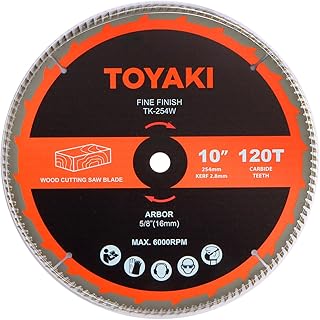
10-Inch 120-Tooth Fine-Finish Blade
Extreme tooth count for a specialist job: melamine, veneered panels, and thin trim where even minor chip-out ruins a visible edge. Keep it off thick hardwood, where heat buildup and slow chip clearance will work against you.
32T/60T/80T 10-Inch 3-Pack
The most practical starting kit for a single-project builder — framing, finish, and ultra-fine in one purchase, so you learn by feel how tooth count changes surface quality. Expect to graduate to premium blades for your final visible cuts, but the education is worth the modest outlay.
Frequently Asked Questions
Does a better blade really make furniture quieter?
Indirectly, yes. Cleaner shoulders and miters close fully, so joints rely on wood-to-wood contact instead of glue films that shrink and eventually allow the tiny seasonal movement responsible for creaks.
Can one blade do everything?
A 60-tooth ATB combination blade covers perhaps 80% of bedroom furniture work. The remaining 20% — pre-finished plywood, long rips of framing stock — is where a second blade pays for itself immediately.
How often should I replace a blade?
Sharpen or replace when you see burnishing, feel increased feed resistance, or hear the pitch of the cut change. A dulling blade announces itself acoustically before it does visually.
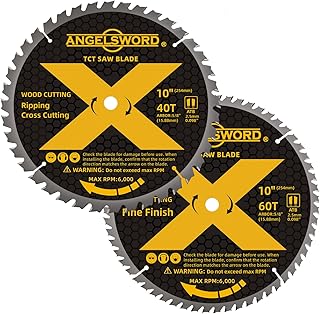
Is a 2-pack enough for a full bed build?
Usually. The ANGELSWORD 40T/60T pairing handles ripping and crosscutting across a headboard, rails, and slats without switching brands or arbor sizes mid-project.
Final Thoughts
If your saw is a 12-inch slider and you’re working solid hardwood, start with the Freud LU91R012 and add the DEWALT DWA112100 for final visible cuts. On a 10-inch saw, the WEN BL1080 delivers most of that refinement for a fraction of the cost — and every one of these blades gets you closer to furniture that holds its silence through the night.