Key takeaways
- Tooth count: Roughly 24–40 teeth for framing and rough stock, 60–80 for furniture-grade crosscuts, and 100+ for veneered plywood, melamine, and trim where chip-out is unforgivable. Higher counts cut slower and generate more heat, so feed gently.
- Diameter and arbor: Match your saw exactly. A 10-inch blade on a 10-inch saw with a 5/8-inch arbor is the most common pairing; 12-inch saws give deeper crosscuts on wide headboard panels but demand more motor and more patience.
- Carbide quality and grind: Look for carbide-tipped teeth with an alternate top bevel (ATB) grind for clean crosscutting. Thicker, better-brazed carbide survives more sharpenings and holds an edge through kiln-dried oak and maple.
- Plate stability and noise: Laser-cut expansion slots and anti-vibration features reduce the ringing whine that makes shop work fatiguing. A stable plate also wanders less, which is what actually keeps a four-corner frame square.
- Kerf and dust: Thin-kerf blades cut faster and waste less wood on underpowered saws, but they flex more. Whatever you choose, pair it with real dust collection — fine hardwood dust lingers in soft furnishings far longer than most people expect.
What's inside
Anyone who has tried to build a bed frame, nightstand, or headboard in a home workshop knows the moment of truth arrives at the miter saw. The cut either closes tight and silent, or it leaves a hairline gap that telegraphs through the finish and, worse, becomes the faint creak you hear at 2 a.m. As someone who spends most of my working life on sleep environments, I’ve come to see blade selection as an unglamorous but real part of bedroom design: torn end grain means more sanding dust in the room, sloppy miters mean joints that shift and squeak, and burned crosscuts mean extra finish coats and extra off-gassing before the piece is safe to sleep beside.
This guide looks at the miter saw blades worth owning in 2026 if your projects end up in a bedroom or living space rather than a job site. I’ve focused on tooth counts, cut quality on hardwoods and sheet goods, vibration and noise behavior, and value — including multi-packs that cover framing and finish work without forcing you to buy premium blades you’ll rarely spin up.
As an Amazon Associate we earn from qualifying purchases.


How to Choose a Saw Blades For Miter Saws (2026)
- Tooth count: Roughly 24–40 teeth for framing and rough stock, 60–80 for furniture-grade crosscuts, and 100+ for veneered plywood, melamine, and trim where chip-out is unforgivable. Higher counts cut slower and generate more heat, so feed gently.
- Diameter and arbor: Match your saw exactly. A 10-inch blade on a 10-inch saw with a 5/8-inch arbor is the most common pairing; 12-inch saws give deeper crosscuts on wide headboard panels but demand more motor and more patience.
- Carbide quality and grind: Look for carbide-tipped teeth with an alternate top bevel (ATB) grind for clean crosscutting. Thicker, better-brazed carbide survives more sharpenings and holds an edge through kiln-dried oak and maple.
- Plate stability and noise: Laser-cut expansion slots and anti-vibration features reduce the ringing whine that makes shop work fatiguing. A stable plate also wanders less, which is what actually keeps a four-corner frame square.
- Kerf and dust: Thin-kerf blades cut faster and waste less wood on underpowered saws, but they flex more. Whatever you choose, pair it with real dust collection — fine hardwood dust lingers in soft furnishings far longer than most people expect.
The Best Saw Blades For Miter Saws (2026)s Reviewed
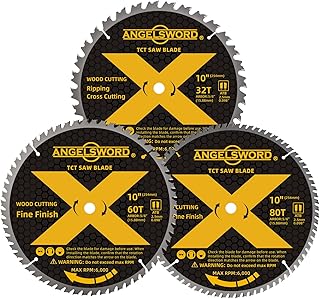
10-Inch Blade 3-Pack (32T / 60T / 80T)
This three-blade set is the most sensible starting point for a hobbyist building bedroom furniture, covering rough framing, general crosscuts, and fine finish work without a premium price per blade. Expect solid rather than exceptional edge life, and treat the 80-tooth as your dedicated finish blade rather than a general workhorse.
WEN BL1080 10-Inch 80-Tooth
My pick for clean crosscuts in hardwood face frames and drawer parts, where the tight tooth spacing leaves an edge that needs little more than a light pass with a sanding block. Feed slowly in thick maple to avoid heat marks, and it will reward you with genuinely glue-ready ends.
WEN BL1280 12-Inch 80-Tooth
The obvious choice if you run a 12-inch saw and cut wide stock such as headboard rails or bed side panels in a single pass. The larger plate stays impressively composed at speed, though your saw’s motor and your dust collection both need to be up to the job.
WEN BL1060 10-Inch 60-Tooth
A well-judged middle ground that crosscuts cleanly enough for most furniture joinery while clearing chips faster and running cooler than an 80-tooth. If you want one blade mounted most of the time, this is the one I’d leave on the saw.
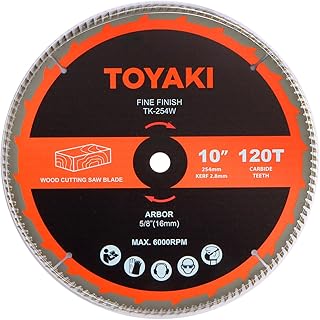
10-Inch 120-Tooth Fine-Finish Blade
Specialist glass for veneered plywood, melamine shelving, and delicate trim, where 120 teeth all but eliminate the splintered top surface that ruins visible edges. It is slow and heat-sensitive by design, so keep it for the cuts that show and never push it through solid stock.
Frequently Asked Questions
How many teeth do I need for bedroom furniture?
Sixty to eighty teeth on a 10-inch blade handles almost all solid-wood furniture crosscutting. Move up to 100 or more only for veneers and laminates, and drop to the 30s for construction lumber.
Can I use a table saw blade on a miter saw?
Often yes, if the diameter, arbor, and maximum RPM match, but avoid aggressive ripping blades with high hook angles on a miter saw — they can grab and climb the workpiece. Choose a blade specified for crosscutting or general-purpose miter use.
Why does my blade burn the wood?
Usually resin buildup, a dull edge, or too slow a feed rate. Clean the blade with a dedicated resin remover, let the saw reach full speed before contact, and lower it through the cut steadily.
Does blade choice affect indoor air quality?
Indirectly, yes. Cleaner cuts mean less sanding, and less sanding means less fine dust settling into mattresses, rugs, and bedding — worth considering if you assemble or finish furniture anywhere near where you sleep.
Final Thoughts
If you want one blade that quietly handles most furniture work, the WEN BL1060 60-tooth is the easy recommendation, with the WEN BL1080 80-tooth stepping in for joints and edges that will be seen. Builders starting from scratch should look hard at the 32T/60T/80T three-pack, which covers framing through finish work for less than the cost of two premium blades — and leaves budget for the dust collection that keeps the workshop out of your bedroom.