Key takeaways
- Fabric over everything: Solution-dyed acrylic (Sunbrella) and engineered fabrics like Terylast hold pigment through seasons of direct sun. Polyester is cheaper and fine for a shaded balcony, but expect visible fading within a couple of summers on a south-facing patio.
- Rib count and material: Eight ribs is the practical minimum for a 9-foot canopy; fiberglass ribs flex and rebound in wind, while reinforced aluminum resists bending under snow load or a heavy dew-soaked canopy.
- Vents matter more than you think: A single- or multi-tier vented top lets gusts escape upward instead of lifting the whole canopy. Vents also pull hot air off the seating area, which makes a real difference if you nap outdoors.
- Match the base to the mount: A freestanding market umbrella needs 50 pounds or more of base weight; a cantilever with no table to stabilize it needs 150 to 220 pounds, usually as a cross base loaded with sand or pavers. Undersized bases cause most umbrella failures.
- UPF rating for genuine light control: Look for UPF 50+ if you want deep, even shade. Beyond sun protection, denser shade reduces glare and helps your eyes and nervous system actually downshift when you lie down.
What's inside
As someone who spends most working hours talking to people about rest, I’ve noticed that the best daytime recovery spot in a house is often outdoors — a lounger, a shaded table, a hammock strung between two posts. The trouble is that shade outdoors is unreliable. A flimsy umbrella folds itself inside out on the first gusty afternoon, bleaches to a chalky gray by August, and starts to wobble in its base until nobody trusts sitting under it. Restorative rest depends on feeling safe and unbothered, and there is nothing unbothered about listening to an aluminum pole creak above your head.
This guide looks at heavy duty patio umbrellas through that lens: canopy fabrics that hold their color and block real UV, frames rated for actual wind rather than marketing wind, and tilt mechanisms that let you chase shade across a long afternoon without getting up. Below you’ll find the picks worth your money in 2026, a short buying checklist, and answers to the questions readers ask most.
As an Amazon Associate we earn from qualifying purchases.


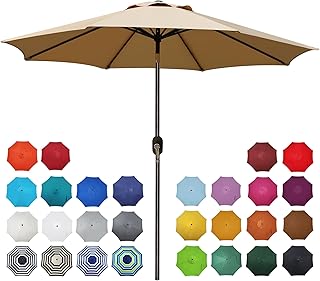

How to Choose a Heavy Duty Patio Umbrella (2026)
- Fabric over everything: Solution-dyed acrylic (Sunbrella) and engineered fabrics like Terylast hold pigment through seasons of direct sun. Polyester is cheaper and fine for a shaded balcony, but expect visible fading within a couple of summers on a south-facing patio.
- Rib count and material: Eight ribs is the practical minimum for a 9-foot canopy; fiberglass ribs flex and rebound in wind, while reinforced aluminum resists bending under snow load or a heavy dew-soaked canopy.
- Vents matter more than you think: A single- or multi-tier vented top lets gusts escape upward instead of lifting the whole canopy. Vents also pull hot air off the seating area, which makes a real difference if you nap outdoors.
- Match the base to the mount: A freestanding market umbrella needs 50 pounds or more of base weight; a cantilever with no table to stabilize it needs 150 to 220 pounds, usually as a cross base loaded with sand or pavers. Undersized bases cause most umbrella failures.
- UPF rating for genuine light control: Look for UPF 50+ if you want deep, even shade. Beyond sun protection, denser shade reduces glare and helps your eyes and nervous system actually downshift when you lie down.
The Best Heavy Duty Patio Umbrellas of 2026, Reviewed
Midtown Umbrellas 9 Ft Auto-Tilt Patio Umbrella
The combination of Terylast fabric, an auto-tilt aluminum frame, and eight reinforced ribs makes this the most well-rounded table umbrella here — the tilt engages as you crank, so you can angle shade over a lounger without stopping to fiddle with a button. The ten-year no-fade claim is unusually confident, and the saturated cobalt canopy is the kind that usually fades first.
EliteShade USA 9ft 3-Tier Market Umbrella
Three stacked vents give this one genuinely superior airflow, which is why it turns up on so many restaurant patios; in commercial use, umbrellas that trap wind simply don’t survive. UPF 50+ coverage and commercial-grade ribs make it my pick for exposed yards and poolside placement.
Grand patio 12 FT Sunbrella Cantilever Umbrella
Twelve feet of Sunbrella acrylic on an offset arm delivers the deepest, most consistent shade pool in this roundup, and it does it without a pole in the middle of your table or daybed. It ships with a base and tilt adjustment, and Sunbrella fabric remains the benchmark for colorfastness — expect to hand this one down.
PURPLE LEAF 10′ x 10′ Square Cantilever Umbrella
The double-top design and 35 MPH-rated frame make this the most stable cantilever at its price, and the square canopy aligns neatly with sectionals and rectangular dining sets. Assembly takes roughly half an hour, and the crank-and-rotate operation is smooth enough that you’ll actually reposition it during the day.
Tempera Patio Market Umbrella
A clean, unfussy market umbrella with push-button tilt, a crank lift, and a fade-resistant canopy — the sensible choice when you need reliable shade over a bistro or dining table without spending cantilever money. Pair it with a heavier base than you think you need and it will outperform its price.
Frequently Asked Questions
How much wind can a heavy duty patio umbrella really handle?
Well-built vented market umbrellas are generally stable up to 20–25 MPH, and reinforced cantilevers like the PURPLE LEAF are rated toward 35 MPH. Treat these as ceilings, not targets: close and secure any umbrella before storms or overnight, since sustained gusts do more damage than brief ones.
Is Sunbrella fabric worth the extra cost?
If your patio gets more than four or five hours of direct sun, yes. Solution-dyed acrylic carries color through the fiber rather than on its surface, so it resists fading, mildew, and the stiff, papery texture cheaper canopies develop after a season.
Can I nap under a patio umbrella without getting sunburned?
Under a UPF 50+ canopy the direct exposure is minimal, but reflected UV from concrete, water, and light-colored decking still reaches you. Position the canopy so shade extends well past your body, retilt as the sun moves, and use sunscreen on anything facing outward.
Should I choose a cantilever or a center-pole umbrella?
Cantilevers are best for loungers, daybeds, and seating groups where a center pole would be in the way, and they cover more square footage. Center-pole market umbrellas are lighter, easier to store, cheaper, and more stable in wind when anchored through a table.
Final Thoughts
For most patios, the Midtown Umbrellas 9 Ft auto-tilt model is the smartest buy — durable fabric, a serious rib count, and one-motion shade adjustment for a fraction of cantilever pricing. If you’re shading a lounger or an outdoor daybed and want the longest-lived canopy available, step up to the Grand patio 12 FT Sunbrella cantilever; and if wind is your main enemy, the three-tier venting on the EliteShade USA market umbrella is the design that holds up season after season.