Key takeaways
- Posture support: Look for a firm base and a backrest that keeps hips slightly behind the knees. A slumped, twisting child fidgets more and eats less — the opposite of what you want an hour before lights-out.
- Harness type: A three-point harness with a buckle a toddler can’t release is the practical minimum. Two-strap models secure the seat to the chair; make sure both the child and the seat are anchored.
- Non-slip base: Rubberized or textured undersides matter more than most listings suggest. Any lateral slide on a wooden or upholstered chair undermines the whole point of the purchase.
- Wipe-clean surfaces: PU leather and molded plastic beat fabric every time. Fewer seams means less trapped food, fewer lingering smells, and no damp cushion at tomorrow’s dinner.
- Height adjustability and weight: Adjustable stages extend usable life from roughly 18 months to five years. Under four pounds is the threshold at which a booster genuinely travels rather than living in a closet.
What's inside
Most parents shop for a booster seat because dinnertime has turned into a wrestling match: a toddler kneeling on an adult chair, sliding sideways, or reaching the table with their chin instead of their hands. What often gets overlooked is how much that struggle spills into the rest of the evening. As a sleep-wellness practitioner, I see the same pattern weekly — a chaotic, uncomfortable final meal of the day leads to a distracted eater, a lighter dinner, an earlier hunger wake-up, and a bedtime routine that starts twenty minutes late and never quite recovers.
A well-chosen booster does quiet work here. Stable seating and a supported pelvis let a child focus on eating rather than balancing, which usually means a fuller belly and calmer transition to bath and bed. This guide covers the criteria that actually matter — posture, harness security, non-slip stability, cleanability and travel weight — and reviews the models I most often recommend to families trying to protect their evening rhythm.
As an Amazon Associate we earn from qualifying purchases.



How to Choose a Booster Seat For Dining Table (2026)
- Posture support: Look for a firm base and a backrest that keeps hips slightly behind the knees. A slumped, twisting child fidgets more and eats less — the opposite of what you want an hour before lights-out.
- Harness type: A three-point harness with a buckle a toddler can’t release is the practical minimum. Two-strap models secure the seat to the chair; make sure both the child and the seat are anchored.
- Non-slip base: Rubberized or textured undersides matter more than most listings suggest. Any lateral slide on a wooden or upholstered chair undermines the whole point of the purchase.
- Wipe-clean surfaces: PU leather and molded plastic beat fabric every time. Fewer seams means less trapped food, fewer lingering smells, and no damp cushion at tomorrow’s dinner.
- Height adjustability and weight: Adjustable stages extend usable life from roughly 18 months to five years. Under four pounds is the threshold at which a booster genuinely travels rather than living in a closet.
The Best Booster Seats For Dining Table (2026) Reviewed
Upseat Boost Ergonomic Booster
Developed with physical therapists, this is the pick I recommend for children who collapse forward or perch on one hip, because the contoured base actively positions the pelvis rather than simply raising the child. The adjustable height and wipe-clean shell make it a genuine multi-year purchase, and better trunk stability tends to translate into longer, less frantic meals.
Ingenuity SmartClean Toddler Booster
The most sensible all-rounder here: a rigid seat, a proper three-point harness, and a smooth surface that takes seconds to clean after a messy pasta night. At its weight it moves easily between kitchen, grandparents’ house and holiday rentals, which is valuable if you’re trying to keep mealtime and bedtime cues consistent away from home.
PU Washable Double-Strap Booster (Grey)
A straightforward, low-profile cushion with two securing straps and a grippy underside — a strong option for older toddlers who no longer need a harness but still can’t reach the table comfortably. The washable PU cover is the standout feature for daily use.
Non-Slip Booster with Backrest and 3-Point Harness
This one earns its place on support: the backrest reduces the sideways slouching that shortens attention at the table, and the harness keeps climbers seated. The PU finish handles nightly wiping without cracking, and it packs flat enough for a car footwell.
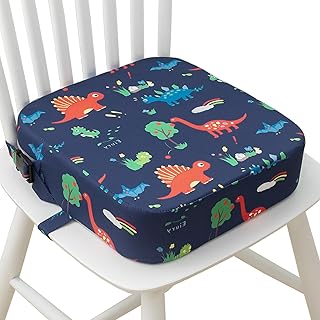
Eiury Portable Booster (Blue Dinosaur)
Where the print does real work — some children resist any new seat, and a booster they actually want to sit in removes a recurring pre-bedtime flashpoint. Safety buckles and a non-slip bottom cover the fundamentals, and it’s light enough to carry one-handed.
Frequently Asked Questions
When can a toddler start using a dining table booster?
Most are rated from around 18 months, once a child sits unaided and holds their head and trunk steadily. Always follow the manufacturer’s minimum age and weight guidance rather than developmental guesswork.
Does mealtime seating really affect sleep?
Indirectly but reliably. A comfortable, secure seat supports a more complete evening meal and a calmer end to the day, both of which reduce night waking from hunger or over-tiredness.
Booster seat or high chair?
High chairs suit babies still developing trunk control. A booster is the better choice once a child wants to eat at the family table, which also tends to improve their appetite and pace.
How long should the last meal be before bed?
Aim to finish dinner 60 to 90 minutes before lights-out, allowing time for digestion and a wind-down routine without the child arriving at bed hungry.
Final Thoughts
For posture-first support that grows with your child, the Upseat Boost is the strongest investment; the Ingenuity SmartClean is the easiest everyday choice for cleanability and travel; and the Eiury Blue Dinosaur booster is my recommendation for toddlers who need persuading into the seat at all. Any of the three will make the last meal of the day calmer — and a calmer dinner is one of the cheapest sleep upgrades available.