Key takeaways
- Seat height versus table clearance: Most dining tables leave roughly 11–12 inches between chair seat and tabletop. A cushion around 3.5–4 inches lifts a two- or three-year-old to plate level without trapping their ribs against the edge — measure before you buy rather than guessing.
- Foot support, not just lift: Dangling feet keep the core working all meal long. Choose the lowest cushion that does the job, and pair a taller booster with a footrest, stool, or box so the legs have somewhere to rest.
- Two-point anchoring: Look for both a harness that holds the child and straps or ties that hold the cushion to the chair. A booster that shifts when a toddler leans sideways undermines the whole point.
- Genuinely wipeable surfaces: Sealed PU faces beat fabric decisively. Yogurt, bolognese, and rice come off with one pass, which keeps the last chore of the evening from stretching bedtime by ten minutes.
- Packability for routine protection: Sleep and mealtime habits travel badly. A booster that folds flat into a weekend bag lets a child eat in the same posture at the same relative height wherever they are.
What's inside
Ask any parent when bedtime actually begins, and most will say 7:30. Ask a sleep specialist, and the answer is closer to 5:45 — the moment dinner hits the table. Evening meals are where a toddler either winds down or winds up, and the seating is a bigger variable than most families realize. A child perched on a folded blanket or a stack of cushions spends the entire meal bracing, wriggling, and sliding. That low-grade physical stress raises arousal at precisely the hour you want it falling, and it tends to reappear as resistance forty minutes later at the top of the stairs.
A properly sized booster seat solves a postural problem and, indirectly, a settling problem. Stable hips mean steadier hands, better chewing, longer sitting tolerance, and a meal that ends because the food is finished rather than because everyone gave up. This guide looks at the booster cushions worth buying in 2026 — what height actually suits a standard dining table, which materials survive a nightly wipe-down, and which models travel well enough to protect your routine in a grandparent’s kitchen or a rented cottage.
As an Amazon Associate we earn from qualifying purchases.



How to Choose a Booster Seats For Dining Table (2026)
- Seat height versus table clearance: Most dining tables leave roughly 11–12 inches between chair seat and tabletop. A cushion around 3.5–4 inches lifts a two- or three-year-old to plate level without trapping their ribs against the edge — measure before you buy rather than guessing.
- Foot support, not just lift: Dangling feet keep the core working all meal long. Choose the lowest cushion that does the job, and pair a taller booster with a footrest, stool, or box so the legs have somewhere to rest.
- Two-point anchoring: Look for both a harness that holds the child and straps or ties that hold the cushion to the chair. A booster that shifts when a toddler leans sideways undermines the whole point.
- Genuinely wipeable surfaces: Sealed PU faces beat fabric decisively. Yogurt, bolognese, and rice come off with one pass, which keeps the last chore of the evening from stretching bedtime by ten minutes.
- Packability for routine protection: Sleep and mealtime habits travel badly. A booster that folds flat into a weekend bag lets a child eat in the same posture at the same relative height wherever they are.
The Best Booster Seats For Dining Table (2026) Reviewed
Upseat Boost Ergonomic Toddler Booster
Designed alongside physical therapists, the Upseat Boost is the only cushion here built around pelvic positioning rather than lift alone, and the adjustable height means it grows with your child instead of becoming redundant in six months. It is the pick for families dealing with a fidgeter who cannot last a full meal.
Booster Seat with Side Pockets, 3.8″ (Grey)
The 3.8-inch profile is close to ideal for a standard 30-inch table, and the tie-down system keeps it planted on wooden and upholstered chairs alike. Side pockets are a small touch that quietly cuts down on dropped spoons and mid-meal interruptions.
Toddler Booster with Backrest and 3-Point Harness
The added backrest gives younger toddlers something to settle into, and the three-point harness discourages the standing-up phase without feeling restrictive. Best suited to children who have only recently graduated from a highchair.
PU Washable Double-Strap Booster (Grey)
A straightforward, well-made cushion with double safety straps and a grippy base — no extra features, no weak points. The washable PU shell is the standout here for anyone tired of laundering fabric covers.
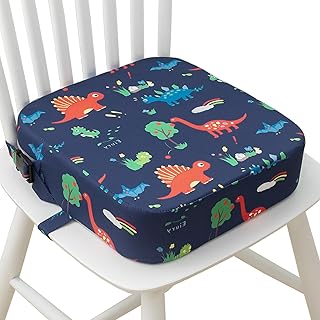
Eiury Portable Booster (Blue Dinosaur)
Lightweight, buckle-secured, and cheerful enough that reluctant sitters actually want to use it, which matters more than spec sheets sometimes admit. It packs down neatly, making it a sensible second booster for travel and grandparents’ houses.
Frequently Asked Questions
When is a child ready for a booster cushion?
Generally around 18 months to 2 years, once they can sit unsupported, climb with help, and stay seated for several minutes. Readiness is about trunk control, not birthdays.
Can a booster seat really affect sleep?
Indirectly, yes. A calm, comfortable dinner is the first step of a wind-down sequence, while a fractious, physically effortful meal raises arousal and makes settling harder.
How high should the booster be?
Aim for the child’s elbows to sit just above the tabletop. Too low and they lean and strain; too high and the table edge presses into their chest.
Are booster cushions safe on dining chairs?
They are, provided the cushion is strapped to the chair, the harness is used, and the child is supervised. Never place one on a stool, bench, or chair with a sloping seat.
Final Thoughts
For most families, the Upseat Boost earns its price through genuine postural design and adjustability, while the 3.8-inch booster with side pockets is the smartest all-round choice for a standard dining table. Keep the Eiury portable cushion in the car or travel bag, and your child’s evening routine stays intact wherever dinner happens.