Key takeaways
- Ice format: Decide before you shop. Large clear cubes (roughly 1.5″–2″) melt slowest and suit whiskey and stirred drinks; spheres offer the least surface area per volume and the most drama; nugget or pebble ice is soft, chewable, and better for highballs, spritzes, and mocktails than for anything you want to sip slowly.
- Measured noise, not marketing noise: Look for a published decibel figure — anything at or under about 45 dB is genuinely unobtrusive in a shared space. Just as important is the pattern: machines that harvest ice in loud, irregular bursts are more disruptive at night than steadier, louder ones.
- Cycle time versus batch size: A unit producing nine cubes an hour with a holding bin serves a dinner party without you hovering. A slow tray-based maker running eight to twelve hours is fine if you plan a day ahead and hate appliance noise entirely.
- Timers and self-cleaning: A programmable timer is the single most useful feature for household peace — you can have ice ready by six and the compressor silent by nine. One-touch self-cleaning matters for hygiene, since standing water in a warm kitchen is a bacterial opportunity.
- Footprint and surroundings: These machines need clearance for airflow and radiate a little heat. Measure your counter, keep them off the same wall as a bedroom headboard, and avoid tucking them into a closed cabinet.
What's inside
Most people shopping for a cocktail ice maker are chasing one thing: the dense, glass-clear cube that lands in a rocks glass with a satisfying clink and refuses to water down a good pour. What they rarely consider is where that machine will live — and how it will behave at eleven at night, humming away in an open-plan kitchen twenty feet from a bedroom door. As someone who spends most of my working life on sleep environments, I can tell you that the two questions are more connected than they look. An intermittent compressor cycle and the clatter of dropping cubes are exactly the kind of variable, unpredictable noise that fragments light sleep, even when the sleeper never fully wakes.
This guide looks at the best cocktail ice makers of 2026 through a slightly different lens than most roundups: build quality and ice quality first, then acoustics, cycle behavior, placement, and how the machine fits into a genuinely restful evening routine. Below you’ll find quick-reference picks, a buying framework, short reviews of the standouts, and answers to the questions I get asked most often about running one of these in a living space.
As an Amazon Associate we earn from qualifying purchases.



How to Choose a Cocktail Ice Maker (2026)
- Ice format: Decide before you shop. Large clear cubes (roughly 1.5″–2″) melt slowest and suit whiskey and stirred drinks; spheres offer the least surface area per volume and the most drama; nugget or pebble ice is soft, chewable, and better for highballs, spritzes, and mocktails than for anything you want to sip slowly.
- Measured noise, not marketing noise: Look for a published decibel figure — anything at or under about 45 dB is genuinely unobtrusive in a shared space. Just as important is the pattern: machines that harvest ice in loud, irregular bursts are more disruptive at night than steadier, louder ones.
- Cycle time versus batch size: A unit producing nine cubes an hour with a holding bin serves a dinner party without you hovering. A slow tray-based maker running eight to twelve hours is fine if you plan a day ahead and hate appliance noise entirely.
- Timers and self-cleaning: A programmable timer is the single most useful feature for household peace — you can have ice ready by six and the compressor silent by nine. One-touch self-cleaning matters for hygiene, since standing water in a warm kitchen is a bacterial opportunity.
- Footprint and surroundings: These machines need clearance for airflow and radiate a little heat. Measure your counter, keep them off the same wall as a bedroom headboard, and avoid tucking them into a closed cabinet.
The Best Cocktail Ice Makers Reviewed (2026)
COMMODORE LUXECUBE Luxury Ice Maker
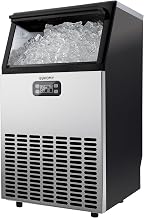
This is the closest thing on the list to a genuine home bar centerpiece: nine crystal-clear 1.5″ cubes per hour, storage for eighteen, ETL listing, and a compressor that stays quiet enough to leave running while guests are talking. The self-cleaning cycle and 115V standard plug make it a low-fuss permanent fixture rather than a weekend novelty.
ecozy 2.1″ Clear Ice Ball Maker
The smallest footprint here by a comfortable margin, which makes it the one I recommend for apartments where the kitchen and sleeping area share air. The eight-hour timer is the real feature — set it in the afternoon, and the machine finishes its work long before anyone is winding down for bed.
Klaris Clear Ice Maker
A completely silent, non-compressor approach: a stainless shell and reusable tray that yield four dense 2″ cubes in eight to twelve hours in your freezer. If noise is a dealbreaker or you simply prefer analog tools, this produces cocktail-grade clarity with zero acoustic footprint at all.
Silonn 2.4″ Sphere Ice Maker
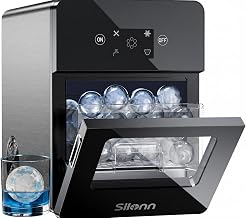
The fastest sphere producer reviewed here, turning out three large balls in around forty minutes and up to a hundred a day. Slow-melting 2.4″ spheres are ideal for bourbon and negronis, though the higher output means longer compressor runtime — use it earlier in the evening rather than as a nightcap machine.
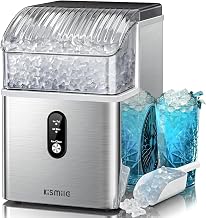
Kismile Nugget Ice Maker
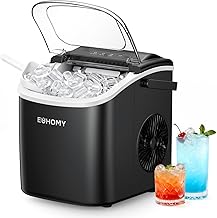
At a rated 43 dB with first ice in seven minutes, this is the quietest high-output unit on the list and the most versatile if your household drinks more sparkling water than spirits. Nugget ice absorbs flavor beautifully in long drinks and makes convincing zero-proof cocktails feel like the real thing.
Frequently Asked Questions
Are countertop ice makers quiet enough to run overnight?
Some are, but I’d advise against it. Even a 43 dB machine produces intermittent harvest sounds, and irregular noise is more arousing to a sleeping brain than steady background sound. Use a timer to finish production before bedtime.
Does a nightcap actually help me sleep?
It helps you fall asleep and then works against you. Alcohol suppresses REM in the first half of the night and causes rebound wakefulness in the second, so the sleep you get is measurably less restorative. Better ice makes for a better drink, not better rest — enjoy the cocktail a few hours before bed.
Why is store-bought ice cloudy?
Fast freezing traps air and dissolved minerals. These machines freeze slowly and directionally, pushing impurities out and leaving dense, clear, slow-melting ice that dilutes your drink far less.
How often should I clean one?
Run the self-clean cycle weekly and empty standing water whenever the machine sits unused. Reservoirs are warm, damp, and dark — ideal conditions for biofilm.
Final Thoughts
For most home bars, the COMMODORE LUXECUBE is the pick worth stretching for, offering true bar-quality clarity with civilized noise levels. Choose the ecozy sphere maker if counter space and quiet are your priorities, or the Klaris tray if you’d rather have flawless cocktail ice with no compressor in the house at all — and whichever you pick, set the timer so your ice is ready long before you are.