Key takeaways
- Verified load rating: Adult hanging generates dynamic force well above your static bodyweight, so treat 880 lbs as a comfortable target and anything under 300 lbs as a children’s unit regardless of how it’s marketed. Beech offers greater density than pine; pine is lighter and easier to mount solo.
- Rung diameter and finish: Look for 1.2–1.5 inch rungs with a sanded, unvarnished or lightly oiled surface. Slick lacquer forces a death grip, which recruits your forearms and neck — the opposite of what you want in a pre-bed decompression hang.
- Adjustable geometry: Models with repositionable pull-up and dip attachments let you change the angle of a stretch by inches, which matters enormously for hip flexors and thoracic extension. Fixed-position ladders limit you to whatever the manufacturer decided.
- Mounting into structure, not plaster: Confirm the anchor plate spacing lines up with 16-inch stud centres, and budget for proper lag bolts. Nine anchor points distributed across two studs is the practical minimum for adult use.
- Footprint and placement: Measure your ceiling height and allow roughly 18 inches of clearance behind the top rung for your knuckles. A bedroom wall works beautifully if the ladder sits away from your headboard — visual clutter near the bed is its own sleep variable.
What's inside
Most people shopping for a wall-mounted stall bar are thinking about pull-ups. As someone who spends their days helping adults untangle poor sleep, I’d argue the more interesting use case happens at night. Desk-bound bodies accumulate compression — loaded discs, shortened hip flexors, a rib cage that hasn’t fully expanded since morning — and that residual tension follows you under the duvet. It shows up as the twenty minutes of fidgeting before you settle, the 3 a.m. lower-back ache, the shoulder you keep repositioning. A Swedish ladder gives you a fixed, vertical framework for decompressing all of that in the last hour of the day, without needing to unroll a mat or follow a video.
The trouble is that this category is genuinely difficult to shop. Listings blur adult and child models together, weight ratings range from optimistic to unverifiable, and the mounting hardware — the single thing standing between you and a hole in your drywall — is usually an afterthought in the product description. This guide sorts through the leading options for adult buyers in 2026, explains which specifications actually matter for hanging and stretching under real bodyweight, and points you toward the models worth mounting in a bedroom or adjacent space where evening wind-down actually happens.
As an Amazon Associate we earn from qualifying purchases.



How to Choose a Swedish Ladder For Adults (2026)
- Verified load rating: Adult hanging generates dynamic force well above your static bodyweight, so treat 880 lbs as a comfortable target and anything under 300 lbs as a children’s unit regardless of how it’s marketed. Beech offers greater density than pine; pine is lighter and easier to mount solo.
- Rung diameter and finish: Look for 1.2–1.5 inch rungs with a sanded, unvarnished or lightly oiled surface. Slick lacquer forces a death grip, which recruits your forearms and neck — the opposite of what you want in a pre-bed decompression hang.
- Adjustable geometry: Models with repositionable pull-up and dip attachments let you change the angle of a stretch by inches, which matters enormously for hip flexors and thoracic extension. Fixed-position ladders limit you to whatever the manufacturer decided.
- Mounting into structure, not plaster: Confirm the anchor plate spacing lines up with 16-inch stud centres, and budget for proper lag bolts. Nine anchor points distributed across two studs is the practical minimum for adult use.
- Footprint and placement: Measure your ceiling height and allow roughly 18 inches of clearance behind the top rung for your knuckles. A bedroom wall works beautifully if the ladder sits away from your headboard — visual clutter near the bed is its own sleep variable.
The Best Swedish Ladders For Adults (2026) Reviewed
Solid Pine 9-Anchor Swedish Ladder with Pull-Up and Dip Station
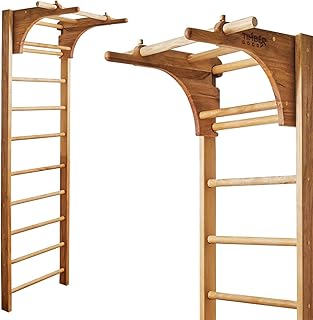
The nine-anchor mounting system is the standout here, spreading load in a way that inspires real confidence during unsupported hangs. Pine keeps the frame manageable for a one-person installation, and the adjustable pull-up and dip station makes this a legitimate all-in-one for someone building an evening mobility habit rather than a training programme.
DHT Wood Stall Bar Suspension Trainer
Nine strategically spaced rods and a black finish give this one a considerably more furnished look than the raw-timber competition — useful if it’s going in a bedroom or living space rather than a garage. The suspension-trainer integration is well executed, letting you dial stretch intensity precisely as your body loosens across a session.
Multi-Function Gymnastics Swedish Ladder
A sensible pick for households where one wall has to serve several bodies, since the rung spacing accommodates adults and younger users without compromise. Build quality is solid rather than exceptional, so verify your stud placement carefully before committing to the mount.
GMWD Swedish Ladder with Pull-Up and Dip Attachments
GMWD has clearly designed this around core strengthening and loaded stretching rather than pure pulling, and the balance of the nine-rod layout reflects that. Of everything here, it’s the model I’d recommend to someone whose main complaint is a stiff, achy back that flares once they lie down.
Solid Beech Swedish Ladder, 880 lb Capacity
Beech construction and an 880-pound rating make this the most reassuring frame in the roundup for heavier adults or anyone who intends to hang with intent. The removable pull-up and dip bars are a thoughtful touch, letting you strip the unit back to clean rungs for quiet stretching sessions.
Frequently Asked Questions
Can hanging really improve my sleep?
Indirectly, yes. Decompressing the spine and opening the front of the body reduces the mechanical discomfort that keeps people repositioning at lights-out, and slow, controlled stretching with extended exhales encourages a parasympathetic shift. It won’t fix insomnia, but it removes a common physical obstacle to falling asleep.
How close to bedtime should I use it?
Thirty to sixty minutes before bed works well for gentle hangs, passive stretches and breathing. Save vigorous pull-ups and dips for earlier in the day, since intense effort raises core temperature and sympathetic arousal at precisely the wrong moment.
Can I mount one on a plasterboard wall?
Not into the plasterboard itself. You need to hit timber studs or masonry with appropriate fixings, and if you can’t locate solid structure behind the intended position, hire someone who can — this is a load-bearing installation above head height.
Is a Swedish ladder better than a doorway pull-up bar?
For mobility purposes, considerably. The multiple rung heights let you stretch at angles a single fixed bar simply can’t reach, and a properly anchored ladder is far more stable than anything wedged into a frame.
Final Thoughts
If you want maximum reassurance underfoot — or rather, overhead — the solid beech model with its 880-pound rating and removable attachments is the most confidence-inspiring frame here. The GMWD ladder is my pick for anyone whose priority is loaded stretching and core work as part of a wind-down routine, while the DHT stall bar earns its place for looking presentable enough to live on a bedroom wall without disrupting the calm you’re trying to build there.