Key takeaways
- Fiber first: Wool is the gold standard for dining rooms — naturally stain-resistant thanks to its lanolin coating, flame-retardant without chemical treatment, and it absorbs airborne moisture and sound rather than reflecting them. Polypropylene and polyester win on price and washability; jute and sisal look beautiful but drink liquids instantly.
- Pile height under 1/2″: Low, tight pile lets chairs slide without snagging and gives crumbs nowhere to hide. Deep shag under a dining table is a maintenance trap and an allergen reservoir.
- Off-gassing and certifications: Look for OEKO-TEX, GREENGUARD Gold, or CRI Green Label Plus. Latex and PVC backings are the usual culprits behind that “new rug” smell — unroll any synthetic rug in a ventilated space for several days before it lives near your bedrooms.
- Size beyond the table: Add 24–30 inches to each side of your table footprint so rear chair legs stay on the rug when guests push back. Undersized rugs create a tripping lip and constant chair-catching.
- Washability versus longevity: Machine-washable synthetics are ideal for households with toddlers or pets. Hand-tufted wool won’t go in a washer but will still look good in fifteen years — decide which timeline you’re buying for.
What's inside
Most people shop for a dining room rug with their eyes and regret it with their nose, their ears, and — surprisingly often — their sleep. As someone who spends most of my working life on sleep environments, I’ve learned that the room where you eat dinner sets up the room where you sleep. Hard floors under a dining table bounce sound and light around late into the evening, keeping the nervous system in a low-grade alert state right through the hours when it should be winding down. Add a rug woven from the wrong fiber and you introduce a second problem: synthetic backings and adhesives that release a faint chemical smell for weeks, plus a dense pile that traps crumbs, dander, and dust mite allergens directly beneath where your family breathes and gathers.
This guide approaches dining room rug material through that lens — not just which fiber survives a dropped fork or a spilled Cabernet, but which fibers keep a room acoustically soft, chemically quiet, and genuinely easy to keep clean. Below you’ll find the material trade-offs that actually matter in 2026, a short buying checklist, honest reviews of six current standouts, and answers to the questions I hear most often from clients redesigning their downstairs.
As an Amazon Associate we earn from qualifying purchases.


How to Choose a Dining Room Rug Material (2026)
- Fiber first: Wool is the gold standard for dining rooms — naturally stain-resistant thanks to its lanolin coating, flame-retardant without chemical treatment, and it absorbs airborne moisture and sound rather than reflecting them. Polypropylene and polyester win on price and washability; jute and sisal look beautiful but drink liquids instantly.
- Pile height under 1/2″: Low, tight pile lets chairs slide without snagging and gives crumbs nowhere to hide. Deep shag under a dining table is a maintenance trap and an allergen reservoir.
- Off-gassing and certifications: Look for OEKO-TEX, GREENGUARD Gold, or CRI Green Label Plus. Latex and PVC backings are the usual culprits behind that “new rug” smell — unroll any synthetic rug in a ventilated space for several days before it lives near your bedrooms.
- Size beyond the table: Add 24–30 inches to each side of your table footprint so rear chair legs stay on the rug when guests push back. Undersized rugs create a tripping lip and constant chair-catching.
- Washability versus longevity: Machine-washable synthetics are ideal for households with toddlers or pets. Hand-tufted wool won’t go in a washer but will still look good in fifteen years — decide which timeline you’re buying for.
The Best Dining Room Rug Materials (2026) Reviewed
Loloi Magnolia Home Gigi (Ivory/Stone, 7×9)
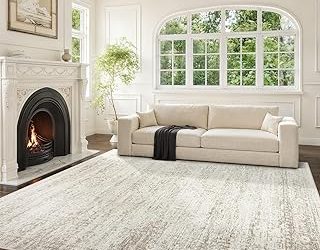
A polyester-blend traditional in a muted ivory-and-stone palette that reads calm rather than stark, which matters if your dining space is visible from a bedroom hallway at night. The low, dense pile handles chair traffic well, and the faded pattern is forgiving of the small marks that inevitably accumulate under a table.
Loloi Magnolia Home Pace (Forrest/Natural, 5×8)
The deep green vintage wash is one of the few saturated colors I’ll recommend near a dining table, because it disguises crumbs and shadowing between vacuums. At 5×8 it suits a four-seat table or a breakfast nook — measure carefully, as it’s too small for a six-seater with pull-out chairs.
Hand-Tufted Basketweave Wool (8×10, Coral Rose)
This is the material choice I’d make for my own home: genuine hand-tufted wool, which means better acoustic absorption, no synthetic off-gassing, and a fiber that resists staining long enough for you to blot a spill. The coral checkered plaid is a bolder statement than the neutrals here, and wool’s resilience means the geometry won’t crush flat under chair legs.
Loloi Magnolia Home Junie (Blue/Natural, 7×10)
A softly muted blue-and-natural modern that works beautifully in open-plan homes where the dining zone flows into a living area. The generous 7×10 footprint comfortably clears chairs on all four sides of a standard six-seat table — the most common sizing mistake I see corrected.
Washable Beige Low-Pile Vintage Rug (8×10)
For families with young children, machine washability outranks fiber prestige, and this low-pile beige delivers it in a genuinely large size. Expect a short airing-out period when it arrives, and confirm your washer capacity before committing to an 8×10 wash cycle.
Frequently Asked Questions
Is wool or synthetic better under a dining table?
Wool for longevity, sound softening, and low chemical emissions; synthetic for washability and budget. If anyone in the household has asthma or allergies, wool with a low pile and frequent vacuuming is generally the healthier long-term choice.
Do rugs actually affect sleep quality?
Indirectly, yes. Textiles reduce reverberation and impact noise — footsteps, chair scrapes, dishwasher hum — that can fragment sleep in adjacent or upstairs bedrooms. They also cut down the hard-surface echo that keeps evening spaces feeling stimulating rather than settling.
How do I stop a dining rug from sliding?
Use a felt-and-rubber pad rather than a thin foam one; it adds cushioning, protects the floor finish, and improves sound dampening. Rubber-backed woven rugs like the braided 6×9 option here already include grip, so skip the pad to avoid trapping moisture.
How often should a dining room rug be cleaned?
Vacuum two or three times weekly under a table, blot spills immediately with cold water and a white cloth, and arrange a professional deep clean annually for wool. Washable synthetics can go through a gentle cold cycle every few months.
Final Thoughts
If you want the healthiest, longest-lasting option, the Hand-Tufted Basketweave Wool rug is the clear pick — real wool, low pile, no off-gassing worries. For a quieter aesthetic that fits a standard six-seat table without sizing compromises, the Magnolia Home Junie in blue and natural is my top all-rounder, while the washable 8×10 beige is the pragmatic choice for households where spills are a nightly event rather than an occasional accident.