Key takeaways
- Vent architecture: A single vent is marketing; two or three tiers are engineering. Stacked vents let pressurized air escape upward instead of pushing against the canopy like a sail, and they also flush trapped hot air away from the seating zone — the difference between shade that feels cool and shade that feels like a tent.
- Rib count and material: Look for eight or more ribs, ideally fiberglass or reinforced aluminum. Fiberglass flexes and rebounds; cheap steel bends once and stays bent. Reinforced ribs are the single best predictor of surviving a second season.
- Canopy weight in GSM: Anything under about 200 GSM transmits noticeable light and heat. Denser polyester or solution-dyed acrylic in the 240 GSM range blocks glare properly, which matters if you’re trying to rest rather than simply sit outdoors.
- Base weight, calculated honestly: Market umbrellas in a table need 50–70 lbs; freestanding cantilevers need 150 lbs or more, or bolting down. Undersized bases cause the majority of “the wind broke my umbrella” failures, and no frame compensates for one.
- Fade warranty length: A 3-year fade guarantee is decent; 10 years signals genuinely UV-stable fabric. Faded canopies lose both opacity and tensile strength, so this spec quietly governs how long the whole thing stays functional.
What's inside
Anyone who has tried to nap in a hammock at 2 p.m. knows the truth: shade is not a luxury, it’s a physiological requirement. Direct afternoon sun raises skin temperature, and core temperature has to fall for the body to drift off. But most patio umbrellas are built for photographs, not for weather. The first real gust off the lake folds eight ribs into a modern sculpture, and the “afternoon rest zone” you spent a weekend arranging becomes a pile of aluminum on the pool cover. Buyers end up replacing an umbrella every second summer, which is expensive, irritating, and — if you actually use your patio to decompress — genuinely disruptive to a routine worth protecting.
This guide approaches heavy-duty, wind-resistant patio umbrellas the way I approach a bedroom: as an environmental system that either supports rest or quietly sabotages it. I’ve weighted frame engineering and vent design heavily, because those determine whether the canopy survives a squall. I’ve also looked at canopy density and fade warranties, since a thin or sun-bleached fabric leaks the glare and heat that keep you alert when you’d rather be dozing. Below are six models worth your money in 2026, plus the specifications that actually predict longevity.
As an Amazon Associate we earn from qualifying purchases.



How to Choose a Heavy-Duty Wind Resistant Patio Umbrella (2026)
- Vent architecture: A single vent is marketing; two or three tiers are engineering. Stacked vents let pressurized air escape upward instead of pushing against the canopy like a sail, and they also flush trapped hot air away from the seating zone — the difference between shade that feels cool and shade that feels like a tent.
- Rib count and material: Look for eight or more ribs, ideally fiberglass or reinforced aluminum. Fiberglass flexes and rebounds; cheap steel bends once and stays bent. Reinforced ribs are the single best predictor of surviving a second season.
- Canopy weight in GSM: Anything under about 200 GSM transmits noticeable light and heat. Denser polyester or solution-dyed acrylic in the 240 GSM range blocks glare properly, which matters if you’re trying to rest rather than simply sit outdoors.
- Base weight, calculated honestly: Market umbrellas in a table need 50–70 lbs; freestanding cantilevers need 150 lbs or more, or bolting down. Undersized bases cause the majority of “the wind broke my umbrella” failures, and no frame compensates for one.
- Fade warranty length: A 3-year fade guarantee is decent; 10 years signals genuinely UV-stable fabric. Faded canopies lose both opacity and tensile strength, so this spec quietly governs how long the whole thing stays functional.
The Best Heavy-Duty Wind Resistant Patio Umbrellas (2026) Reviewed
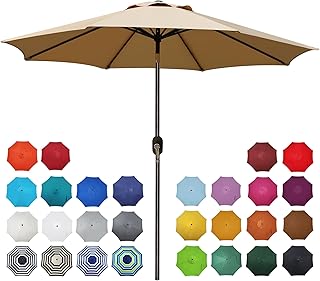
PURPLE LEAF Cantilever 10′ x 10′ Double Top
The 35 MPH-rated frame and double-top design make this the most storm-capable option here, and the offset pole means you can shade a lounger or daybed without a table leg in the way — a real advantage for anyone building a dedicated outdoor rest spot. The 240 GSM canopy is dense enough to cut glare to genuinely restful levels, and setup takes about half an hour with two people.
EliteShade USA 9ft 3-Tier Market Umbrella
Three stacked vents and commercial-grade construction give this one the best pressure relief in the roundup, plus a 10-year no-fade guarantee that outlasts most patio furniture. UPF 50+ coverage and the tiered airflow keep the shaded area measurably cooler, which is exactly what you want if you nap outdoors.
Midtown Umbrellas – The Lean 9 Ft
Eight reinforced ribs and Acrylast acrylic fabric put this in hospitality territory; it’s the model I’d pick for a spot that gets consistent breeze and full afternoon exposure. Auto-tilt is more useful than it sounds, letting you chase low-angle light without leaving your chair.
15FT Double-Sided Rectangular Market Umbrella
For long tables or a pair of loungers, the double-sided rectangular canopy covers ground no round umbrella can match, and the included base removes the most common point of buyer error. Bring it down in serious wind — the surface area is substantial — but for typical conditions the coverage is unmatched.
Tempera Patio Market Umbrella with Push Button Tilt
A sturdy pole, fade-resistant canopy, and straightforward crank-and-tilt operation make this the sensible mid-range choice for a standard six-seat table. It’s not the most wind-hardened frame here, but it’s honestly built and assembles in minutes.
Frequently Asked Questions
How much wind can a patio umbrella really handle?
Well-engineered vented models tolerate roughly 25–35 MPH gusts when properly weighted. Above that, close it — no consumer umbrella is designed to stay open in a storm, and manufacturer warranties reflect that.
Does shade quality actually affect sleep?
Yes, in two ways. Dense shade lowers skin and core temperature, which supports sleep onset, and it reduces the bright-light exposure that suppresses melatonin. A thin canopy that scatters light does neither well.
Should I leave the umbrella open overnight?
No. Overnight gusts are the most common cause of catastrophic failure, and dew trapped in a closed-but-covered canopy encourages mildew. Close it, and use a ventilated cover.
Cantilever or center pole?
Center pole for dining tables; cantilever for loungers, daybeds, and hot tubs where an unobstructed footprint matters. Cantilevers demand far more base weight.
Final Thoughts
If you want maximum resilience and a clear footprint for a lounger, the PURPLE LEAF Cantilever is the strongest all-around choice in 2026. For a classic table setup, the EliteShade 3-Tier delivers the best airflow and the longest fade protection, while the Midtown Lean is the one I’d recommend for consistently breezy, high-exposure patios.