Key takeaways
- Genuine weather rating: Look for an explicit outdoor certification or an IP rating — the Frigidaire’s IPX4 designation, for example, tells you the enclosure survives splashing water from any direction. A glass-door cooler marketed for “home, bar, office” is an indoor appliance, and a covered porch is the most exposure it should ever see.
- Compressor noise, measured honestly: Anything above roughly 40 dB becomes audible through a screened window at night. Manufacturers describe nearly everything as “quiet,” so weigh owner reports over spec sheets, and site the unit on the far side of the patio from bedroom windows regardless.
- Display brightness and dimmability: Digital temperature readouts often use bright blue or white LEDs. A fridge you open at 10 p.m. shouldn’t be delivering short-wavelength light straight at your eyes; interior LED lighting that can be switched off is a meaningful feature, not a frill.
- Built-in versus freestanding ventilation: Front-venting units can be recessed into outdoor cabinetry; rear-venting ones need clearance or they will run hot, work harder, and get louder. Confirm this before you commit to a countertop cutout.
- Capacity matched to actual use: A 90- to 130-can cooler covers ordinary family and small-gathering needs. Stepping up to nine cubic feet makes sense for a pool house or entertaining space, but a half-empty commercial cabinet cycles inefficiently and adds noise you gain nothing from.
What's inside
Anyone who has hosted a late summer evening on the patio knows the routine: the conversation is winding down, everyone is comfortable, and then someone has to get up, cross the yard, slide open the door, and let a wedge of harsh kitchen light spill out over the whole scene. Fifteen minutes later the mood has shifted, the indoor lights are on, and the night that was drifting toward sleep has been jolted awake. As someone who spends most working hours talking to people about why they can’t wind down, I find this small logistical detail matters more than it sounds. The last ninety minutes before bed are when your body decides whether it’s going to sleep well, and repeatedly walking into bright, task-lit interior space during that window is a genuine disruption to melatonin timing.
An outdoor beverage fridge solves a hospitality problem and a circadian one at the same time. But the category is messier than most: some units are truly weather-rated, others are indoor coolers with optimistic marketing, and compressor noise varies enough that a poorly chosen model will hum through an open bedroom window all night. This guide covers what actually distinguishes an outdoor-capable unit, how to think about noise and light if the fridge sits anywhere near a sleeping space, and six specific models worth considering in 2026.
As an Amazon Associate we earn from qualifying purchases.



How to Choose a/an Outdoor Mini Fridge (2026)
- Genuine weather rating: Look for an explicit outdoor certification or an IP rating — the Frigidaire’s IPX4 designation, for example, tells you the enclosure survives splashing water from any direction. A glass-door cooler marketed for “home, bar, office” is an indoor appliance, and a covered porch is the most exposure it should ever see.
- Compressor noise, measured honestly: Anything above roughly 40 dB becomes audible through a screened window at night. Manufacturers describe nearly everything as “quiet,” so weigh owner reports over spec sheets, and site the unit on the far side of the patio from bedroom windows regardless.
- Display brightness and dimmability: Digital temperature readouts often use bright blue or white LEDs. A fridge you open at 10 p.m. shouldn’t be delivering short-wavelength light straight at your eyes; interior LED lighting that can be switched off is a meaningful feature, not a frill.
- Built-in versus freestanding ventilation: Front-venting units can be recessed into outdoor cabinetry; rear-venting ones need clearance or they will run hot, work harder, and get louder. Confirm this before you commit to a countertop cutout.
- Capacity matched to actual use: A 90- to 130-can cooler covers ordinary family and small-gathering needs. Stepping up to nine cubic feet makes sense for a pool house or entertaining space, but a half-empty commercial cabinet cycles inefficiently and adds noise you gain nothing from.
The Best Outdoor Mini Fridges (2026), Reviewed
15 Inch Outdoor Beverage Refrigerator, French Door
The strongest all-round pick here: stainless construction, a true built-in or freestanding installation, and 127-can capacity behind a French door that lets you retrieve a drink without dumping the whole cabinet’s cold air. The split-door design also means less light escapes at night, which matters more than most buyers expect.
Frigidaire 4.3 Cu Ft All-Weather Refrigerator
The only unit on this list I’d leave genuinely uncovered — the IPX4-rated, rugged enclosure is built for real exposure rather than a sheltered porch. Solid door, no glass, so nothing inside is light-stressed or visible, and the sealed cabinet holds temperature well through hot afternoons.
Antarctic Star 95-Can Beverage Cooler
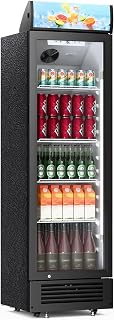
A well-proportioned 2.4 cubic foot glass-door cooler for covered patios and outdoor kitchens, with a digital display and enough shelf flexibility to handle tall bottles. Treat it as a sheltered-use appliance and it performs reliably and quietly.
EUHOMY 130-Can Beverage Refrigerator
The best capacity-per-dollar option, with removable shelves and precise digital control in a black finish that hides fingerprints on a busy deck. Its interior light switches independently of the compressor, which I appreciate for late-evening use.
Antarctic Star Outdoor 9 Cu. Ft. Glass Door Fridge
A commercial-scale display cabinet for pool houses, outdoor bars, and anyone who entertains at volume. It runs noticeably louder than the compact units, so keep it well away from bedroom-facing walls.
ROVSUN 3.3 Cu.Ft. Beverage Refrigerator
The double-layer glass door does real work here, both for thermal efficiency and for muting compressor sound, and the 32–50°F range is wide enough to serve as a wine cabinet. The lock is a practical touch in a household with curious teenagers.
Frequently Asked Questions
Can I put an indoor beverage fridge on my patio?
Only under full cover, and even then you’re accepting shortened lifespan. Indoor compressors aren’t rated for ambient temperature swings or humidity, and moisture reaching the electronics is a failure — sometimes a hazardous one. If the unit will see weather, buy an outdoor-rated model.
Will the compressor keep me awake?
It can, if it’s sited badly. Sound intrusion at night is about proximity and line of sight to an open window more than raw decibels, so place the fridge on the opposite side of the patio from bedrooms and, where possible, behind a solid rail or planter that breaks the direct path.
Does a cold drink before bed help or hurt sleep?
Cold water is broadly fine and can even support the slight drop in core temperature that precedes sleep onset. Alcohol is the real variable: it shortens sleep latency but fragments the second half of the night and suppresses REM, so an easily accessible beer fridge is worth pairing with a personal cutoff time.
How much clearance does a built-in installation need?
Follow the manufacturer’s figures, but front-venting units generally need only a fraction of an inch at the sides while rear-venting models want two to three inches behind. Starving a compressor of airflow is the fastest way to make a quiet fridge loud.
Final Thoughts
For most covered patios and outdoor kitchens, the 15 Inch French Door Beverage Refrigerator is the pick I’d make: capacious, properly built-in, and thoughtful about how much cold air and light escape each time it opens. If your installation is genuinely exposed, the Frigidaire IPX4 All-Weather Refrigerator is the honest choice and the only one here I’d trust to rain. And if noise near a bedroom is your main concern, the ROVSUN 3.3 Cu.Ft. and its double-layer glass door is the quietest compact unit on this list.