Key takeaways
- Abrasion rating: Look for double rub counts above 15,000 for family dining and 30,000+ if the chairs double as desk seating. Anything below 9,000 belongs on a decorative accent chair, not at a table used daily.
- Breathability: Faux linens, chenilles, and loose-weave blends allow vapour transfer, so seats don’t feel clammy after twenty minutes. Fully coated vinyls and tight microfibres run hot and are best reserved for chairs used briefly.
- Cleaning method: Decide honestly whether you’ll spot-clean or machine-wash. Yardage fabric commits you to spot treatment forever; a removable slipcover lets you throw the mess in a warm cycle and forget it.
- Weave tightness versus pets: Loops and open textures catch claws and hold fur. If you have a cat or a shedding dog, prioritise flat, tight weaves and jacquards over looped chenille.
- Yardage maths: Budget roughly half a yard per standard drop-in seat pad, plus 20% for pattern matching and mistakes. Full-back dining chairs typically need 1.5 to 2 yards each.
What's inside
Most dining chairs fail long before their frames do. The joinery holds, the legs stay square, but the seat surface pills, glazes, or goes shiny at the contact points — usually within the first two years. That’s rarely bad luck. Dining seating absorbs a punishing combination of abrasion, body heat, moisture from spills and skin, and repeated compression cycles, and the fabric chosen at purchase is almost never rated for that load. Buyers then find themselves choosing between reupholstering a chair that’s structurally fine or draping it in something that looks like a hospital sheet.
There’s a second issue people notice but seldom name: temperature. As someone who spends most of my working life on the physiology of rest and comfort, I pay close attention to how surfaces manage heat and vapour, because the same principles that make a mattress sleepable make a chair sittable through a three-hour dinner. Dense synthetics trap warmth and hold it against the thighs and lower back; open-weave natural blends release it. This guide covers both concerns — durability and thermal comfort — across two categories: upholstery fabric sold by the yard for DIY recovering, and stretch slipcovers for chairs you’d rather protect than rebuild.
As an Amazon Associate we earn from qualifying purchases.



How to Choose a Fabrics For Dining Room Chairs (2026)
- Abrasion rating: Look for double rub counts above 15,000 for family dining and 30,000+ if the chairs double as desk seating. Anything below 9,000 belongs on a decorative accent chair, not at a table used daily.
- Breathability: Faux linens, chenilles, and loose-weave blends allow vapour transfer, so seats don’t feel clammy after twenty minutes. Fully coated vinyls and tight microfibres run hot and are best reserved for chairs used briefly.
- Cleaning method: Decide honestly whether you’ll spot-clean or machine-wash. Yardage fabric commits you to spot treatment forever; a removable slipcover lets you throw the mess in a warm cycle and forget it.
- Weave tightness versus pets: Loops and open textures catch claws and hold fur. If you have a cat or a shedding dog, prioritise flat, tight weaves and jacquards over looped chenille.
- Yardage maths: Budget roughly half a yard per standard drop-in seat pad, plus 20% for pattern matching and mistakes. Full-back dining chairs typically need 1.5 to 2 yards each.
The Best Fabrics For Dining Room Chairs (2026)s Reviewed
Damask Tapestry Chenille Upholstery Fabric
This is the pick if you’re genuinely reupholstering rather than covering, and it’s the most comfortable of the group by a clear margin — the chenille pile compresses without going hard, and the tapestry backing keeps the face yarns from shifting under weight. The trade-off is the raised jacquard texture, which is a magnet for pet hair and needs a brush attachment rather than a wipe.
TinaKim Thick Chair Upholstery Fabric
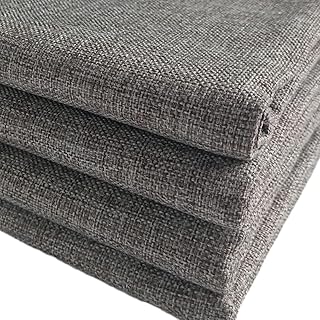
A sensible faux linen in a substantial weight, sold in a two-yard cut that’s about right for four drop-in seat pads. It handles heat well and staples cleanly without fraying at the fold lines, though the flaxen shade shows dark liquid stains readily, so I’d treat it with a fabric protector before it goes near a table.
Promindfly 3D Jacquard Dining Chair Covers
The best all-round slipcover here for full-back chairs, with enough elastane in the weave to grip curved backrests instead of ballooning. The 3D jacquard texture disguises creasing far better than flat knits, which is the usual giveaway that a chair is wearing a cover.
Waterproof Jacquard Seat Covers (Set of 4)
A laminated backing makes these the right answer for households with toddlers or a tendency toward red wine, since spills sit on the surface long enough to blot. Be aware that waterproofing and breathability are inherently opposed — these run warmer than the unlined alternatives, so they’re better for shorter meals than long evenings.
Stretch Washable Seat Slipcovers (Set of 6)
The lightest-touch option: a soft, breathable knit that covers the seat pad only, leaving wooden backs and frames on display. It’s the most thermally comfortable slipcover on this list and the cheapest way to rescue six tired seats, but it offers no protection above the cushion line.
Frequently Asked Questions
How many double rubs do dining chairs actually need?
For a household of four eating two meals a day at the table, 15,000 double rubs is a realistic floor. Chairs used for homework, laptops, or long card games should be treated as light commercial seating and specified at 30,000 or above.
Is linen a mistake for dining chairs?
Pure linen wrinkles and abrades faster than most people expect. Faux linen and linen-blend weaves keep the visual texture and the breathability while adding the tensile strength that makes the surface survive daily use.
Can I wash upholstery fabric before stapling it on?
Pre-washing removes sizing and pre-shrinks the weave, which prevents puckering later — but it also softens the hand and can make the fabric harder to pull taut. If you pre-wash, do it before cutting and expect to lose a few inches.
Do slipcovers make chairs uncomfortably hot?
Coated or waterproof ones can, because they block vapour transfer from the skin. Unlined stretch knits and jacquards are largely thermally neutral and rarely noticeable.
Final Thoughts
If you’re recovering chairs properly, the Damask Tapestry Chenille offers the best combination of durability and sit-comfort, with the TinaKim faux linen as a lighter, more contemporary alternative. If you want the problem solved this weekend without a staple gun, the Promindfly 3D Jacquard covers are the most convincing choice — they stay put, they wash, and they don’t announce themselves as slipcovers.