Key takeaways
- Breathability: Woven and faux-linen fabrics let body heat dissipate, which matters enormously during long meals and in warm climates. Sealed PU and vinyl block airflow entirely — excellent against spills, less pleasant against bare legs in July.
- Abrasion resistance: Look for tightly woven, higher-weight cloth rather than loose, slubby textures. Loose weaves look beautiful in photos and snag on belt buckles, zippers, and cat claws within months.
- Cleanability: Decide honestly whether you want wipeable or washable. Wipeable surfaces handle red wine in seconds; machine-washable covers handle everything else, but only if you can actually get them off and on without a struggle.
- Fit and slip resistance: A cover that migrates is worse than no cover. Prioritize elasticated hems, rear-covered designs, or ties, and measure your seat’s width, depth, and thickness before ordering rather than trusting “universal.”
- Support underneath: Fabric can’t compensate for collapsed foam. If the seat bottoms out within twenty minutes, replace or supplement the cushion first — the upholstery is the last layer, not the fix.
What's inside
As someone who spends most of my professional life studying rest, I’ve come to believe that recovery isn’t confined to the bedroom. The dining room is where many of us sit longest outside of work — lingering over coffee, helping with homework, stretching a Sunday breakfast into the afternoon. And yet the surface we sit on for those hours is often an afterthought: a thin foam pad wrapped in fabric that pills, slides, traps heat, or crackles every time someone shifts. Buyers usually discover the problem too late, after the chairs are assembled and the receipt is gone.
This guide approaches dining chair upholstery the way I’d approach a mattress or a pillowcase: by asking how a material handles pressure, temperature, and moisture over time, and how easily it can be cleaned when real life happens to it. Below you’ll find covers for rescuing chairs you already own, yardage for anyone reupholstering from the frame up, and fully upholstered seating worth buying outright — with the trade-offs of each spelled out plainly.
As an Amazon Associate we earn from qualifying purchases.




How to Choose a/an Upholstery For Dining Room Chairs (2026)
- Breathability: Woven and faux-linen fabrics let body heat dissipate, which matters enormously during long meals and in warm climates. Sealed PU and vinyl block airflow entirely — excellent against spills, less pleasant against bare legs in July.
- Abrasion resistance: Look for tightly woven, higher-weight cloth rather than loose, slubby textures. Loose weaves look beautiful in photos and snag on belt buckles, zippers, and cat claws within months.
- Cleanability: Decide honestly whether you want wipeable or washable. Wipeable surfaces handle red wine in seconds; machine-washable covers handle everything else, but only if you can actually get them off and on without a struggle.
- Fit and slip resistance: A cover that migrates is worse than no cover. Prioritize elasticated hems, rear-covered designs, or ties, and measure your seat’s width, depth, and thickness before ordering rather than trusting “universal.”
- Support underneath: Fabric can’t compensate for collapsed foam. If the seat bottoms out within twenty minutes, replace or supplement the cushion first — the upholstery is the last layer, not the fix.
The Best Upholstery For Dining Room Chairs (2026)s Reviewed
SearchI Waterproof PU Seat Covers, Set of 6
The rear-covered PU construction is the most spill-proof option here, shedding juice and gravy before they reach the foam, and it wipes clean in one pass. Accept the trade-off knowingly: PU doesn’t breathe, so it runs warm on long summer sittings, though it’s an easy win for households with toddlers.
Stretch Washable Dining Chair Seat Slipcovers, Set of 6
A breathable stretch knit that grips the seat instead of shifting under you, and it releases pet hair and stains in a normal wash cycle. This is my default recommendation for mismatched or dated chairs you’d rather refresh than replace.
TinaKim Thick Faux Linen Upholstery Fabric
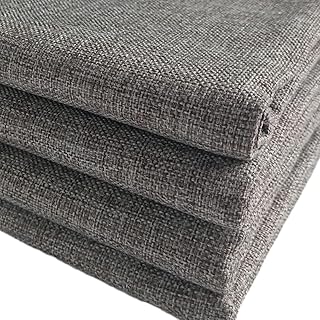
Genuinely substantial yardage with the airy hand of linen and enough density to survive daily use once stapled over a seat base. Two yards covers roughly four standard drop-in seats; order a third yard if you’re pattern-matching or new to reupholstery.
Faux Linen Needlework Fabric, 3.3 Yards
The larger cut gives you room for mistakes, and the grey-blue reads as a soft neutral that hides crumbs better than pale beige ever will. The weave is slightly more open than the TinaKim option, so I’d reserve it for adult-heavy dining rooms rather than clawing pets.
chairus Slipcovered Parsons Dining Chairs, Set of 4
The smartest design compromise on this list: real upholstered comfort with a removable linen cover, so a spill is a laundry task rather than a crisis. The high back offers genuine lumbar contact, which is why these are the chairs people actually linger in.
Frequently Asked Questions
Does dining chair upholstery really affect comfort that much?
Yes — more than most people expect. Surface temperature and pressure distribution determine whether you shift constantly or sit easily, the same variables that govern comfort in bedding.
Is waterproof upholstery worth the loss of breathability?
In homes with small children or frequent entertaining, usually yes. If your dining room doubles as a workspace where you sit for hours, choose a breathable woven fabric and keep a stain treatment nearby instead.
How much fabric do I need to reupholster a dining chair?
Budget about half a yard per standard drop-in seat, plus 20 percent for pattern repeats and errors. Measure across the seat and down each side, adding three inches per edge for stapling.
Can slipcovers work on chairs with arms or unusual shapes?
Seat-only covers work broadly; full-chair covers rarely fit armed or sculpted frames well. For those, reupholstering or replacement gives a far better result.
Final Thoughts
If you want the most comfortable long-term answer, the chairus Slipcovered Parsons Chairs deliver supportive, breathable seating with the practicality of a washable cover. For upgrading chairs you already own, the stretch washable slipcovers are the versatile everyday choice, while the SearchI waterproof PU set is the one I’d hand to any parent of a messy eater.