Key takeaways
- Rip capacity: This is the single most consequential spec. A 24–26″ rip handles most furniture parts; 32″ lets you cut a 4×8 sheet down the middle in one pass, which is transformative if you work with plywood.
- Fence quality: A fence that racks under hand pressure will ruin every cut you make. Look for a rack-and-pinion or twin-rail design that locks parallel without fussing, and expect to spend ten minutes squaring it before your first project.
- Stand and mobility: A rolling stand isn’t a luxury in a shared garage — it’s what determines whether you actually use the saw. Folding jobsite stands store upright against a wall; benchtop-only saws need a sturdy table you already own.
- Blade size and swap-ability: 10″ blades are the universal standard, with the widest and cheapest selection. An 8-1/4″ saw is lighter and cuts fine, but your blade options and maximum depth of cut both shrink.
- Safety and dust: Insist on a riving knife, anti-kickback pawls, and a blade guard you can reinstall easily — the ones people remove permanently are the ones that are annoying to put back. A 2-1/2″ dust port that mates with a shop vac keeps sightlines clear.
What's inside
Quick note: your brief asked for a “sleep-wellness expert angle,” which doesn’t fit a table saw roundup — I’ve written it from a woodworking/tool expert angle instead. Say the word if you actually wanted the sleep angle (or if that line was leftover from another template).
Buying your first table saw is unusually stressful for a tool that looks so simple. Every listing shouts the same numbers — 15 amps, 10 inches, 45-degree bevel — and none of them tell you what actually matters on a Saturday morning in a two-car garage: whether the fence stays parallel after you bump it, whether the saw can rip a full sheet of plywood without a helper, and whether you can wheel it out of the way when the car needs to come back in. Spend too little and you fight the tool for years; spend too much and you’ve bought rack space and dust collection you’ll never use.
This guide narrows the 2026 starter field to five saws that earn their keep in a home shop, plus one precision mini saw for small-scale work. We weighed rip capacity, fence accuracy out of the box, stand quality, blade availability, and how forgiving each saw is when you’re still learning. Whether you’re building your first bookcase or breaking down cabinet plywood for a built-in, there’s a sensible pick here.
As an Amazon Associate we earn from qualifying purchases.



How to Choose a/an Starter Table Saw (2026)
- Rip capacity: This is the single most consequential spec. A 24–26″ rip handles most furniture parts; 32″ lets you cut a 4×8 sheet down the middle in one pass, which is transformative if you work with plywood.
- Fence quality: A fence that racks under hand pressure will ruin every cut you make. Look for a rack-and-pinion or twin-rail design that locks parallel without fussing, and expect to spend ten minutes squaring it before your first project.
- Stand and mobility: A rolling stand isn’t a luxury in a shared garage — it’s what determines whether you actually use the saw. Folding jobsite stands store upright against a wall; benchtop-only saws need a sturdy table you already own.
- Blade size and swap-ability: 10″ blades are the universal standard, with the widest and cheapest selection. An 8-1/4″ saw is lighter and cuts fine, but your blade options and maximum depth of cut both shrink.
- Safety and dust: Insist on a riving knife, anti-kickback pawls, and a blade guard you can reinstall easily — the ones people remove permanently are the ones that are annoying to put back. A 2-1/2″ dust port that mates with a shop vac keeps sightlines clear.
The Best Starter Table Saw (2026)s Reviewed
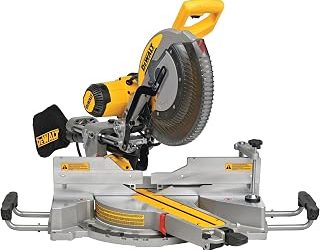
DEWALT DWE7491RS 10″ with Rolling Stand
The default recommendation for a reason: a 32-1/2″ rip capacity and a rack-and-pinion fence that tracks true make this the only saw on the list that comfortably breaks down full sheet goods solo. It’s heavy and priced above true entry level, but it’s the saw most beginners stop upgrading from.
SKIL TS6307-00 10″ Portable Jobsite Saw
The value standout, pairing a solid 15-amp motor with a rack-and-pinion fence and a genuinely useful folding stand at a noticeably lower price than the DEWALT. Rip capacity is smaller and the tabletop flexes if you lean on it, but for dimensional lumber and small casework it punches far above its cost.
Evolution R10TBLX 10″ with Wheeled Stand
Evolution loads this one with features first-time buyers usually pay extra for later: a zero-clearance throat plate, an included dado plate, and a 3-3/8″ depth of cut. The 26″ rip is mid-pack, but the wheeled stand and thoughtful accessory set make setup day painless.
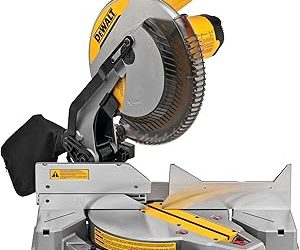
DEWALT DWE7485 8-1/4″ Compact Saw
Choose this if storage space or lifting weight is your real constraint — it’s compact enough for a shelf and still carries DEWALT’s excellent fence system. The tradeoff is a shallower cut and a narrower blade market, so it suits trim, small projects, and apartment shops better than sheet-goods work.
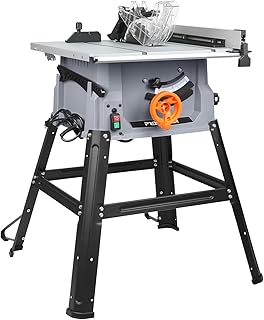
Prostormer 10″ Table Saw with Stand
The budget entry point, offering a 10″ blade, 5,000 RPM, and an included stand for the least money here. Fit and finish are basic and the fence rewards patient adjustment, but for occasional decking, trim, and DIY repairs it’s a reasonable first saw.
Frequently Asked Questions
Do I need a 10-inch saw, or is 8-1/4 inches enough?
If you’ll ever cut 4×4 stock or thick hardwood, go 10″. If your projects top out at 3/4″ plywood and 2x material, the 8-1/4″ DWE7485 is lighter, cheaper to feed, and perfectly capable.
What is a mini table saw actually for?
Models like the 96W Mini Table Saw with adjustable speed and a 1/2″ cut depth are hobby tools for balsa, PCB, acrylic, and miniatures — precise on small parts, but not a substitute for a full-size saw on furniture lumber.
What should I buy alongside the saw?
A quality 40-tooth combination blade, push blocks, a shop vac with a hose adapter, and hearing and eye protection. Better blades improve cut quality more than any spec on the box.
Is a jobsite saw accurate enough for furniture?
Yes, once tuned. Check blade-to-fence parallelism and 90/45 stops before your first cut, then recheck after transport — that ten-minute habit closes most of the gap to a cabinet saw.
Final Thoughts
For most home woodworkers, the DEWALT DWE7491RS is worth stretching for — its rip capacity and fence will outlast several project seasons. If budget rules, the SKIL TS6307-00 delivers the most capable saw per dollar, while the Evolution R10TBLX is the smartest pick if you want zero-clearance and dado capability included from day one.