Key takeaways
- Pressure, within reason: Automotive paint and trim are happiest between roughly 1,200 and 2,300 PSI. Chasing headline numbers above that buys you driveway-stripping power you’ll rarely want near a clear coat, and it usually arrives with a louder motor and a heavier frame.
- Flow rate over raw force: GPM is the underrated spec. Around 1.2 to 1.8 GPM rinses foam and grit away efficiently, which shortens the job — the single best way to reduce how long a motor is running outside a bedroom window.
- Noise and vibration: Induction motors generally hum where universal motors whine, and a stable, wide-footprint base stops the unit skittering across concrete. If you wash before 8am, treat quiet operation as a feature, not a bonus.
- Foam and nozzle setup: A proper foam cannon or onboard detergent tank plus a 25° and 40° tip covers virtually all car work. Skip the 0° pencil jet on paintwork entirely.
- Cord, hose, and storage reality: A 25ft-plus hose and tidy onboard reels decide whether the machine gets used or stays in the corner. Wall-mounted and cordless designs shine in tight garages where dragging out a bulky unit is the actual barrier.
What's inside
Anyone who has tried to wash a car properly knows the real obstacle isn’t dirt — it’s timing. The only free hours tend to fall early on a Saturday or late on a Sunday evening, exactly when a screaming gas engine turns a simple chore into a neighborhood event. As someone who spends most days advising people on protecting their rest environment, I’ve come to see the humble pressure washer as a surprisingly relevant purchase: sound carries further at dawn and dusk than most people realize, and a machine that runs at conversational volume is the difference between a satisfying chore and an apology to the family next door.
This guide looks at car-cleaning pressure washers through two lenses at once: cleaning performance and acoustic livability. Below you’ll find what actually matters when comparing specs, honest notes on five machines worth your money in 2026, and answers to the questions readers send most often. Every pick here is electric or battery-powered, because in a residential setting that decision does more for your weekends — and your neighbors’ lie-ins — than any nozzle upgrade ever will.
As an Amazon Associate we earn from qualifying purchases.


How to Choose a Car Cleaning Pressure Washer (2026)
- Pressure, within reason: Automotive paint and trim are happiest between roughly 1,200 and 2,300 PSI. Chasing headline numbers above that buys you driveway-stripping power you’ll rarely want near a clear coat, and it usually arrives with a louder motor and a heavier frame.
- Flow rate over raw force: GPM is the underrated spec. Around 1.2 to 1.8 GPM rinses foam and grit away efficiently, which shortens the job — the single best way to reduce how long a motor is running outside a bedroom window.
- Noise and vibration: Induction motors generally hum where universal motors whine, and a stable, wide-footprint base stops the unit skittering across concrete. If you wash before 8am, treat quiet operation as a feature, not a bonus.
- Foam and nozzle setup: A proper foam cannon or onboard detergent tank plus a 25° and 40° tip covers virtually all car work. Skip the 0° pencil jet on paintwork entirely.
- Cord, hose, and storage reality: A 25ft-plus hose and tidy onboard reels decide whether the machine gets used or stays in the corner. Wall-mounted and cordless designs shine in tight garages where dragging out a bulky unit is the actual barrier.
The Best Car Cleaning Pressure Washer (2026)s Reviewed
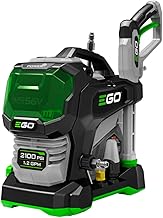
EGO Power+ HPW2100
At 2,100 PSI with no cord and no engine, this is the quietest genuinely capable washer I’ve used, and its variable-pressure wand lets you dial force down for panels and up for wheel arches. Note that the battery and charger are sold separately, so factor that into your budget if you’re not already in the EGO ecosystem.
Wall-Mounted 5500 PSI Power Washer
The appeal here is convenience: it mounts permanently in the garage, feeds through a 66ft auto-rewind hose, and includes five nozzle tips plus adjustable pressure levers so you’re never stuck at full blast. Treat the peak-pressure rating as marketing rather than gospel, and keep it throttled well down for bodywork.
6-in-1 Cordless Portable Pressure Washer
With 1,300 PSI, two 4.0Ah batteries, and the ability to draw from a bucket, this handheld is ideal for apartment dwellers, driveway-free parking, and quick post-road-trip rinses. It won’t strip a patio, but for regular maintenance washes it’s the least disruptive option in this roundup.
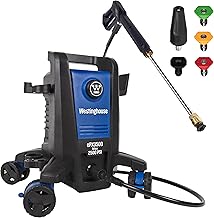
Westinghouse ePX3500
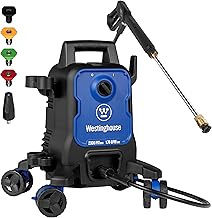
The strongest all-rounder: 2,500 max PSI and 1.76 GPM move through a filthy car quickly, while the anti-tipping base, onboard soap tank, and steel wand feel a class above the price. This is the pick if the car shares duties with fences and siding.
Westinghouse ePX3100
Essentially the ePX3500 with pressure trimmed to 2,300 PSI, which is arguably the smarter number for automotive work. Same soap tank, same five-nozzle set, same reassuringly stable footprint, usually for less money.
Frequently Asked Questions
How much PSI is safe for car paint?
Stay between about 1,200 and 2,300 PSI, hold the wand 12 to 18 inches from the surface, and use a 40° tip on paint. Damage comes far more often from getting too close with too narrow a nozzle than from the rating on the box.
Are cordless models powerful enough?
For routine washes, yes. Battery units excel at foam-and-rinse maintenance cleaning; if you’re removing baked-on winter road salt or mud, a corded electric will finish faster.
Is electric really quieter than gas?
Considerably. Gas units commonly sit around 85–90 dB, while electric models typically land in the 70s and cordless ones lower still — a meaningful difference for early-morning or evening washing near open windows.
Do I still need a foam cannon?
An onboard soap tank is fine for casual cleaning, but a dedicated foam cannon produces thicker foam that lifts grit before your mitt touches the paint, which is the real key to swirl-free results.
Final Thoughts
For most households the Westinghouse ePX3100 hits the sweetest spot of pressure, price, and stability, with the ePX3500 worth the upgrade if you clean more than just cars. If your washing happens at unsociable hours — or you simply value a quiet garage — the EGO Power+ HPW2100 is the one I’d choose and keep for years.