Key takeaways
- Sleep frequency: Be honest about usage. Under 20 nights a year, a 6-inch foam or foam-and-fiber mattress is fine. For weekly or nightly sleeping, insist on 8 inches or more with a defined support core — thinner mattresses transmit slat pressure straight into the hips and shoulders.
- Frame material and slat spacing: Solid hardwood frames stay quiet and square for years; softer woods and thin metal tubing develop creaks and sag at the center. Look for slats no more than 3 to 4 inches apart, since wide gaps let even a good mattress dip between supports.
- Conversion mechanism: Test whether one person can convert it unassisted. Traditional bi-fold arms are the most durable and repairable; click-clack backrests are faster but concentrate stress on a single hinge, so hardware quality is everything.
- Flat-sleep geometry: A futon that converts to a near-flat surface with a slight hinge ridge is acceptable; one that leaves a pronounced crease or a 10-degree incline is not. Spinal alignment suffers most at the lumbar transition, exactly where most cheap hinges sit.
- Cover fabric and maintenance: Corduroy and linen-weave upholstery breathe better than faux leather, which traps heat and can feel clammy against skin. If you choose faux leather for wipe-clean convenience, plan on a breathable mattress protector and cotton sheets.
What's inside
Most people don’t shop for a futon because they want one — they shop because a room has to do two jobs. The home office becomes a guest room in December. The studio apartment needs a couch that doesn’t force a choice between seating and sleeping. The problem is that the market rewards furniture that photographs well in a 6-second video, and a futon that looks sharp on camera can still deliver a mattress that bottoms out by 2 a.m., a frame that flexes when two adults sit down, or a conversion mechanism that requires a wrestling match. From a sleep-quality standpoint, that matters more than buyers expect: fragmented sleep on an unsupportive surface raises overnight arousals, and guests rarely tell you they slept badly — they just decline the next invitation.
This guide approaches futons the way I’d assess any sleep surface: support geometry first, then comfort layer, then the hardware that has to survive a few hundred conversions. Below you’ll find the models worth shortlisting in 2026, spanning true hardwood convertibles, compact upholstered sleepers, and a standalone mattress for people who already own a frame. I’ve also included the selection criteria I use with clients, plus answers to the questions that come up most often once a futon actually arrives.
As an Amazon Associate we earn from qualifying purchases.


🛒 Best Price Today on Amazon
Prime members get fast, free shipping on everything above, plus member-only deals. New members get a 30-day free trial — cancel anytime.
How to Choose a Futon Bed in 2026
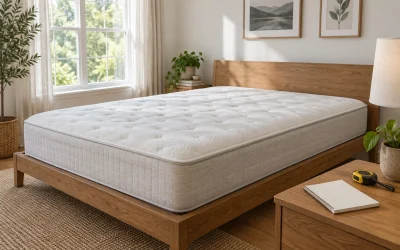
- Sleep frequency: Be honest about usage. Under 20 nights a year, a 6-inch foam or foam-and-fiber mattress is fine. For weekly or nightly sleeping, insist on 8 inches or more with a defined support core — thinner mattresses transmit slat pressure straight into the hips and shoulders.
- Frame material and slat spacing: Solid hardwood frames stay quiet and square for years; softer woods and thin metal tubing develop creaks and sag at the center. Look for slats no more than 3 to 4 inches apart, since wide gaps let even a good mattress dip between supports.
- Conversion mechanism: Test whether one person can convert it unassisted. Traditional bi-fold arms are the most durable and repairable; click-clack backrests are faster but concentrate stress on a single hinge, so hardware quality is everything.
- Flat-sleep geometry: A futon that converts to a near-flat surface with a slight hinge ridge is acceptable; one that leaves a pronounced crease or a 10-degree incline is not. Spinal alignment suffers most at the lumbar transition, exactly where most cheap hinges sit.
- Cover fabric and maintenance: Corduroy and linen-weave upholstery breathe better than faux leather, which traps heat and can feel clammy against skin. If you choose faux leather for wipe-clean convenience, plan on a breathable mattress protector and cotton sheets.
The Best Rated Futon Beds of 2026, Reviewed
Kodiak Furniture Monterey Futon Set (Full, Barbados)
This is the reference point I compare other futons against: a solid hardwood frame, closely spaced slats, and a linen-covered full mattress that holds its loft instead of compressing into the frame within a season. It converts cleanly with one hand and is genuinely suitable for regular, not just occasional, sleeping.
Kodiak Phoenix Futon Sofa Bed
The Phoenix pairs the same hardwood construction with a slimmer, more upright silhouette, which makes it the better pick for narrow living rooms and apartments where a deep-seated sofa dominates the floor plan. The stone linen mattress runs slightly firmer — an advantage for back sleepers, a small adjustment period for side sleepers.
Kodiak Monterey Queen with Storage Drawers
A queen-width sleeping surface is a meaningful upgrade for couples, and the integrated drawers solve the linens problem that plagues most guest setups — bedding lives under the futon rather than in a hall closet. Measure carefully first; it needs real wall space and drawer clearance in front.
Marsail 66″ Convertible Futon Sofa Bed
At roughly 66 inches, this is the compact-space specialist: adjustable backrest positions, breathable corduroy upholstery, and a footprint that fits a home office or dorm room without blocking traffic. Best suited to solo sleepers and shorter guest stays rather than as a primary bed.
Flamaker Convertible Futon Loveseat
The most feature-dense option here, with removable armrests, cup holders, and a reclining backrest that makes it a strong media-room piece. The faux leather wipes clean easily but sleeps warm, so pair it with cotton bedding if guests are staying more than a night or two.
Frequently Asked Questions
Can a futon work as an everyday bed?
Yes, provided the mattress is at least 8 inches thick with a real support core and the frame has tightly spaced hardwood slats. Nightly use on a thin, foam-only futon over widely spaced supports is where people develop hip and lower-back complaints.
Which is firmer — futon or innerspring mattress?
Most futons sleep firmer, since they’re built to fold and therefore avoid tall spring units. Side sleepers often benefit from adding a 2-inch topper, which restores shoulder and hip contouring without compromising the fold.
How do I stop a futon mattress from sliding?
Use the included storage or retention straps where provided, or add a thin rubber non-slip pad between mattress and slats. Persistent sliding usually signals a mattress slightly undersized for its frame.
Do futon mattresses need airing out?
They do. Folding traps moisture inside the core, so stand or unfold the mattress for a few hours monthly, especially in humid climates — it’s the single most effective step for preventing odor and prolonging foam life.
Final Thoughts
If the futon will see regular overnight use, the Kodiak Monterey Full remains the most defensible purchase in 2026, with the Monterey Queen with storage drawers the clear upgrade for couples and frequent hosts. For tight rooms where a full-size hardwood frame simply won’t fit, the Marsail 66″ delivers the best balance of comfort, breathability, and footprint.