Key takeaways
- Thickness and span: A 1.5-inch solid slab resists deflection across roughly 30 inches of unsupported span; thinner tops need a stretcher or apron underneath, or they will bow under vise pressure and heavy pounding.
- Wood species behavior: Acacia is dense, oily, and shrugs off dents; birch is lighter, sands beautifully, and takes stain evenly but bruises faster. Rubberwood sits between the two and costs less per square foot.
- Chemical and heat exposure: Epoxy, CA glue, and solvents bond permanently to bare wood. If you finish or refinish projects on the bench, plan on a sacrificial mat or a hardboard overlay from day one.
- Cleanup expectations: Non-porous surfaces such as PVC and PU leather wipe clean in seconds and keep small parts from rolling. Oiled wood needs periodic re-oiling and will show water rings.
- Mounting and modification: Confirm you can drill dog holes, mount a vise, or trim the slab to your frame. Unfinished slabs offer the most freedom; textured mats are cuttable with a utility knife and require no hardware at all.
What's inside
A workbench top absorbs everything a shop can throw at it: hammer strikes, spilled solvents, clamp pressure, hot solder, and the slow grind of sliding metal. Most buyers discover the problem after the fact — the plywood top swells and fuzzes, the particleboard slab sags between the legs, or the beautiful hardwood surface picks up a permanent glue skin within a month. Choosing a surface material is less about finding the toughest option and more about matching the material to the work you actually do, then protecting it accordingly.
This guide breaks down the three practical paths available in 2026: solid hardwood slabs for stiffness and repairability, engineered rubberwood tops for value and scratch resistance, and roll-out mats that shield whatever surface you already own. Below you’ll find the specifications that matter, honest notes on where each material struggles, and short reviews of five options that cover benches from a 4-foot apartment table to a full 6-foot garage station.
As an Amazon Associate we earn from qualifying purchases.




How to Choose a Workbench Top Material (2026)
- Thickness and span: A 1.5-inch solid slab resists deflection across roughly 30 inches of unsupported span; thinner tops need a stretcher or apron underneath, or they will bow under vise pressure and heavy pounding.
- Wood species behavior: Acacia is dense, oily, and shrugs off dents; birch is lighter, sands beautifully, and takes stain evenly but bruises faster. Rubberwood sits between the two and costs less per square foot.
- Chemical and heat exposure: Epoxy, CA glue, and solvents bond permanently to bare wood. If you finish or refinish projects on the bench, plan on a sacrificial mat or a hardboard overlay from day one.
- Cleanup expectations: Non-porous surfaces such as PVC and PU leather wipe clean in seconds and keep small parts from rolling. Oiled wood needs periodic re-oiling and will show water rings.
- Mounting and modification: Confirm you can drill dog holes, mount a vise, or trim the slab to your frame. Unfinished slabs offer the most freedom; textured mats are cuttable with a utility knife and require no hardware at all.
The Best Workbench Top Materials (2026) Reviewed
Howizz Acacia Butcher Block Countertop (36″ x 25″)
Acacia’s tight, interlocking grain gives this slab excellent dent resistance for its price, and the 1.5-inch thickness makes it stiff enough for a vise once mounted to a solid frame. Arriving unfinished is an advantage here — a few coats of penetrating oil or a wiping varnish let you tune it for either a workshop or a desk.
Unfinished Birch Butcher Block Countertop (60″ x 25″)
At five feet long, this birch slab is the most practical option for a full-length garage or laundry-room bench, and the smooth-sanded face is ready for oil, stain, or paint without additional prep. Birch is softer than acacia, so expect dings from dropped tools; the upside is that it sands flat again in minutes.
ClosetMaid ProGarage Rubberwood Workbench Top
Rubberwood is the quiet workhorse of bench tops: dimensionally stable, scratch resistant, and inexpensive relative to domestic hardwoods. This one is sized and finished specifically for garage systems, which makes it the lowest-effort upgrade if you’re replacing a sagging composite top on an existing frame.
Drydiet PU Leather Workbench Mat (24″ x 72″)
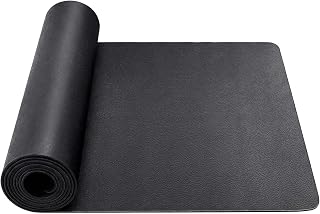
A 6-foot PU leather topper is the fastest way to make an existing bench glue-proof and quieter under metal parts. It’s cuttable to fit, wipes clean with a damp cloth, and — unlike rubber mats — won’t leave a residue on finished wood underneath.
48″ x 17″ PVC Workbench Mat, Steel Plate Texture
The 1.5mm PVC mat with steel-plate embossing is the sensible choice for electronics, crafting, and light assembly: the texture keeps fasteners from wandering, and stains stay on the surface rather than soaking in. Two of these side by side cover most 4-foot benches for less than the cost of a hardwood slab.
Frequently Asked Questions
Is butcher block strong enough for a real workbench?
Yes, provided it’s at least 1.5 inches thick and supported every 24 to 30 inches. Edge-glued slabs are stiffer than plywood of the same thickness and can be planed or sanded flat repeatedly over their lifetime.
What finish should I use on an unfinished slab?
For workshop use, a penetrating oil or oil-varnish blend is ideal: it repels moisture, renews easily with a rag, and doesn’t chip like film finishes. Reserve polyurethane for tops that double as desks.
Do I need a mat if I already have a hardwood top?
If you glue, paint, solder, or cut on the bench, a sacrificial mat pays for itself. It’s far cheaper to replace a $30 mat than to resurface a slab coated in cured epoxy.
How thick should a workbench mat be?
Around 1.5mm suits precision and craft work where you want a firm, stable feel. Thicker mats cushion better for hand-tool work but can make clamping and measuring less accurate.
Final Thoughts
For a long-term bench you’ll rebuild a frame around, the 60-inch birch slab offers the most usable surface per dollar, while the Howizz acacia block is the tougher pick for smaller benches that see heavy hand-tool work. If your bench is already serviceable, skip the rebuild entirely — the Drydiet PU leather topper protects six feet of surface for a fraction of the cost of replacing it.