Key takeaways
- Leg count and center support: Nine legs is the benchmark for queen and full sizes, because it means a reinforced center rail is carrying the middle third of your box spring. Six-leg frames leave that zone unsupported, and over a year or two you’ll feel the dip form.
- Verified weight capacity: Add your mattress, box spring, and every sleeper together, then look for a frame rated well above that number. Ratings in the 2,000–2,500 lb range aren’t marketing excess; headroom is what keeps steel from developing a permanent bow.
- Noise engineering: Squeak comes from metal-on-metal contact at the joints, not from the steel itself. Prioritize frames with welded corners rather than stacked bolts, and check that non-slip pads sit between the frame and both the floor and the box spring.
- Deck height and transfer ease: Seven inches of clearance plus a box spring and mattress usually lands the sleep surface around 24 inches — comfortable for most adults, and low enough for pets or anyone with mobility limitations to manage. Go taller only if you want deep under-bed storage.
- Assembly and adjustability: Tool-free interlocking designs cut setup to ten or fifteen minutes and, more importantly, let you disassemble cleanly for a move without stripped hardware. If you’re planning a mattress upgrade, a size-adjustable frame protects your investment.
What's inside
Most people blame their mattress when they wake up stiff and unrested, but the culprit is often two feet below the surface. A box spring is only as good as the platform holding it, and a frame that flexes, sags, or squeaks under load transfers every micro-movement straight into your sleep architecture — the kind of subtle disruption that fragments deep sleep without ever fully waking you. As a sleep-wellness practitioner, I see this pattern constantly: a perfectly good mattress set performing badly because the base beneath it was an afterthought.
This guide focuses on metal bed frames built specifically to carry a box spring and mattress together — the traditional two-piece setup that still dominates American bedrooms. I’ve evaluated the leading 2026 options on the factors that actually affect rest: center-rail support, leg count and placement, noise behavior over time, deck height, and how forgiving each frame is during assembly. Below you’ll find the top picks, followed by a practical buying framework and answers to the questions I hear most often from clients.
As an Amazon Associate we earn from qualifying purchases.


🛒 Best Price Today on Amazon
Prime members get fast, free shipping on everything above, plus member-only deals. New members get a 30-day free trial — cancel anytime.
How to Choose a Bed Frame For Mattress And Box Spring (2026)
- Leg count and center support: Nine legs is the benchmark for queen and full sizes, because it means a reinforced center rail is carrying the middle third of your box spring. Six-leg frames leave that zone unsupported, and over a year or two you’ll feel the dip form.
- Verified weight capacity: Add your mattress, box spring, and every sleeper together, then look for a frame rated well above that number. Ratings in the 2,000–2,500 lb range aren’t marketing excess; headroom is what keeps steel from developing a permanent bow.
- Noise engineering: Squeak comes from metal-on-metal contact at the joints, not from the steel itself. Prioritize frames with welded corners rather than stacked bolts, and check that non-slip pads sit between the frame and both the floor and the box spring.
- Deck height and transfer ease: Seven inches of clearance plus a box spring and mattress usually lands the sleep surface around 24 inches — comfortable for most adults, and low enough for pets or anyone with mobility limitations to manage. Go taller only if you want deep under-bed storage.
- Assembly and adjustability: Tool-free interlocking designs cut setup to ten or fifteen minutes and, more importantly, let you disassemble cleanly for a move without stripped hardware. If you’re planning a mattress upgrade, a size-adjustable frame protects your investment.
The Best Bed Frame For Mattress And Box Spring (2026)s Reviewed
Amazon Basics 9-Leg Metal Bed Frame (Full)
This is the dependable baseline every other frame gets measured against: nine legs, a proper center rail, and tool-free assembly that most people finish in under twenty minutes. It won’t impress anyone visually, but hidden beneath a bed skirt it does exactly one job — holding a box spring flat and silent — and it does it without drama.
EMODA 7 Inch Queen Bed Frame
The standout here is the 2,500 lb rating paired with six non-slip pads, which together solve the two problems that ruin most budget frames: gradual center sag and creeping nighttime noise. Headboard compatibility and a low profile make it my default recommendation for couples who want a finished-looking bed without a platform-bed price.
ZINUS Compack Adjustable Bed Frame
Zinus built genuine flexibility into this one — it expands from full to king or twin to queen, so a mattress upgrade doesn’t mean replacing the base. The seven-inch support height keeps the geometry right for a standard box spring, and the folding construction stores flat between moves.
Full Size Metal Bed Frame, 7 Inch
A no-frills nine-leg design that hits the essentials at the lowest realistic price point for a properly supported full-size setup. Reasonable choice for a guest room, a first apartment, or a teenager’s room where the mattress set will likely change before the frame ever does.
Amazon Basics Smart Box Spring Bed Base (Full)
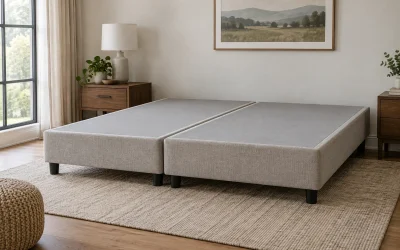
Slightly different animal: this is a five-inch foundation that replaces a traditional box spring rather than supporting one, which is worth knowing before you buy. If your existing box spring has failed and you want a lower, firmer, quieter deck, it’s the cleanest way to reset the system.
Frequently Asked Questions
Do I still need a box spring in 2026?
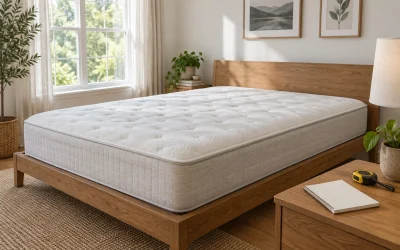
Only if your mattress was designed for one — most innerspring and hybrid models still are, and their warranties often require it. All-foam mattresses generally want a solid or closely slatted surface instead, and pairing one with a bare box spring will make it feel softer and wear faster.
Why does my metal frame squeak, and can I fix it?
Squeaking almost always originates at bolted joints or where the box spring slides against bare steel. Tighten every fastener, add felt or rubber pads at each contact point, and check that all legs are making firm floor contact — that sequence resolves the large majority of cases.
Is nine legs really better than six?
For full size and larger, yes. The extra legs exist to load the center rail, which is where a box spring carries the most weight and where sag develops first. On a twin the difference is negligible; on a queen it’s meaningful over a five-year horizon.
Will a low-profile frame make it harder to get out of bed?
Rarely, once you account for the full stack. Seven inches of frame plus a nine-inch box spring plus a ten-inch mattress puts the surface near 26 inches, which is close to ideal for most adults. Measure from your floor to the back of your knee and aim to land within an inch or two of that number.
Final Thoughts
For most bedrooms, the EMODA 7 Inch Queen Bed Frame is the strongest all-around choice in 2026 — its load rating, noise control, and headboard compatibility cover nearly every need at a sensible price. Choose the ZINUS Compack if you anticipate changing mattress sizes and want a frame that adapts with you, and fall back on the Amazon Basics 9-Leg Frame when you simply need proven, silent support beneath a box spring with no extras and no fuss.