Key takeaways
- Louvered vs. fixed roof: Rotating louvers let you dial light from full sun to near-total shade, which matters if you want bright morning exposure and dim afternoon rest from the same seat. Fixed polycarbonate panels are simpler and cheaper but commit you to one light level all day.
- Rain acoustics: Thin metal and hard polycarbonate amplify rainfall into a sharp clatter. Thicker aluminum louvers with rubber seals produce a lower, steadier sound — genuinely restful rather than startling. Ask about panel gauge before you assume rain will be soothing.
- Heat behavior: Dark finishes look sharp and hide pollen, but they radiate absorbed heat downward in the late afternoon. If your patio faces west, either choose a lighter finish or plan on a louvered roof you can angle to vent trapped air.
- Post thickness and sway: Anything under roughly 3.5 inches square tends to flex noticeably in gusts, and that low-frequency creaking is exactly the kind of unpredictable input that keeps you from drifting off. Thicker posts and proper anchoring buy you stillness.
- Drainage routing: Integrated gutters that channel water down through the posts keep the perimeter dry, so cushions stay usable and you’re not stepping into a puddle. Open-edge designs will drip a curtain of water right where you walk.
What's inside
As someone who spends most of my working hours talking to people about rest, I’ve noticed a pattern: the deepest daytime recovery rarely happens indoors. A shaded outdoor spot with moving air and filtered light does something a bedroom can’t — it lets your nervous system downshift while still giving your body the daylight cues it needs to keep your circadian rhythm anchored. The trouble is that most backyards offer only two extremes: blazing sun that drives you inside by 11 a.m., or a sealed-up patio cover that turns the space into a dim, stuffy box. Neither invites you to linger, and neither helps you sleep better that night.
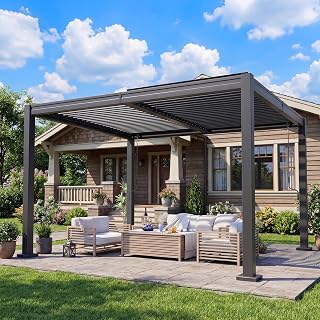
A roofed pergola solves the problem by giving you adjustable overhead cover — enough shade to keep surface temperatures and glare comfortable, enough openness to keep air moving and bright indirect light reaching your eyes. This guide looks at the roofed pergolas worth considering in 2026, judged the way I’d judge a bedroom: temperature control, light management, noise, and whether the structure is calm enough that you’ll actually use it for a mid-afternoon reset rather than just storage.
As an Amazon Associate we earn from qualifying purchases.


How to Choose a Pergola With Roof (2026)
- Louvered vs. fixed roof: Rotating louvers let you dial light from full sun to near-total shade, which matters if you want bright morning exposure and dim afternoon rest from the same seat. Fixed polycarbonate panels are simpler and cheaper but commit you to one light level all day.
- Rain acoustics: Thin metal and hard polycarbonate amplify rainfall into a sharp clatter. Thicker aluminum louvers with rubber seals produce a lower, steadier sound — genuinely restful rather than startling. Ask about panel gauge before you assume rain will be soothing.
- Heat behavior: Dark finishes look sharp and hide pollen, but they radiate absorbed heat downward in the late afternoon. If your patio faces west, either choose a lighter finish or plan on a louvered roof you can angle to vent trapped air.
- Post thickness and sway: Anything under roughly 3.5 inches square tends to flex noticeably in gusts, and that low-frequency creaking is exactly the kind of unpredictable input that keeps you from drifting off. Thicker posts and proper anchoring buy you stillness.
- Drainage routing: Integrated gutters that channel water down through the posts keep the perimeter dry, so cushions stay usable and you’re not stepping into a puddle. Open-edge designs will drip a curtain of water right where you walk.
The Best Pergolas With Roofs Reviewed (2026)
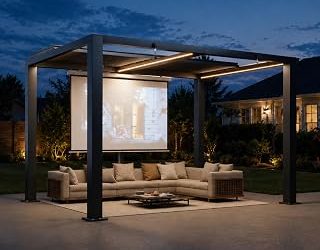
10×12 FT Louvered Pergola, Dark Grey
The two independently adjustable roof sections are the standout feature here: you can shade a lounger completely while leaving the other half open to sky, which is ideal if one person wants to nap and the other wants to read. Drainage is routed internally, so the surrounding deck stays dry after storms.
Aoxun Louvered Pergola 10×16
The thickened 3.8-inch posts make a real difference in perceived stillness — this frame holds steady in wind where slimmer structures creak and shift. At 10×16 it’s generous enough for a daybed plus seating, and the simplified assembly system spares you a full weekend.
Airwire 10×12 FT Louvered Pergola with Curtains & Netting
My pick for anyone who actually intends to sleep outside. The included curtains cut low-angle sun that louvers can’t block, and the netting handles the mosquitoes that otherwise end every attempt at an outdoor rest before it starts.
10′ x 13′ Louvered Pergola, Deep Grey
A well-proportioned single-zone louvered unit with a rainproof hardtop and a bit more depth than the standard 10×12, giving you room for a proper reclining chair. The deep grey aluminum resists fading, though expect some radiant warmth in west-facing installations.
Aoxun 10′ x 14′ Lean-To Gazebo, Black
Wall-mounted with a sloping roof, this suits narrow side patios and doorways where a freestanding pergola won’t fit. Shedding water away from the house is efficient, but the fixed pitch means you accept whatever shade the sun’s angle gives you.
Frequently Asked Questions
Is napping under a pergola actually good for my sleep?
A short 20-minute nap in filtered daylight tends to leave you clearer than an equivalent nap in a dark room, and the daylight exposure reinforces your circadian timing. Keep it under 30 minutes and before mid-afternoon to protect your night sleep.
Do louvered roofs leak when closed?
Quality units use interlocking louvers with gaskets and stay dry in steady rain. Wind-driven rain at a sharp angle will find its way through most designs, which is where side curtains earn their place.
Should I choose a lean-to or freestanding model?
Lean-to designs are cheaper, sturdier per dollar, and ideal for tight spaces, but they inherit heat and noise from the house wall. Freestanding pergolas placed a few feet out catch far more cross-breeze.
Do I need to anchor into concrete?
Yes, for any permanent installation. Proper anchoring into concrete or a reinforced deck frame is what eliminates the sway and creaking that undermine both safety and rest.
Final Thoughts
For most backyards, the Aoxun 10×16 louvered pergola offers the best combination of stability and usable space, while the dual-zone 10×12 dark grey model wins if you’re sharing the space with someone whose light preferences differ from yours. If your real goal is genuine outdoor sleep, start with the Airwire 10×12 — curtains and netting turn a shaded patio into somewhere you can actually close your eyes.