Key takeaways
- Match the orifice to your machine: Orifice size is calibrated to your washer’s flow rate, not its pressure. A 4.0 orifice suits roughly 4.0 GPM machines; fit it to a 2.0 GPM unit and you’ll lose pressure, while going too small strains the pump and can trip the unloader valve.
- Know your spray angles: 0° is a concentrated jet for isolated stains, 15° strips, 25° is the general-purpose workhorse, 40° rinses delicate surfaces, and the black soap tip drops pressure to draw detergent. Most homeowners live at 25° and 40°.
- Decide if you need a turbo: A rotating turbo nozzle spins a 0° jet in a cone, giving you concentrated cutting power across a wider path. On concrete, brick, and pavers it genuinely halves cleaning time. On wood, vinyl, or paint, it’s a liability.
- Check pressure and temperature ratings: Buy tips rated above your machine’s output — 4000 PSI covers nearly all consumer and prosumer units. If you ever run warm or hot water, confirm the nozzle is rated for it; many budget tips are cold-water only.
- Look at the fittings and storage: Stainless steel inserts in a plated brass or steel body resist erosion far longer than soft alloys. And a quick-connect set with a holder or belt clip means you stop losing the 40° tip in the lawn every single spring.
What's inside
Anyone who has spent a Saturday morning waving a pressure washer wand at a stained driveway knows the frustration: the machine sounds furious, the water is definitely leaving the gun, and yet the grime just sits there. Nine times out of ten, the motor isn’t the problem. The nozzle is. That small brass or stainless tip screwed onto the end of your lance decides how the pump’s energy is shaped — whether it arrives as a wide, gentle curtain that rinses siding safely, or a hard pencil-thin line that strips paint off concrete. Choose wrong and you either waste an afternoon or gouge a permanent stripe into your deck boards.
There is a quality-of-life argument here too, and it’s one we take seriously on a site devoted to comfortable homes. Faster, more effective cleaning means fewer hours of engine drone under your bedroom window, less weekend eaten by chores, and a patio or entryway you actually want to sit in at the end of the day. A restful home is largely a maintained one. Below we break down what matters in a pressure washer nozzle in 2026 — orifice sizing, spray angles, turbo versus fan patterns, build materials — then review the standout tips and sets currently worth your money, from budget five-packs to serious rotating turbo nozzles.
As an Amazon Associate we earn from qualifying purchases.


How to Choose a/an Pressure Washer Nozzles (2026)
- Match the orifice to your machine: Orifice size is calibrated to your washer’s flow rate, not its pressure. A 4.0 orifice suits roughly 4.0 GPM machines; fit it to a 2.0 GPM unit and you’ll lose pressure, while going too small strains the pump and can trip the unloader valve.
- Know your spray angles: 0° is a concentrated jet for isolated stains, 15° strips, 25° is the general-purpose workhorse, 40° rinses delicate surfaces, and the black soap tip drops pressure to draw detergent. Most homeowners live at 25° and 40°.
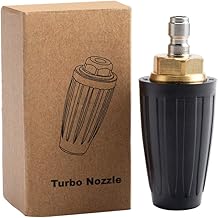
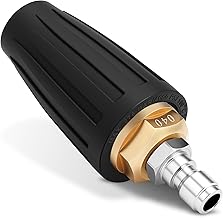
- Decide if you need a turbo: A rotating turbo nozzle spins a 0° jet in a cone, giving you concentrated cutting power across a wider path. On concrete, brick, and pavers it genuinely halves cleaning time. On wood, vinyl, or paint, it’s a liability.
- Check pressure and temperature ratings: Buy tips rated above your machine’s output — 4000 PSI covers nearly all consumer and prosumer units. If you ever run warm or hot water, confirm the nozzle is rated for it; many budget tips are cold-water only.
- Look at the fittings and storage: Stainless steel inserts in a plated brass or steel body resist erosion far longer than soft alloys. And a quick-connect set with a holder or belt clip means you stop losing the 40° tip in the lawn every single spring.
The Best Pressure Washer Nozzles (2026)s Reviewed
Tool Daily Pressure Washer Nozzle Tips, 5-Pack
A clean, no-nonsense five-tip set covering 0°, 15°, 25°, 40°, and soap in 1/4″ quick connect, rated to 4000 PSI at 2.5 GPM. This is the set we’d hand to a first-time pressure washer owner: correct sizing, solid machining, and enough range to handle siding, cars, and walkways without overthinking it.
Simpson 80144 Turbo Nozzle
The most credible turbo tip in the group, rated to 4500 PSI and hot-water capable up to 212°F — a spec most competitors can’t claim. Simpson’s oscillating jet cuts driveway and patio cleaning time noticeably, and the build quality justifies the premium if you’re maintaining a lot of hardscape.
Twinkle Star Pressure Washer Nozzle Tips Set
Functionally very close to the Tool Daily set and often the cheaper of the two, with the same 2.5 GPM sizing and full angle range. A sensible pick as a spare set to keep in the garage, or if you’d rather have two of everything than hunt for a dropped tip.
Hourleey Pressure Washer Tips, 7-Piece with Holder
Seven tips plus an integrated holder makes this the most practical everyday kit here — the extra angles cover in-between jobs, and the holder solves the perennial problem of losing tips mid-project. Best value for homeowners who clean a variety of surfaces.
AURORA CAR Turbo Nozzle, 4.0 Orifice
A capable 360° rotating turbo built for larger 4.0 GPM machines, aimed squarely at brick, concrete, and vinyl. It doesn’t match Simpson’s hot-water rating, but for cold-water driveway work at a fraction of the price it delivers most of the benefit.
Frequently Asked Questions
Which nozzle should I use most of the time?
The 25° green tip handles the majority of residential jobs — concrete, fences, garden furniture, and outdoor equipment. Step up to 40° white for siding, screens, and vehicles.
Are turbo nozzles safe on all surfaces?
No. Turbo tips such as the Simpson 80144 or the Yupjlia rotating nozzle concentrate a 0° jet and should be kept to concrete, brick, stone, and unpainted masonry. Keep them well away from wood decking, painted trim, and vinyl unless you test in a hidden area first.
Will a 4000 PSI nozzle boost my washer’s pressure?
Not at all. The rating simply indicates the tip can safely withstand that pressure. Actual output is set by your pump; the nozzle only shapes and directs it.
How often should nozzles be replaced?
Water gradually erodes the orifice, widening it and softening the spray. If you notice reduced cleaning power with no change to your machine, swap in a fresh tip — an inexpensive fix that’s often mistaken for pump failure.
Final Thoughts
For most homeowners, the Hourleey 7-piece set with holder is the smartest starting point — complete coverage, organized storage, and a modest price. Add the Simpson 80144 turbo nozzle if driveways, patios, and pavers are a regular part of your routine; it’s the one upgrade here that will visibly shorten your cleaning day. Budget-conscious buyers who just need the basics done properly will be well served by the Tool Daily five-pack.