Key takeaways
- Slat spacing and thickness: Aim for slats no more than 2.5–3 inches apart, secured at both ends rather than resting loose in a channel. Wide gaps void most memory foam and hybrid warranties and create soft valleys under your hips within a year.
- Wood species and construction: Rubberwood, pine, and poplar behave very differently. Rubberwood and other dense hardwoods resist joint loosening; pine is lighter and gentler on the budget but wants periodic bolt checks. Look for corner blocks or center-leg support on queen and larger.
- Deck height versus mattress loft: Add your mattress depth to the frame height. A total sleep surface of roughly 22–26 inches lets most adults sit with feet flat on the floor, which is the single most underrated comfort factor in a bed frame.
- Headboard geometry: If you read or nurse a child in bed, choose a taller headboard with a flat or gently reclined face. Fluted and slatted designs look beautiful but check that ridges sit below shoulder height so they don’t dig in.
- Storage that you’ll actually use: Under-bed clearance is only useful if it’s unobstructed by center rails and deep enough for bins. Integrated bench or drawer storage is excellent for linens but adds assembly time and weight.
What's inside
Most people shopping for a bed frame are really shopping for a solution to a sound they hear at 2 a.m. A creak when you roll over. A hollow knock when your partner shifts. A slow sag in the middle of the mattress that pulls your spine into a shape it never asked for. From a sleep-wellness standpoint, these are not cosmetic complaints — micro-arousals from noise and unstable support fragment the deeper stages of sleep long before you consciously wake, which is why so many people report “sleeping badly” on a mattress that tests perfectly fine in a showroom.
Wood platform beds solve a surprising amount of this, provided you buy the right one. Solid timber damps vibration better than hollow metal tubing, closely spaced slats replace a box spring without dead spots, and a low profile keeps entries and exits stable for anyone with hip or knee sensitivity. Below I’ve assessed six wooden platform beds available in 2026 on the criteria that actually affect sleep quality: slat spacing and support, joinery and hardware, noise behavior over time, headboard ergonomics, and whether the storage claims are genuinely usable. Sizes, colorways, and current pricing are shown in the cards.
As an Amazon Associate we earn from qualifying purchases.



🛒 Best Price Today on Amazon
Prime members get fast, free shipping on everything above, plus member-only deals. New members get a 30-day free trial — cancel anytime.
How to Choose a Wooden Platform Bed (2026)
- Slat spacing and thickness: Aim for slats no more than 2.5–3 inches apart, secured at both ends rather than resting loose in a channel. Wide gaps void most memory foam and hybrid warranties and create soft valleys under your hips within a year.
- Wood species and construction: Rubberwood, pine, and poplar behave very differently. Rubberwood and other dense hardwoods resist joint loosening; pine is lighter and gentler on the budget but wants periodic bolt checks. Look for corner blocks or center-leg support on queen and larger.
- Deck height versus mattress loft: Add your mattress depth to the frame height. A total sleep surface of roughly 22–26 inches lets most adults sit with feet flat on the floor, which is the single most underrated comfort factor in a bed frame.
- Headboard geometry: If you read or nurse a child in bed, choose a taller headboard with a flat or gently reclined face. Fluted and slatted designs look beautiful but check that ridges sit below shoulder height so they don’t dig in.
- Storage that you’ll actually use: Under-bed clearance is only useful if it’s unobstructed by center rails and deep enough for bins. Integrated bench or drawer storage is excellent for linens but adds assembly time and weight.
The Best Wooden Platform Beds (2026), Reviewed
AMERLIFE Fluted King Platform Bed
A genuinely striking black fluted headboard and footboard on a king footprint, with rounded safety edges that I appreciate in any bedroom shared with kids or navigated at night. Slat support is well distributed and the assembly hardware is better than the price suggests, though budget an hour and a second pair of hands for the king.
LIFEMENT Signature Wood Platform Bed
The quietest performer here relative to cost — the noise-free design holds up under restless sleepers, which is exactly what light-sleeping couples need. Generous under-bed clearance makes it a smart pick for small bedrooms where the frame has to double as storage.
Apollo Solid Wood Platform Bed (Queen, Mahogany)
Solid rubberwood with a reinforced frame puts this in a different structural class from most flat-pack beds, and the mid-century Scandinavian lines age far better than trend-driven silhouettes. If you want one frame that outlasts three mattresses, this is the one I’d point you toward.
Evermagin Fluted Walnut Queen Bed
The 51-inch headboard is tall enough to read against comfortably, and the 63-inch footboard storage bench is the rare integrated feature that earns its space — ideal for duvets and seasonal layers you’d otherwise pile on a chair. Expect a longer build, and confirm your room’s walkaround clearance before ordering.
Mellow Naturalista Classic (12-Inch Pine)
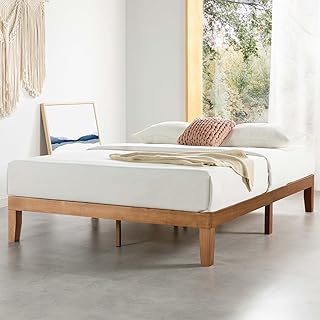
A clean, honest 12-inch solid pine platform with well-spaced wooden slats and no headboard to work around, which suits anyone pairing it with a wall-mounted or upholstered headboard later. Pine is softer, so re-tighten the bolts at the six-month mark and it’ll stay silent.
Frequently Asked Questions
Do I need a box spring with a wooden platform bed?
No. Every frame here uses slats spaced to support foam, latex, and hybrid mattresses directly. Adding a box spring raises the surface uncomfortably high and can actually reduce airflow beneath the mattress.
Why does my wooden bed frame squeak, and can I fix it?
Almost always dry wood-on-wood contact or bolts that have relaxed with seasonal humidity changes. Re-torque all hardware, then add adhesive felt pads where slats meet the rails. This resolves the majority of complaints without any new parts.
Which wood should I choose for a heavier sleeper or a shared bed?
Prioritize rubberwood or another dense hardwood with a reinforced center rail and a supporting leg. The KOMFOTT 14-inch rubberwood foundation and the Apollo solid wood frame are both built for sustained higher loads.
How much clearance do I need for under-bed storage?
Measure from the floor to the underside of the side rail, then subtract an inch for clearance. Standard fabric bins need about 7 inches; rolling drawers need 9 or more, plus a rail-free path to slide through.
Final Thoughts
If longevity and quiet support matter most, the Apollo Solid Wood Platform Bed is the strongest all-round investment, with the KOMFOTT 14-inch rubberwood foundation close behind for anyone who wants that same structural integrity in a minimal, headboard-free form. For bedrooms where storage and presence both count, the Evermagin Fluted Walnut with its footboard bench does more work in the same square footage than anything else on this list.